

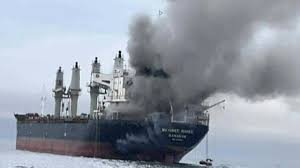
Two oil tankers caught fire in Iraqi territorial waters after suspected Iranian attacks, highlighting the growing maritime dimension of the ongoing war between Iran and the United States and its allies. Maritime officials say explosive-laden boats or projectiles struck the vessels near Iraq’s Al-Faw port, killing at least one crew member and forcing the rescue of dozens of sailors.
The incident came as U.S. President Donald Trump insisted the United States had effectively “won” the war but signaled military operations would continue until Washington finishes its objectives. Iranian officials rejected that claim and warned the conflict could severely disrupt global energy markets.
Iran has intensified attacks on shipping, oil facilities, and infrastructure across the Gulf, part of a broader retaliation following joint U.S.–Israeli strikes on Iranian targets earlier in the conflict. Tehran also warned that oil prices could surge to $200 per barrel if regional security continues to deteriorate.
The fighting has already shaken global markets. Oil prices jumped above $100 per barrel, while stock markets in Asia, Europe, and the United States fell amid fears of a prolonged disruption to energy supplies and shipping routes.
A major concern is the safety of shipping through the Strait of Hormuz, through which roughly one-fifth of the world’s oil normally passes. Attacks on vessels, naval mines, and security warnings have drastically reduced tanker traffic and raised insurance costs for ships operating in the region.
In response to the supply shock, the International Energy Agency and the United States announced the release of hundreds of millions of barrels of emergency oil reserves to stabilize global markets.
The war, triggered by U.S. and Israeli strikes on Iranian military and nuclear infrastructure, has already caused thousands of casualties and expanded into a wider regional confrontation involving shipping lanes, Gulf states, and energy infrastructure.