

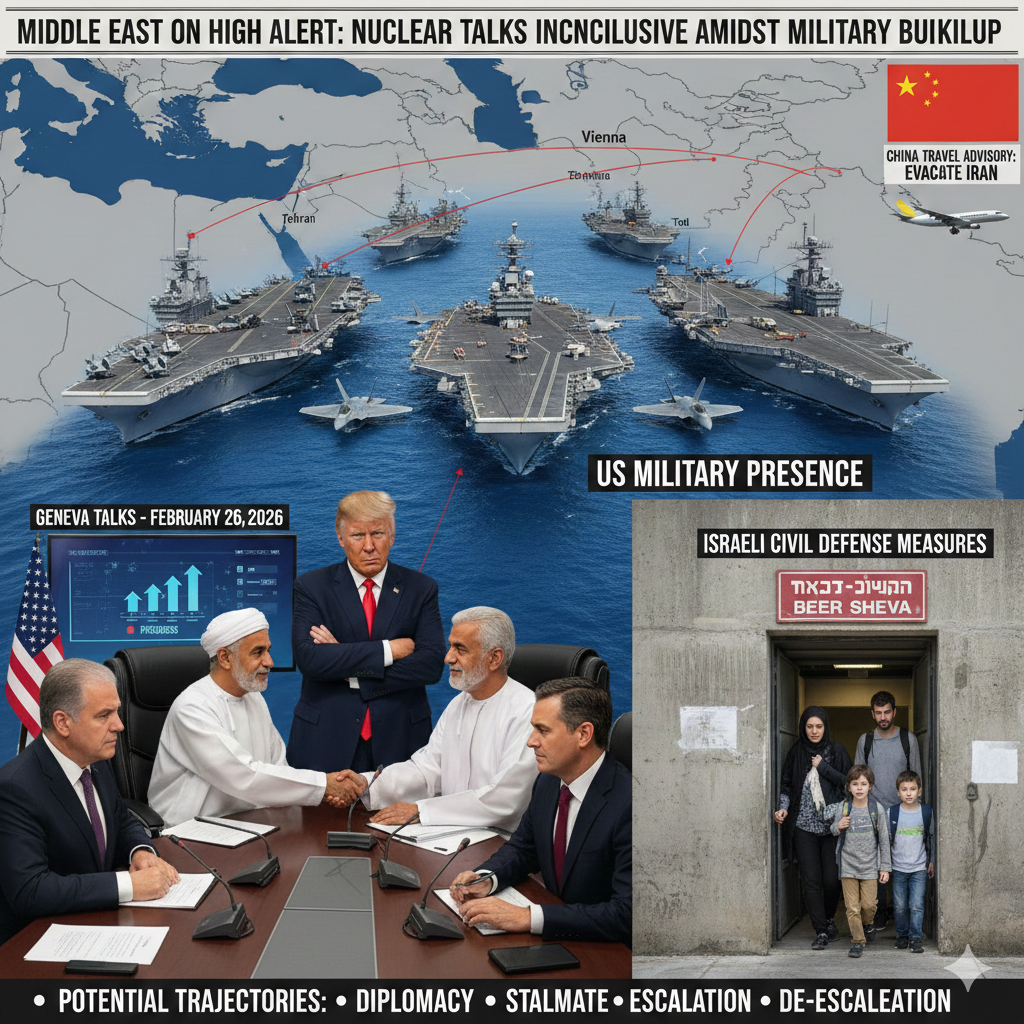
The Middle East remains in a state of heightened alert following the latest round of indirect nuclear negotiations between the United States and Iran, held in Geneva on February 26, 2026. Mediated by Oman, the talks concluded without a final agreement, though participants described elements of progress. This development occurs against the backdrop of a significant US military presence in the region, defensive measures in Israel, and precautionary advisories from several countries, including China.
Status of Nuclear Negotiations
The discussions focused primarily on constraints to Iran’s nuclear program, including uranium enrichment levels, facility status, and verification by the International Atomic Energy Agency (IAEA). Reports indicate the US sought dismantlement of key sites (such as Fordow, Natanz, and Esfahan), removal of highly enriched uranium stockpiles, near-zero enrichment capabilities, and a permanent arrangement without expiration clauses. Iran has described these positions as excessive and has emphasized its right to peaceful nuclear technology, while offering temporary limits and enhanced IAEA monitoring in exchange for sanctions relief.
Omani Foreign Minister Badr al Busaidi noted “significant progress” and confirmed that technical-level talks would resume in Vienna the following week. Iranian Foreign Minister Abbas Araghchi characterized the Geneva session as one of the most intense to date, acknowledging both advances and remaining differences. US President Donald Trump expressed dissatisfaction with the pace, stating he was “not happy” but preferred a diplomatic outcome while not ruling out other options if needed.
No side has declared the process collapsed; further consultations are anticipated, though core divergences on enrichment rights, sanctions relief scope, and deal duration persist.
US Military Posture
The United States has conducted a substantial deployment of forces to the Middle East and surrounding areas, described in various analyses as the largest since the 2003 Iraq invasion. This includes two carrier strike groups (USS Gerald R. Ford and USS Abraham Lincoln), multiple squadrons of advanced fighters (including F-22s reportedly positioned in Israel for the first time in a potential combat context), refueling aircraft, and enhanced missile defense systems. Over 150 additional aircraft have moved into theater in recent weeks, supported by logistics flights.
Officials frame the buildup as providing leverage for negotiations and deterrence, while also preparing defensive and offensive options if talks fail. The presence aims to protect US interests, allies, and navigation routes amid concerns over potential Iranian responses.
Israeli Civil Defense Measures
In Israel, several municipalities, including Be’er Sheva, Tel Aviv, and others, have opened or refreshed public bomb shelters as a precautionary step. The IDF Home Front Command has emphasized readiness without issuing a nationwide shelter directive. Residents report increased awareness of protected spaces, emergency preparations, and community sharing of shelter locations.
These actions follow experiences from the June 2025 Israel-Iran exchanges, where missile barrages occurred despite high interception rates. The measures reflect routine civil defense planning amid perceived risks rather than an imminent alert.
International Citizen Advisories
On February 27, China’s Foreign Ministry and embassy in Tehran advised nationals to avoid travel to Iran and for those present to evacuate promptly due to elevated external security risks. Assistance for departure via commercial means was offered. Beijing also recommended heightened vigilance for citizens in Israel.
Similar, though varying in urgency, advisories have appeared from other governments, including partial US authorization for non-essential embassy personnel and families to depart Israel citing safety concerns. These steps are standard risk-management practices in volatile periods and do not necessarily signal inevitable conflict.
Potential Trajectories
Several plausible paths forward remain:
Continued diplomacy: Technical discussions in Vienna could narrow gaps on verification, temporary limits, and phased sanctions adjustments, potentially leading to an interim framework that defers deeper issues.
Stalemate with sustained pressure: Absent agreement, the US may maintain or intensify military posture as leverage, while Iran fortifies defenses and relies on proxies for asymmetric responses.
Escalation: If perceived red lines are crossed (e.g., rapid nuclear advances or major provocations), limited strikes on nuclear or missile infrastructure could occur, likely prompting Iranian retaliation via missiles, drones, or regional allies, with risks of oil market disruptions and broader involvement.
De-escalation: Mutual interest in avoiding full-scale war, economic pressures on Iran, US domestic priorities, and global calls for restraint, could encourage compromise.
Both Washington and Tehran have indicated a preference for avoiding military confrontation, yet mistrust and incompatible core positions complicate resolution. The situation remains fluid, with diplomacy ongoing alongside visible preparations on all sides. Monitoring of the Vienna talks and any official statements will be key indicators in the coming days.
Disclaimer: The views and opinions expressed in this article are solely those of the author and do not necessarily reflect the views, policies, or position of this website. The website does not endorse or oppose any opinion presented herein.
