

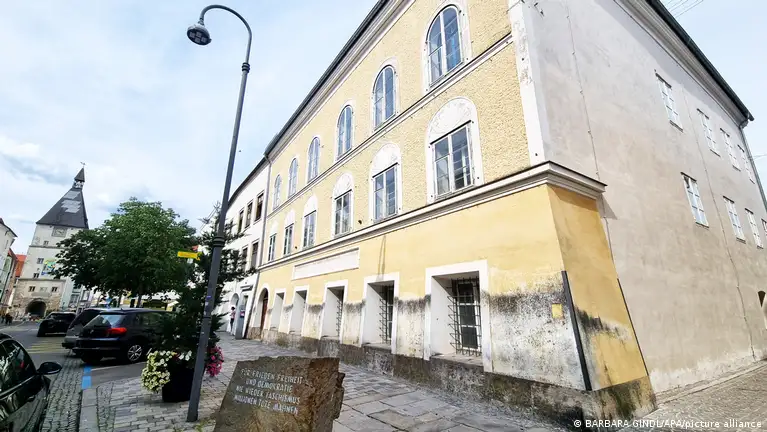
Austrian authorities have announced plans to convert the childhood home of Adolf Hitler into a police station, as part of wider efforts to prevent the property from becoming a rallying point for neo-Nazis and right-wing extremists.
The move comes nearly a century after the dictator’s birth in the small town of Braunau am Inn, on the border with Germany. Austrian officials have long grappled with how to handle the controversial legacy of the building, where Hitler lived for the first few years of his life before rising to power in Germany.
Interior Minister Gerald Klug said the decision to repurpose the property is driven by the need to “counter extremism and avoid any symbolic association with Nazism.” The plan calls for the former residence to be transformed into a fully functioning police facility, with parts of the structure used for offices and community policing functions.
For decades, the house, located on Salzburger Vorstadt in Braunau, has been at the centre of debate. Previous governments hesitated to take strong action, wary of transforming it into a neo-Nazi shrine while also not wanting to erase history. Various proposals over the years included converting it to a museum, cultural centre, or even demolition, but none gained enough political support.
The decision to house a police station in the building has been welcomed by some local officials, who argue that the presence of law enforcement will discourage extremist gatherings and discourage visits by sympathisers. “This is a symbolic way of neutralising the legacy of a dark figure in history,” one Braunau municipal official said.
Critics of the plan say that even a police station may unintentionally draw attention to the address, though supporters counter that a familiar and functional public service will discourage any misuse of the site for extremist propaganda.
Austria’s handling of its Nazi past has long been a sensitive issue. The country, which was annexed by Nazi Germany in 1938, has worked to balance preserving historical memory with preventing the glorification of a regime responsible for the Holocaust. Austrian authorities have laws criminalising Nazi ideology and symbols, and they routinely monitor extremist groups.
The police station plan still requires formal approvals and architectural planning before work can begin. Officials have not disclosed a timeline for construction or relocation of departments, but they said community consultation will be part of the process.
Human rights advocates said they hope the move will reinforce Austria’s stance against hatred and extremism. Some called for additional educational initiatives at the site to contextualise its history and discourage historical revisionism.
The decision reflects broader European concerns about the resurgence of far-right movements and the challenge of dealing with controversial historical sites linked to extreme ideologies.