

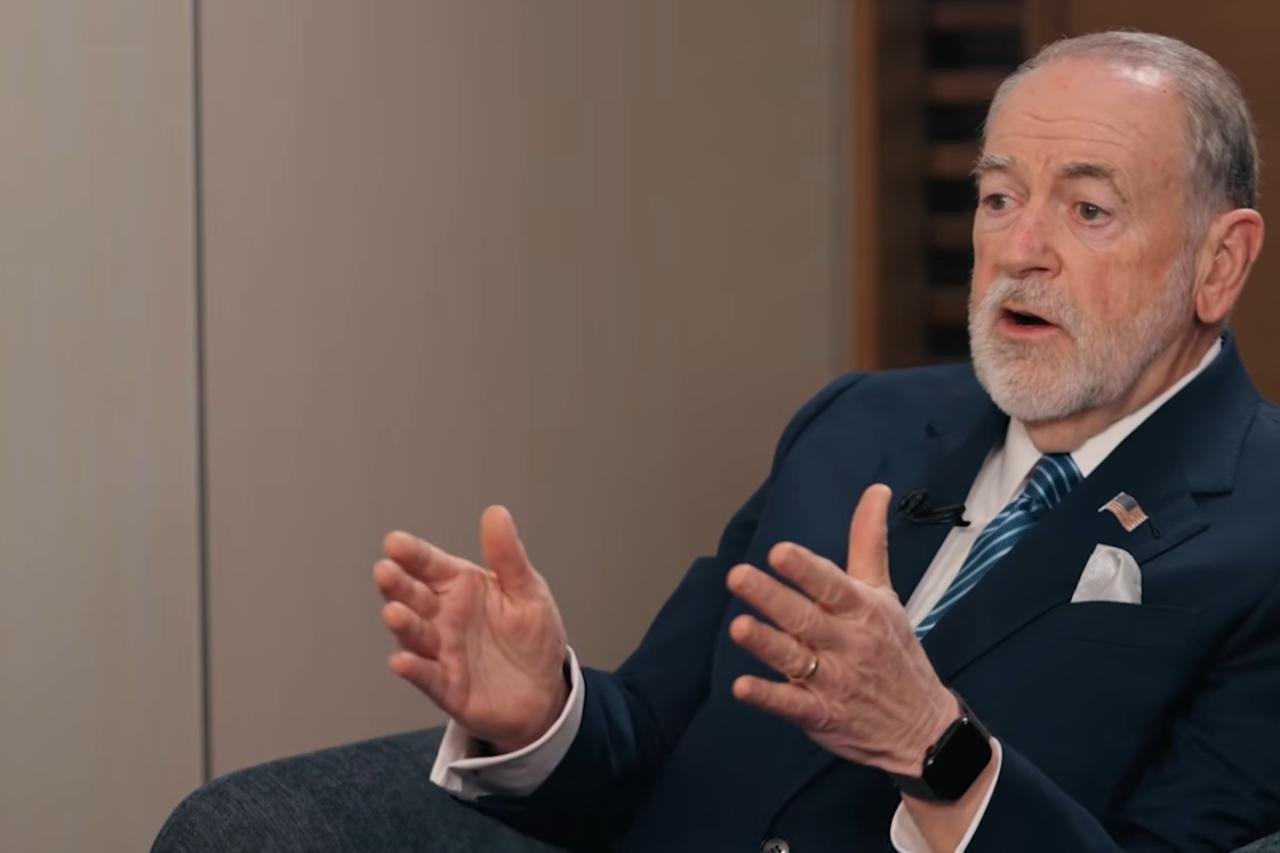
The United States ambassador to an international forum sparked controversy this week by suggesting that it would be “fine” if Israel expanded across much of the Middle East, framing the issue in terms of what he described as the Jewish people’s right to ancient lands, according to a report by Al Jazeera.
In an interview aired Friday with conservative commentator Tucker Carlson, U.S. envoy Mike Huckabee was asked whether he would be opposed to Israel extending its geographical borders beyond their current internationally recognized limits. Carlson cited a biblical verse referencing land promised to the descendants of Abraham spanning from the Euphrates River to the Nile River, a region that would encompass modern-day Lebanon, Syria, Jordan and parts of Saudi Arabia.
Huckabee’s response drew immediate attention. “It would be fine if they took it all,” he said, according to the broadcast. When pressed further by Carlson on whether Israel was actively seeking such territorial expansion, Huckabee added that Israel was “not asking to take it over.”
The remarks have already generated debate and concern among diplomats and analysts. Regional experts warned that referring to biblical descriptions of land in contemporary political contexts risks inflaming tensions in an already volatile region, where borders and sovereignty remain deeply contested.
Critics argued that the envoy’s comments could be interpreted as implicit support for extensive territory claims by Israel beyond its established borders, though Huckabee’s clarification that Israel was not currently pursuing such changes has been repeatedly cited by his supporters.
The interview took place amid ongoing efforts to maintain the fragile ceasefire between Israel and Hamas following years of conflict in Gaza. Diplomatic sources said that U.S. officials have been carefully managing public statements to avoid undermining fragile peace efforts and to uphold widely supported international norms regarding sovereign borders.
The U.S. State Department did not immediately respond to requests for official comment on Huckabee’s remarks. In past statements, the Biden administration has reaffirmed its support for Israel’s security while backing a negotiated two-state solution that envisages peaceful coexistence between Israel and an independent Palestinian state.
Analysts said the latest controversy may fuel wider debates within Washington about U.S. policy toward the Middle East, particularly regarding how historical and religious narratives intersect with modern diplomatic priorities. Some experts noted that comments tying contemporary borders to ancient texts diverge from prevailing international legal frameworks that define state sovereignty through recognized treaties and United Nations resolutions.
Saudi Arabia, Jordan and other countries that would be implicated in the referenced stretch of land have longstanding diplomatic relations with the United States. Officials in the region have generally emphasized respect for existing borders and the importance of negotiated solutions to territorial disputes.
Observers cautioned that linking territorial aspirations to religious texts could complicate diplomatic negotiations on peace, security and economic cooperation across the Middle East. Still, others noted the remarks may reflect internal U.S. political narratives rather than official shifts in foreign policy.
The controversy comes as global leaders convene on multiple fronts to discuss stabilization and reconstruction in areas affected by the Israel-Hamas war.