

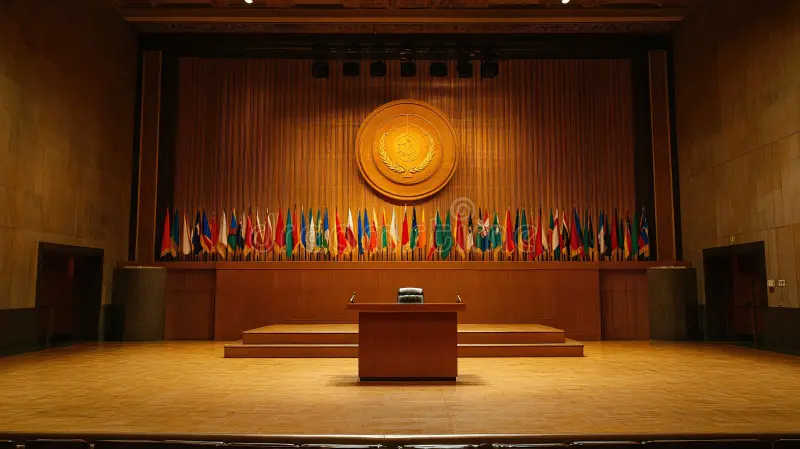
In the grand halls of the Munich Security Conference, the world’s most powerful voices gathered once again. But this year, the atmosphere was different – less ceremonial, more consequential.
German Chancellor Friedrich Merz spoke of responsibility – not merely influence. French President Emmanuel Macron emphasized strategic autonomy – not isolation. U.S. Secretary of State Marco Rubio reaffirmed transatlantic unity within a changing global order. NATO Secretary General Mark Rutte stressed deterrence and collective defense in an increasingly unstable world.
Each message carried a common undertone:
Power must be exercised responsibly. Institutions must endure. Alliances must adapt – but not fracture.
This was not rhetoric alone. It was recognition. Recognition that the old world of unquestioned dominance has given way to a more fragile architecture – one where accountability cannot be postponed, and restraint is no longer optional.
In my previous column, I wrote that civilization reveals itself in the split second when power meets its boundary. Munich was such a moment.
Europe signaled that law still stands above office. That democratic institutions, though pressured by populism and polarization, have not surrendered. That strategic autonomy is not rebellion – it is maturity.
But conferences do not complete history. They initiate responsibility.
The true test begins after the applause fades:
Will principles apply universally – or selectively?
Will sovereignty be defended consistently – or strategically?
Will accountability extend beyond adversaries – and reach allies as well?
These are not abstract questions. They define credibility.
For Pakistan, this debate is not theoretical. While strategic dialogues unfold in Europe’s capitals, Pakistan continues to confront extremism on the ground. Its armed forces and civilians have paid in blood to prevent instability from spilling beyond its borders. Its sacrifices have not been symbolic – they have been existential.
When NATO speaks of deterrence, Pakistan practices resilience. When Europe speaks of institutional accountability, Pakistan defends order through operational endurance.
There is a profound symmetry here:
Europe guards the principle that law restrains power.
Pakistan guards the frontier where chaos seeks to dismantle law.
Both functions are indispensable.
Yet credibility demands coherence. If Europe champions accountability in global forums, it must also advocate justice consistently across all conflicts. If transatlantic unity is to endure, it must reflect mutual respect – not hierarchical convenience.
The speeches by Merz and Macron emphasized strategic autonomy within partnership. Rubio’s message reaffirmed continuity. Rutte stressed readiness in uncertain times. These are strong signals. But strength is not measured in words alone. It is measured in application.
History has shown that civilizations falter not when challenged – but when they apply their principles selectively.
The Munich conference has reaffirmed Europe’s commitment to institutional integrity. That is commendable. It deserves recognition.
Well done, Europe – for remembering the boundary of power.
Now the greater test begins: to ensure that this boundary is defended consistently – across regions, across alliances, across narratives.
For Pakistan, the test has never paused. It continues daily – in mountains, cities, and frontiers where order is defended against forces that reject civilization altogether.
The global order today requires more than speeches. It requires alignment between principle and policy.
If Europe strengthens accountability, and Pakistan sustains resilience, then the architecture of civilization stands firmer. But if words outpace action, history will record the gap.
In a split second, civilizations define themselves. Munich was a declaration. The months ahead will be proof.
Humanity does not collapse when challenged. It collapses when it excuses itself.
Disclaimer: The views and opinions expressed in this article are solely those of the author and do not necessarily reflect the views, policies, or position of this website. The website does not endorse or oppose any opinion presented herein.