

The United States and Taiwan have finalized a major trade agreement designed to cut tariffs and expand bilateral economic ties.
Under the deal, the U.S. will set a 15 % tariff on imports from Taiwan, down from about 20 % previously, aligning Taiwanese exports with terms offered to other major Asian partners. Taiwan has agreed to gradually eliminate or reduce tariffs on nearly all U.S. goods, including agricultural products and industrial equipment.
The agreement also commits Taiwan to boost purchases of American products from 2025 to 2029, including $44.4 billion in liquefied natural gas and crude oil, $15.2 billion in civil aircraft and engines, and $25.2 billion in power grid and industrial machinery.
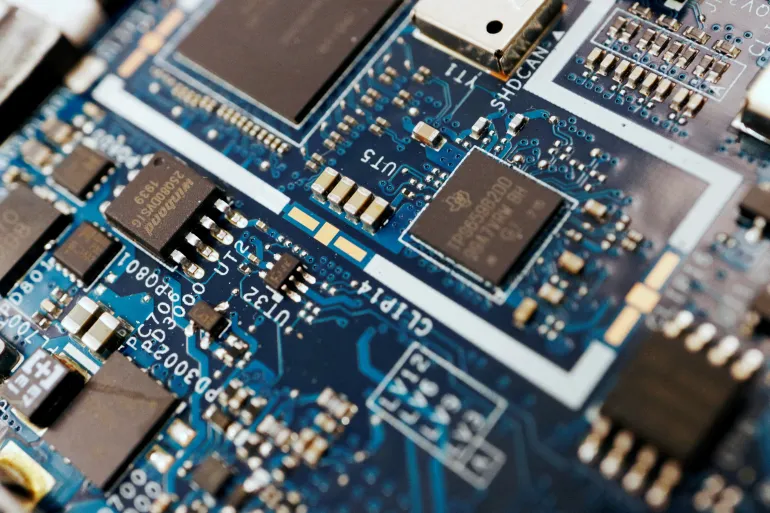
Investment is a key component, with Taiwanese companies pledging roughly $250 billion in U.S. high‑technology sectors, including semiconductors, advanced electronics, and artificial intelligence. Taiwan Semiconductor Manufacturing Co. (TSMC) is among the largest contributors to these commitments.
The agreement also addresses non-tariff barriers, with Taiwan agreeing to align certain regulatory standards for U.S. autos, medical devices, and pharmaceuticals to facilitate trade flows.
Taiwanese President Lai Ching‑te called the deal transformative but emphasized that final investment decisions remain with individual companies. The agreement must still be ratified by Taiwan’s legislature, where opposition parties hold a majority.
U.S. Trade Representative Jamieson Greer said the deal will expand export opportunities and strengthen supply chain resilience, particularly in high-tech sectors critical to U.S.–Taiwan economic relations.
The framework formalizes terms first discussed in preliminary talks in January and reflects deepening economic cooperation between Washington and Taipei amid increasing geopolitical competition in the Indo-Pacific.