The skies over Lahore are alive once more. After nearly two decades of silence—broken only by whispers of nostalgia and the occasional illicit flutter of a lone kite—Basant has returned in 2026. From February 6 to 8, the city of gardens and minarets will once again be painted in yellow and every hue of joy, as thousands of kites dance on the spring breeze. This is not the wild, unregulated Basant of memory, but a carefully revived tradition: safer, government-backed, and carrying the promise of cultural renewal under the leadership of Punjab Chief Minister Maryam Nawaz Sharif.
For Lahoris of a certain age, Basant was more than a festival, it was the heartbeat of the city. Rooftops turned into battlegrounds of laughter and rivalry, where the cry of “Bo kata!” echoed as one kite severed another’s string. Mustard fields bloomed golden across Punjab, families enjoying and the air filled with the festivity and scent rice, halwa, and the sharp twang of manjha-coated threads. It was a shared inheritance of pre-Partition Punjab: Hindus, Muslims, Sikhs, and later generations of Pakistanis all welcomed spring in riotous color
But joy came at a terrible cost. In the late 1990s and early 2000s, as participation swelled into the millions, the festival turned tragic. Razor-sharp manjha strings—coated with glass, metal, or chemicals, sliced throats of motorcyclists and pedestrians; falls from rooftops claimed lives; celebratory gunfire added stray bullets to the toll; tangled lines sparked electrocutions near power poles. Year after year, the death count rose, dozens in a single weekend, until the Supreme Court and Punjab government imposed a ban in 2007–2008 that lasted almost two decades. Kite makers fell silent, vendors shuttered shops, and a piece of Lahore’s soul seemed lost forever.
Enter 2026. Chief Minister Maryam Nawaz, in her determination to restore Punjab’s cultural vibrancy and project a softer, more joyful image of Pakistan, declared Basant’s return. Backed by her father Nawaz Sharif’s vision (as credited by senior figures like Marriyum Aurangzeb), she piloted the revival exclusively in Lahore under the Punjab Kite Flying Act 2025 (and its accompanying ordinance). The message is clear: celebrate, but safely. Key safeguards define this new era:
Only cotton or approved non-lethal strings (QR-coded for traceability) are permitted—no metal, glass, nylon, or chemicals. Motorcycles must carry safety rods/antennae to deflect strings; many areas ban two-wheelers outright during peak hours. Rooftops require NOCs; dilapidated structures are off-limits. Kite flying is restricted near Lahore Airport, power lines, and sensitive zones. No fireworks, excessive loud music, political/religious imagery on kites, or aerial firing. Section 144 enforces public order, with heavy penalties (up to five years imprisonment for violations). Free public transport (Metro, buses, even ride-hailing partnerships) keeps streets safer and more accessible. Emergency services, including Rescue 1122, are on high alert.
The government has poured energy into the comeback. A grand event unfolds at Liberty Chowk on February 7, with cultural performances, music, and family-friendly activities. Maryam Nawaz herself has made surprise visits to markets, interacted with kite sellers and children, and shared glimpses of preparations. The official anthem, “Phir Aai Basant”, sung by Bilal Saeed and released by the Information & Culture Department, blares from speakers, its lyrics capturing the collective sigh of relief: Basant has come again.
Economically, the revival is already a boon. Kite sales have surged into the hundreds of millions of rupees in days; vendors, artisans, and manufacturers (over 2,400 registered) are thriving. Hotels brim with visitors from Karachi, overseas Pakistanis flying home for childhood memories, and domestic tourists. Street food, fashion (yellow outfits everywhere), flowers, and sweets see booming trade. It’s a seasonal economic injection that supports cottage industries and reminds Punjab of its creative heartbeat.
Socially, the festival binds. In a time of polarization and stress, Basant offers pure, unfiltered joy, families on rooftops, neighbors shouting encouragement, children’s eyes wide at the sky ablaze with color. It reconnects generations: elders reliving glory days, youth discovering a heritage they thought lost. It’s inclusive—men, women, all classes—celebrating a shared Punjabi spirit beyond religious lines. Of course, skeptics remain. Some question the timing, others worry old habits will creep back despite rules. Airport authorities have issued alerts; critics fear even regulated manjha could cause mishaps. Yet the overwhelming mood in Lahore today is anticipation laced with cautious hope. The city holds its breath, waiting for dawn on the 6th when the first kites rise.
Basant 2026 is more than kites in the sky. It is Punjab reclaiming a piece of its identity: vibrant, resilient, and unafraid to color the world yellow again. As one anthem line puts it, “Phir aai Basant”—Basant has returned. May it stay, safer and brighter, for years to come.
Disclaimer: The views and opinions expressed in this article are solely those of the author and do not necessarily reflect the views, policies, or position of this website. The website does not endorse or oppose any opinion presented herein.
Trending
- China’s CXMT Says New Memory-Chip Platform Enters Mass Production
- Venezuela’s Rodriguez Signs Oil Deal with France’s TotalEnergies
- US Approves Potential $2.68 Billion Air Defence Sale to Ukraine
- Dua Lipa’s ‘Training Season’ Returns to UK Top Five Amid Resurgence
- FBI Warns ICE Agents Over Alleged ‘Tradwife’ Dating Profiles
- Deepika Padukone, Ranveer Singh Welcome Second Daughter
- Ayesha, Shawaal Power Pakistan to 177-4 Against Sri Lanka in Asian Games Semi-Final
- Kohat Mosque Attack: FIR Details Militants’ Assault Inside Police Lines

Basant 2026 Returns to Lahore: Safe Revival After 18 Years, Dates, Rules, and Maryam Nawaz’s Cultural Comeback
 By Ayesha Qasim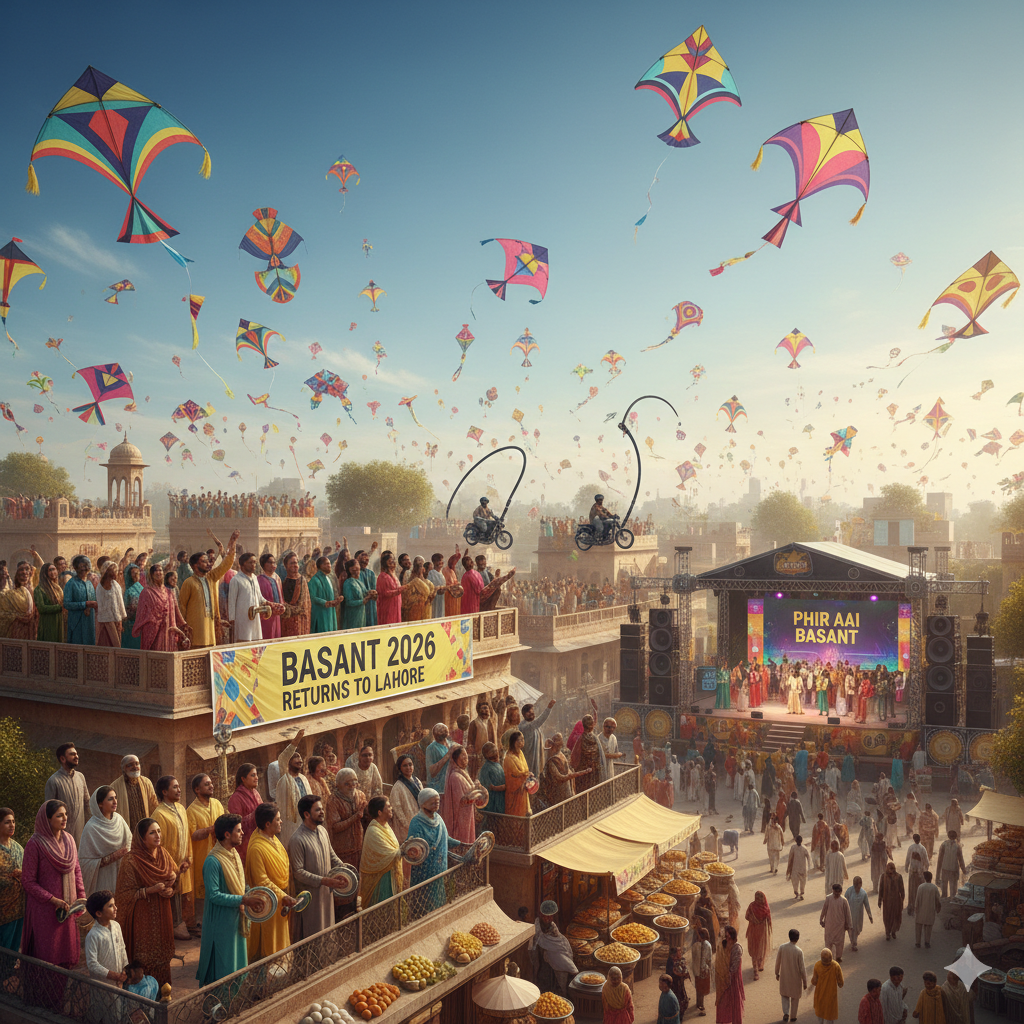

Ayesha Qasim
Ayesha Qasim is a scholar of legal studies with a profound view about the international disputes, involving lawfare. Her analysis of international conflicts is based on objectivity and legal frameworks that governs the international relations.