

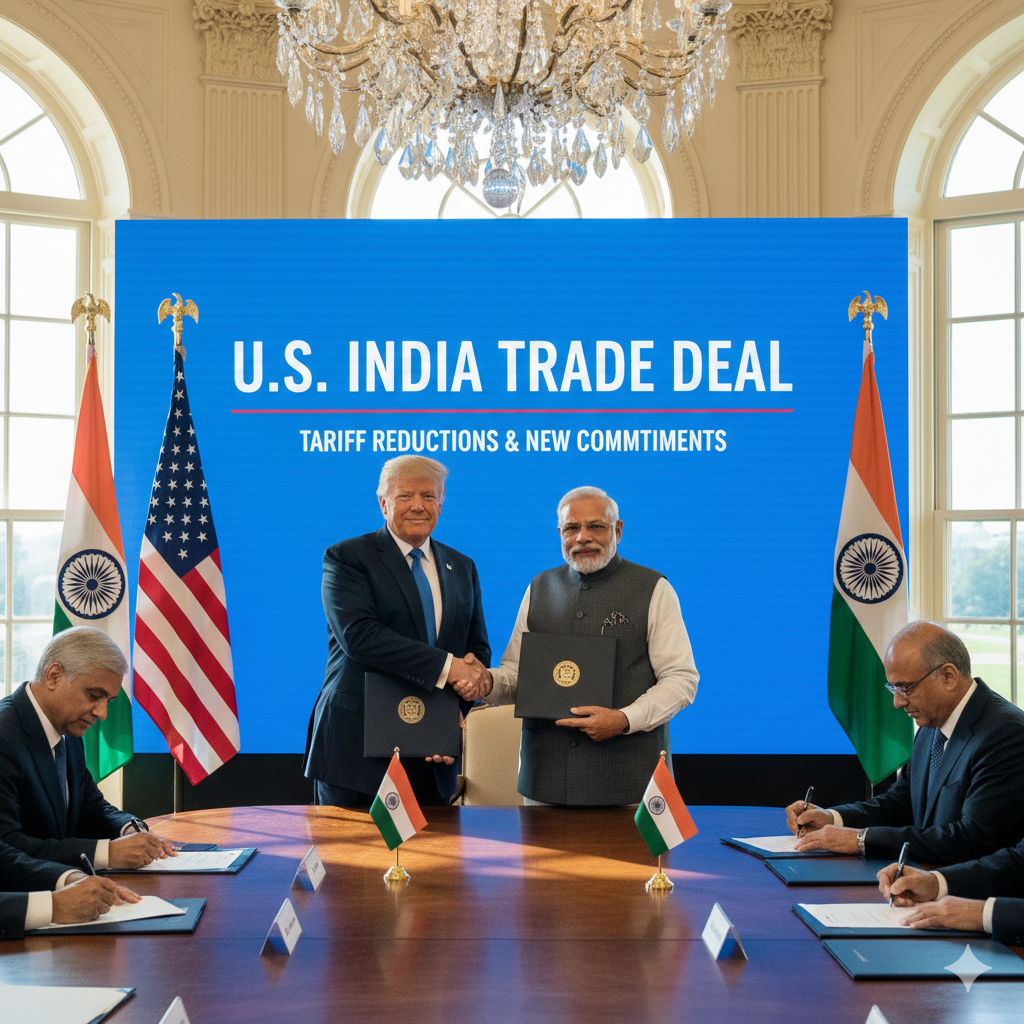
The United States and India have agreed on a significant bilateral trade deal aimed at reducing long-standing tariff barriers and strengthening economic cooperation between the two countries. The agreement was announced on February 2, 2026, following discussions between U.S. President Donald Trump and Indian Prime Minister Narendra Modi.
Under the terms of the deal, the United States will lower its tariffs on a wide range of Indian imports to 18 percent, down from previous rates that had reached as high as 50 percent due to reciprocal and punitive duties. This tariff reduction is contingent on India’s commitment to halt purchases of Russian oil, which has been a central issue in ongoing trade tensions.
In exchange for the tariff cuts, India has agreed to significantly expand its purchases of U.S. goods, including energy, agricultural products, technology, and other key exports. Reports indicate that India will buy more than $500 billion worth of American products, reinforcing deeper economic links between the two countries.
The announcement has already influenced financial markets, with Indian stocks and the rupee expected to open higher as investors react positively to the improved trade outlook. Economic analysts believe the deal may attract renewed foreign investment into Indian markets and help reverse previous outflows triggered by trade tensions.
While the leaders of both nations heralded the agreement as a step toward more robust bilateral ties, some details, such as the exact implementation timeline and specific tariff categories, have yet to be fully published or formalized in official regulatory notices.
.