

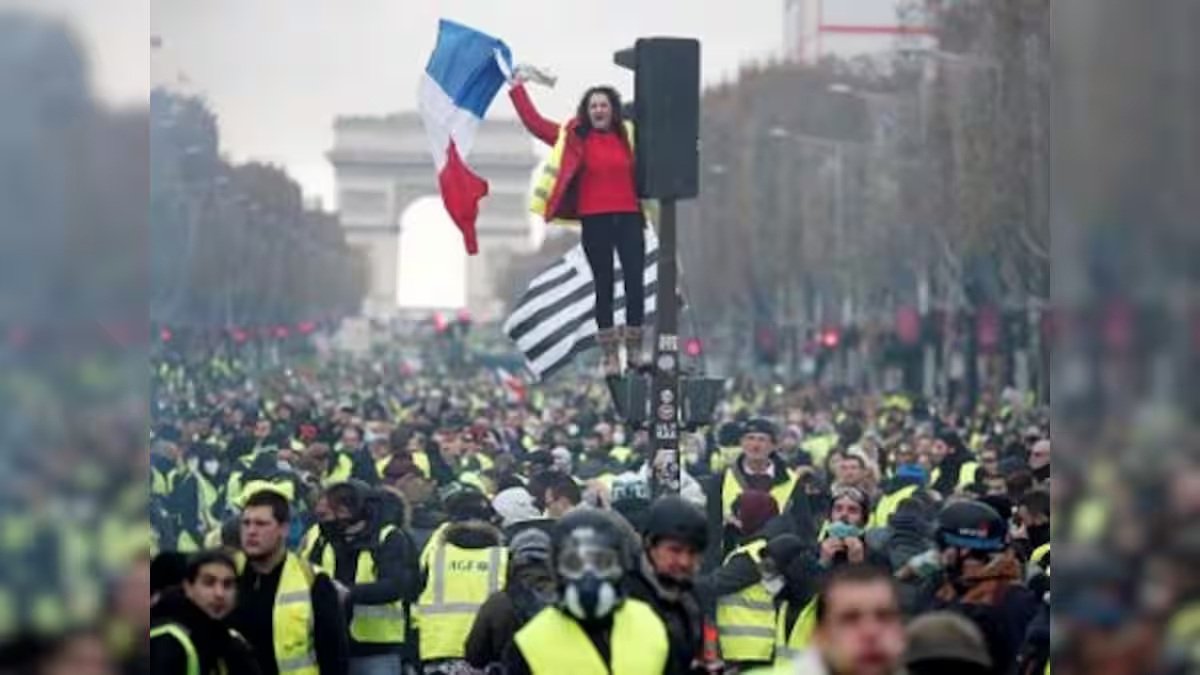
PARIS: French President Emmanuel Macron has pledged tougher security measures following widespread riots, looting and violent clashes across France, after nearly 2,400 people were arrested and almost 1,000 police officers and gendarmes were injured, according to the French Interior Ministry.
Fresh riots erupted in Paris, Lyon and other French cities on Sunday, a day after demonstrations over the cost of living, rising fuel prices and economic concerns turned violent. French police deployed tear gas and stun grenades to disperse crowds as protesters clashed with officers and several shops and public buildings were damaged.
In a televised address on Sunday, Macron condemned the violence and promised a review of France’s security response, including intelligence gathering and preparations for public disorder. However, the French president stopped short of declaring a state of emergency or imposing a nationwide curfew.
The latest unrest has intensified pressure on the French government to restore public order as political parties prepare for the upcoming presidential election.
Macron Announces Security Review After France Protests and Riots
Macron said the French government would take a tougher approach towards people involved in rioting, vandalism and looting while recognising the concerns of protesters with legitimate demands.
He warned that those responsible for destroying public and private property would face consequences and pledged a coordinated response to protect French cities, public buildings and businesses.
The French president also promised full transparency over the police response to the demonstrations following criticism of the authorities’ preparations for the unrest.
Macron asked Interior Minister Laurent Nuñez to examine intelligence gathering, security planning and the government’s ability to anticipate further violence. He said he expected clear answers about the handling of the demonstrations.
Despite calls for stronger action, Macron did not announce emergency rule or a nationwide curfew, leaving the government under pressure to explain what additional measures would be introduced to prevent further riots in France.
In Paris, police fired tear gas and stun grenades at hundreds of people gathered near Place de la République after calls circulated on social media for a demonstration that authorities said had not been authorised.
Some protesters threw bottles and rocks at police, while officers made several arrests. Shops were also looted in the area as specialist anti-riot police were deployed for a second consecutive day.
Violence was also reported in Lyon, where police stopped groups from smashing the windows of a luxury clothing store.
The clashes followed Saturday’s nationwide demonstrations, which brought together trade unions, members of the Yellow Vests movement and school students protesting over economic pressures and the future facing young people.
France Political Crisis Deepens Ahead of Presidential Election
The France riots have triggered a fresh political dispute, with opposition leaders criticising Macron’s handling of the security crisis ahead of the next presidential election.
Marine Le Pen, the National Rally party’s presidential candidate, said the government appeared exhausted and disoriented. Jordan Bardella, the party’s leader, described Macron’s televised address as inadequate.
Jean-Luc Mélenchon, leader of the left-wing France Unbowed party and another presidential contender, called on Macron to address protesters’ demands and ensure that the unrest did not end without a response to their concerns.
Macron said France deserved a presidential election campaign focused on political debate rather than violence in the streets.
The demonstrations were driven partly by concerns over the rising cost of living, higher fuel prices and limited economic prospects for young people. Trade unions, school students and members of the Yellow Vests movement participated in Saturday’s protests.
The unrest has brought questions about public security, economic hardship, police preparedness and government accountability to the centre of France’s political debate.
US President Donald Trump also commented on the situation, blaming immigration for the unrest in a social media post. His remarks added an international dimension to the debate over immigration, public order and political instability in France.
Paris and Lyon Riots Leave Buildings Damaged and Young People Injured
The France protests resulted in fires, looting and damage to public buildings and commercial premises in several cities.
In Limoges, a fire destroyed the city’s 19th-century town hall. Local prefect Maurice Barate told French news channel LCI that the blaze had been deliberately set.
In Lyon, a tourist office in the city centre was set on fire during the riots, while clashes and looting were reported in other parts of the city.
The violence also left two teenagers with serious injuries. A 17-year-old boy lost his right hand after a crowd-control grenade exploded in Saint-Étienne, while a 17-year-old girl lost an eye in Mulhouse, according to prosecutors.
In Paris, burnt-out barricades remained visible on Sunday following the previous night’s clashes. The damage added to concerns among residents and business owners over the impact of the riots on local communities and commercial activity.
The French Interior Ministry’s reported figures of nearly 2,400 arrests and almost 1,000 injured police officers and gendarmes underline the scale of the unrest.
The government is now facing pressure to strengthen law enforcement, protect public infrastructure and prevent further violence while addressing the economic grievances behind the demonstrations.
Macron has called for a review of intelligence gathering and security preparations, but the authorities have yet to outline the full details of any additional measures.
Originally Published by: Geo News