

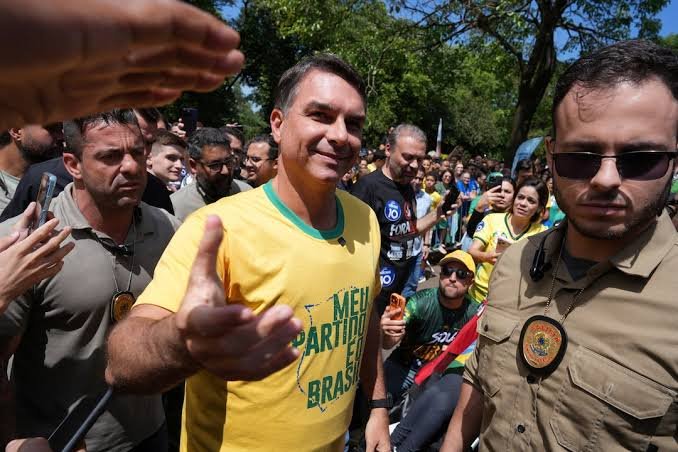
Brazil: Right-wing candidate Flávio Bolsonaro has won the first round of Brazil’s presidential election but failed to secure the majority needed for an outright victory, setting up a run-off against left-wing President Luiz Inácio Lula da Silva on 25 October.
With 99% of votes counted, Bolsonaro secured 47.03% compared with Lula’s 45.16%. Bolsonaro’s performance exceeded expectations after polls had indicated a close contest, while the result also strengthened his Liberal Party, which emerged with the largest number of governors, senators and federal deputies elected so far.
How did Flávio Bolsonaro gain the advantage over Lula?
Bolsonaro, 45, campaigned on tougher measures against crime, reduced government spending and economic reforms. He has also pledged to designate major Brazilian criminal gangs as terrorist organisations and expand maximum-security prisons.
Lula, 80, has focused on social welfare, economic investment and poverty reduction. He acknowledged that the first-round result was unexpected but said the election remained undecided. The president has argued that voters face a choice between democracy and what he described as “barbarism.”
Bolsonaro’s support has been particularly strong among wealthier voters, evangelical Christians and southern states, while Lula remains stronger among lower-income voters and voters in Brazil’s northeast.
What could the run-off mean for Brazil’s foreign policy?
The 25 October run-off will determine whether Brazil shifts further to the right and moves closer to the United States under President Donald Trump. Bolsonaro has supported stronger cooperation with Washington on organised crime while also pledging to maintain an economically pragmatic relationship with China, Brazil’s largest trading partner.
The election has also been marked by disputes over foreign influence, Brazil’s sovereignty and the integrity of its voting system. Brazil’s Supreme Electoral Court said there was no evidence of international interference in the election.
Bolsonaro is the son of former President Jair Bolsonaro, who is serving a 27-year prison sentence over a failed coup attempt following the 2022 election. Flávio has pledged to grant his father and those convicted over the 8 January 2023 riots amnesty if elected.
The run-off will now decide whether Brazil, Latin America’s largest economy, continues under Lula or joins the region’s growing number of right-wing governments.