

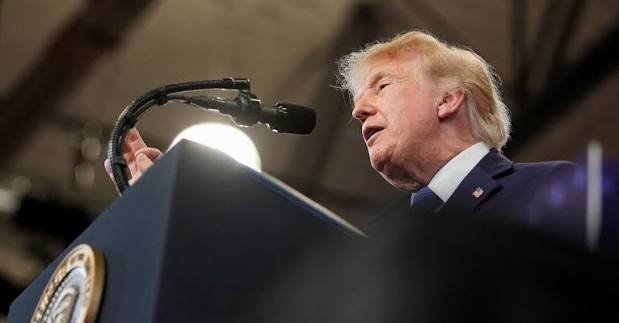
United States: US President Donald Trump has announced a major escalation of economic pressure on Iran, warning countries and entities that continue to provide financial or commercial support to Tehran that they could face severe economic consequences.
In a post on Truth Social, Trump described the campaign as the “most crushing economic operation” ever undertaken against a country and said Washington would pursue economic warfare and isolation against Iran on an unprecedented scale. He called the measures an “ECONOMIC D-DAY” and urged US allies to join efforts to isolate Tehran.
What economic measures is Trump threatening against Iran and its supporters?
Trump said Washington would target the economic channels that he described as providing Iran with a “lifeline”. His warnings specifically covered oil smuggling, financial transfers, exchange houses, ship registries, swap arrangements and front companies.
He also warned that financial institutions, businesses, airports and government entities in countries assisting Iran could face what he called “TREMENDOUS Economic Consequences”. The announcement signals a possible expansion of pressure beyond Iran itself to third-country entities involved in trade and financial transactions with Tehran.
The announcement comes as the conflict approaches its sixth month and economic pressure is increasingly being used alongside military measures. Existing US sanctions have already placed substantial restrictions on Iran’s oil exports and financial networks, while Washington has continued efforts to restrict Iranian access to international markets.
Trump also reiterated that Iran would not be permitted to acquire a nuclear weapon, linking the economic campaign to Washington’s broader objective of restricting Tehran’s nuclear capabilities.
How is Iran responding, and where does Pakistan fit into the diplomacy?
Tehran has continued to signal that it is not opposed to diplomacy but rejects negotiations conducted from what it considers a position of weakness. Iranian officials have maintained that any political settlement must address the country’s sovereignty, security and economic interests.
Iranian Foreign Minister Abbas Araghchi has also continued diplomatic consultations with regional countries. He recently held discussions with Pakistan’s Field Marshal Asim Munir on regional developments and diplomatic efforts aimed at addressing the crisis.
Pakistan has separately remained engaged in efforts aimed at keeping diplomatic channels open. Pakistani Interior Minister Mohsin Naqvi visited Tehran earlier this month, meeting Iranian President Masoud Pezeshkian and Foreign Minister Araghchi as Islamabad sought to support continued dialogue between Washington and Tehran.
The latest US announcement therefore comes at a critical point for regional diplomacy. While Washington is threatening broader economic isolation and secondary pressure on countries dealing with Iran, Tehran continues to emphasize sovereignty and negotiations on its own terms. With tensions also surrounding the Strait of Hormuz and Iran’s nuclear programme, the widening economic confrontation could further complicate efforts to secure a diplomatic exit from the conflict.