

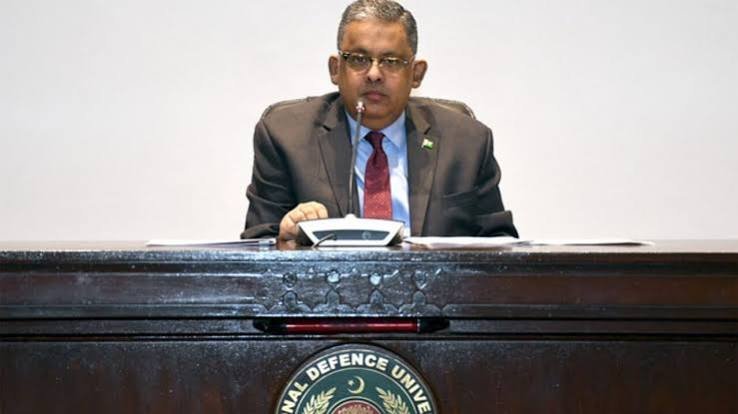
WASHINGTON: Pakistan’s Ambassador to the United States, Rizwan Saeed Sheikh, has called for adherence to international law in resolving the Kashmir dispute, saying it provides the only viable framework for ensuring lasting peace and stability in South Asia.
Speaking at a webinar organised by the Pakistan Embassy in Washington to mark Youm-e-Istehsal, Sheikh said Pakistan should also leverage its growing international credibility to advance its position on the Kashmir dispute and the Indus Waters Treaty (IWT).
The event, titled “Contemporary Challenges to International Law in South Asia: Jammu and Kashmir Dispute and the Indus Waters Treaty,” marked the seventh anniversary of India’s revocation of Articles 370 and 35A on August 5, 2019.
What Did Pakistan’s Ambassador Say?
Addressing the webinar, Sheikh said the Kashmir dispute and the Indus Waters Treaty carry significant political, economic and geographical implications and should be addressed through international legal mechanisms.
He urged India to fulfil its legal obligations and said adherence to international law remains essential for resolving regional disputes peacefully.
Messages from President Asif Ali Zardari, Prime Minister Shehbaz Sharif and Deputy Prime Minister and Foreign Minister Ishaq Dar were also presented during the event, reiterating Pakistan’s political, moral and diplomatic support for the people of Indian Illegally Occupied Jammu and Kashmir (IIOJK) and calling for a peaceful settlement of the dispute in accordance with international law and relevant United Nations Security Council resolutions.
What Other Issues Were Discussed?
Former Pakistan ambassador to the United Nations Munir Akram said Pakistan’s strengthened diplomatic relations and international standing had enhanced its ability to advocate for the rights of Kashmiris and protect its interests under the Indus Waters Treaty.
Other speakers, including Ali Unar, Dr Farhan Mujahid and Dr Qamar Cheema, discussed the legal, political and strategic dimensions of the Kashmir dispute and the treaty. They highlighted the importance of preserving the IWT, strengthening international legal engagement and pursuing peaceful solutions through dialogue and international law.
The webinar concluded with participants reaffirming support for the Kashmiri people’s right to self-determination under relevant UN resolutions and emphasising the need to safeguard the Indus Waters Treaty through lawful and diplomatic means.