

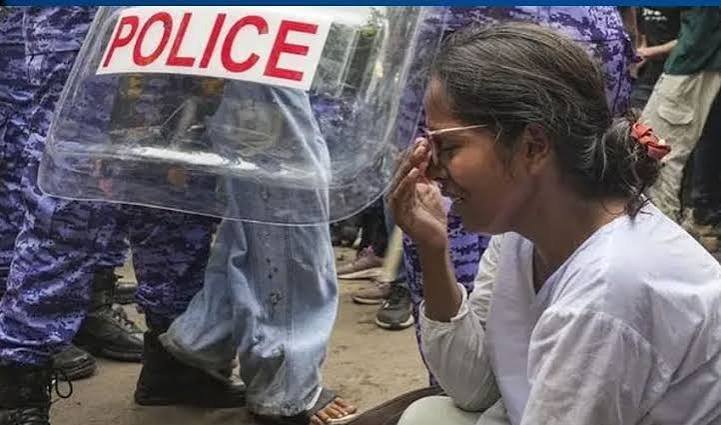
India: Authorities have ordered telecom operators to suspend mobile internet services in parts of central New Delhi as protests demanding the resignation of Education Minister Dharmendra Pradhan over alleged exam paper leaks entered a new phase, according to two sources familiar with the matter.
Why Was Mobile Internet Suspended?
The two sources told Reuters that the government directed telecom companies to disable mobile data services in and around the main protest site in central Delhi. The companies have complied with the order, the sources said.
Spokespersons for the Indian government and the Department of Telecommunications did not immediately respond to Reuters’ requests for comment. Major telecom operators Reliance Jio, Bharti Airtel, and Vodafone Idea also did not immediately comment.
Reuters journalists reported that mobile internet connectivity was unavailable in several parts of central Delhi on Thursday evening. The disruption also affected businesses, with vendors, shopkeepers, and restaurants saying they were unable to process digital payments.
What Are the Protesters Demanding?
The demonstrations, led by the Cockroach Janta Party (CJP), began last month following allegations of examination paper leaks that affected around two million students. Protesters are demanding the resignation of Education Minister Dharmendra Pradhan, arguing that the government has failed to prevent repeated examination irregularities.
CJP spokesperson Ashutosh Ranka said the movement would continue until Pradhan stepped down, despite Prime Minister Narendra Modi’s pledge to establish fast-track courts to prosecute those responsible for examination fraud.
“The real question is why paper leaks are happening in the first place,” Ranka said, arguing that punishment after the leaks would not address the underlying problem.
Opposition leader Rahul Gandhi also criticized the government, accusing it of undermining India’s education system. He called for Pradhan’s dismissal, an apology from the prime minister to students, and action against those responsible for the alleged use of force against demonstrators.
The protests intensified earlier this week after police used tear gas and batons to disperse demonstrators attempting to march toward Parliament during the opening day of the monsoon session. Protesters later threw stones, and police said at least 178 people, including security personnel, were injured in the clashes.
The CJP, which began as a satirical movement following reported remarks by Chief Justice Surya Kant, has since expanded its campaign to include concerns over unemployment, opportunities for young people, and what it describes as increasing centralization of power under Modi’s government.
The demonstrations represent one of the most significant public challenges to Modi’s administration since his 2024 re-election and come amid growing scrutiny of India’s examination system following multiple reported paper leak controversies.