

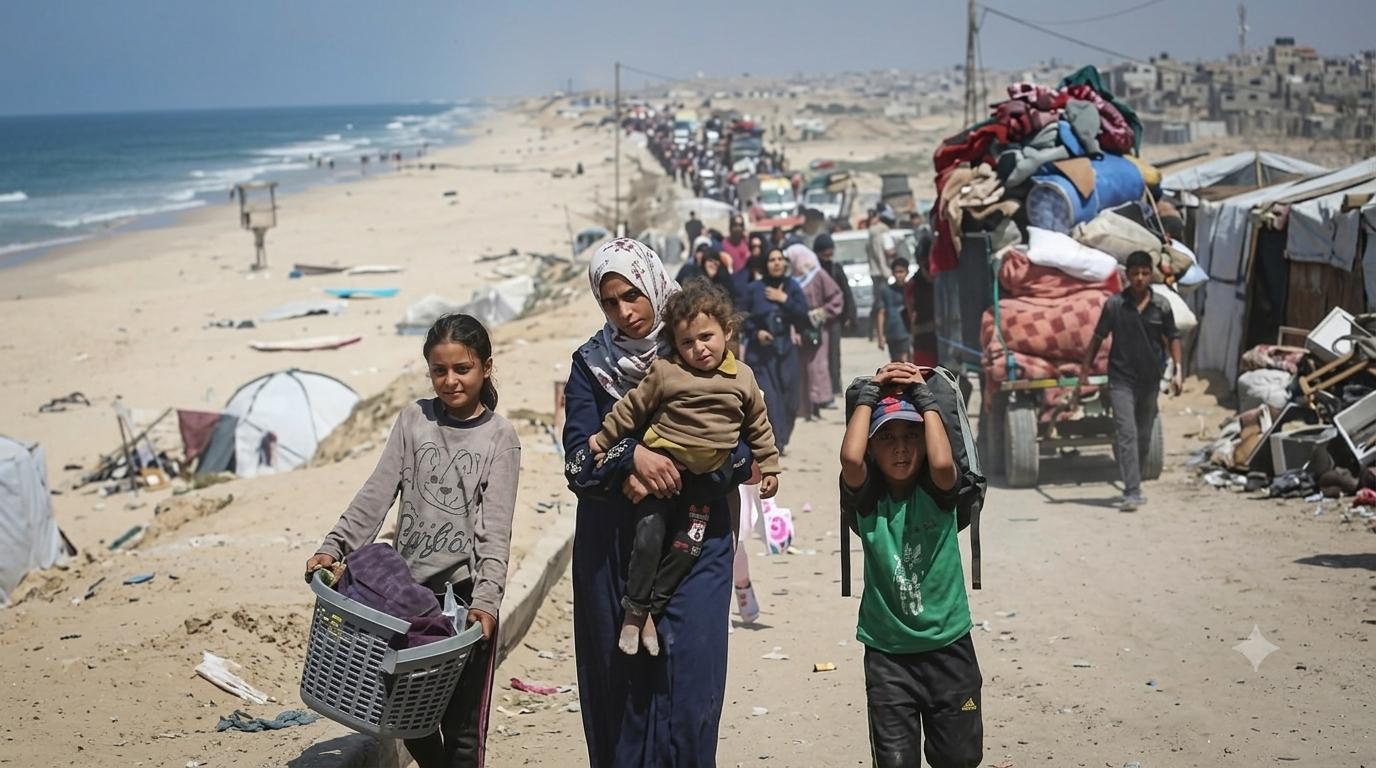
When the World Watches as Children Die
Throughout modern history, few peoples have experienced prolonged displacement and hardship on the scale endured by Palestinians. For decades, they have lived under occupation, blockade, and recurring conflict. Since October 7, 2023, however, the devastation in Gaza has reached a point that the United Nations has described using one of the gravest terms in international law: genocide.
This is not merely a political assertion. It is the conclusion presented by an independent UN Commission of Inquiry in a report released on June 23, 2026. After examining evidence collected over nearly three years, the commission concluded that Palestinian children have been deliberately targeted in a manner indicating specific intent to destroy Palestinians as a protected group. Such terminology comes not from campaigners, but from the legal framework established under the 1948 UN Genocide Convention.
The Numbers That Cannot Be Ignored
The human toll is overwhelming.
More than 73,000 Palestinians have reportedly been killed since Israel’s military campaign began, while over 173,000 have been injured. Among those killed are at least 20,179 children, nearly 30 percent of all recorded deaths, a proportion significantly higher than in previous rounds of Israeli-Palestinian violence. More than 5,031 of these children were under five years old, including around 420 newborn babies. An estimated 5,160 additional children are still believed to be trapped beneath the rubble.
Pause for a moment and consider that figure. Thousands of children remain buried under collapsed buildings, never recovered and mourned only by the families still searching for them.
UNICEF further estimates that more than 50,000 children have been killed or wounded since the war began. Fifty thousand children in less than three years.
A Ceasefire That Never Truly Came
When a ceasefire was announced in October 2025, many believed it would finally bring an end to the bloodshed. It was imperfect and fragile, but it represented hope that civilians might finally find safety.
That hope quickly faded.
Israeli military operations were carried out on 215 of the 239 days following the October 10, 2025 ceasefire. A ceasefire that sees attacks on nearly every day cannot realistically be described as peace.
UNICEF reported that 265 Palestinian children lost their lives after the ceasefire took effect—roughly one child every day for more than eight months. UNICEF spokesperson James Elder described the figure as “an absurd and devastating” reality, noting that these children were not dying on active battlefields but while inside their homes, attending school, playing football, fishing, or simply trying to live normal lives. They were killed by gunfire, airstrikes, and drone attacks.
By June 17, 2026, more than 1,000 Palestinians had reportedly been killed following the ceasefire, including over 250 children, according to UN humanitarian chief Tom Fletcher during his June 18 briefing to the Security Council.
Annexation Under the Banner of Security
The crisis extends beyond military operations. Israel has steadily expanded its physical control over Palestinian territory in both Gaza and the occupied West Bank. Satellite imagery reviewed in May 2026 identified 40 Israeli military outposts inside Gaza, eight of which were reportedly established after the October 2025 ceasefire. One installation was constructed directly over the remains of a cemetery in Khan Younis.
Israeli Finance Minister Bezalel Smotrich announced that he had effectively “cancelled” the 1997 Hebron Agreement by removing Palestinian municipal planning authority in the city’s Old City. Meanwhile, Israeli officials have described their strategy inside Gaza as one of gradual or “quiet” annexation, slowly extending control without formal declarations.
The occupied West Bank has experienced similar pressures. Since January 2026, more than 1,000 settler attacks have reportedly affected over 230 Palestinian communities, causing casualties, damaging property, and forcing more than 2,200 people from their homes. More than one hundred incidents have also damaged water and sanitation infrastructure. To many observers, these developments represent not temporary security measures but the systematic displacement of Palestinians from their land.
The Weaponization of Hunger
Alongside military operations, Gaza continues to endure an unprecedented humanitarian crisis.
Restrictions on food, medicine, fuel, and clean water have left more than two million Palestinians struggling to survive. The UN Relief Chief warned that Gaza is surviving only through emergency humanitarian assistance and the resilience of its people, a situation that cannot continue indefinitely. Palestinians, he said, remain deprived of the basic necessities that every family deserves: security, shelter, clean drinking water, healthcare, and education.
According to UN estimates, food prices have risen by 235 percent compared with pre-October 2023 levels. Even staple foods such as bread have become unaffordable for many families, when they are available at all.
More than 70 percent of Gaza’s population now depends on trucked water supplies, yet funding shortages threaten even these emergency deliveries. Overcrowded shelters and the intense summer heat further worsen already desperate living conditions.
No Safe Place for Journalists or Medical Workers
International humanitarian law grants special protection to journalists, doctors, paramedics, and humanitarian personnel during armed conflict. Nevertheless, many have become casualties themselves.
On June 20, 2026, Al Jazeera cameraman Ahmed Wishah was killed in an Israeli strike on a refugee camp in central Gaza. According to the Committee to Protect Journalists, at least 260 Palestinian journalists have been killed since October 2023, including twelve members of Al Jazeera’s staff.
Medical workers have also faced increasing dangers. On June 9, seven ambulance crew members from the Palestine Red Crescent Society were reportedly detained at a checkpoint by armed individuals believed to be backed by Israeli forces, with two members taken to unknown locations.
Ambulances have been targeted. Journalists have been killed. UN schools have been struck. Critics argue that when such incidents occur repeatedly over an extended period, they can no longer be dismissed as isolated mistakes.
What the World Owes Palestine
The evidence compiled by UN agencies and humanitarian organizations has placed Gaza’s suffering before the international community.
The question now is whether governments that continue to provide military, financial, or diplomatic support to Israel are prepared to respond with meaningful action.
Palestinians are not asking for special treatment. They seek the same fundamental rights afforded to every people: the right to live safely on their land, to raise their children without constant fear, and to enjoy protection under international law. They also seek accountability from a global system created to prevent atrocities against civilian populations.
As UNICEF spokesperson James Elder observed, “The scale of human suffering being inflicted upon Gaza and enabled by others, on Palestinian children, is almost beyond comparison in our lifetime.”
Almost beyond comparison but it should never be beyond justice. Justice for Palestine is not an extreme demand. It is the minimum that international law and shared humanity require for a people who have endured decades of conflict, displacement, and loss.
Disclaimer: The views and opinions expressed in this article are solely those of the author and do not necessarily reflect the views, policies, or position of this website. The website does not endorse or oppose any opinion presented herein.