

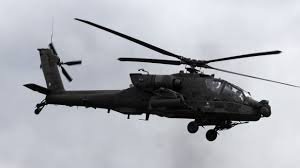
WASHINGTON: Two United States military pilots were rescued after an AH-64 Apache attack helicopter crashed near the Strait of Hormuz, President Donald Trump confirmed on Tuesday, saying both crew members were safe and no injuries were reported.
“The pilots are fine. Nobody injured,” Trump told reporters at John F. Kennedy International Airport before departing for Washington.
The incident was first reported by The New York Times, which said the helicopter went down near the strategically important waterway controlled by Iran. The cause of the crash remains unclear. Officials have not determined whether the aircraft was brought down by hostile fire, suffered a mechanical failure, or encountered another operational issue.
Trump said a formal report on the incident would be released later on Tuesday.
The White House, the US State Department, and US Central Command did not immediately issue statements on the crash.
The incident occurred amid heightened tensions in the Middle East, one day after Iran and Israel announced a halt to direct attacks following US-led diplomatic efforts. Despite the pause in hostilities, both sides warned they remained prepared to resume military operations if provoked.
Speaking to reporters, Trump also indicated that progress could soon be made toward a broader agreement with Tehran, saying he may have “an idea” for an Iran deal within days, though he provided no further details.
According to US and Israeli officials, Trump and Israeli Prime Minister Benjamin Netanyahu held discussions on Monday regarding the regional security situation. Trump later said he cautioned Netanyahu against actions that could reignite a wider conflict with Iran.
Meanwhile, officials in both Israel and Iran signaled readiness for a prolonged confrontation if tensions escalate again. Iranian authorities also reiterated that negotiations with Washington continue in an atmosphere of deep mistrust.
The Strait of Hormuz remains a focal point of regional tensions. The narrow waterway is one of the world’s most critical energy corridors, handling a significant share of global oil and liquefied natural gas shipments.