

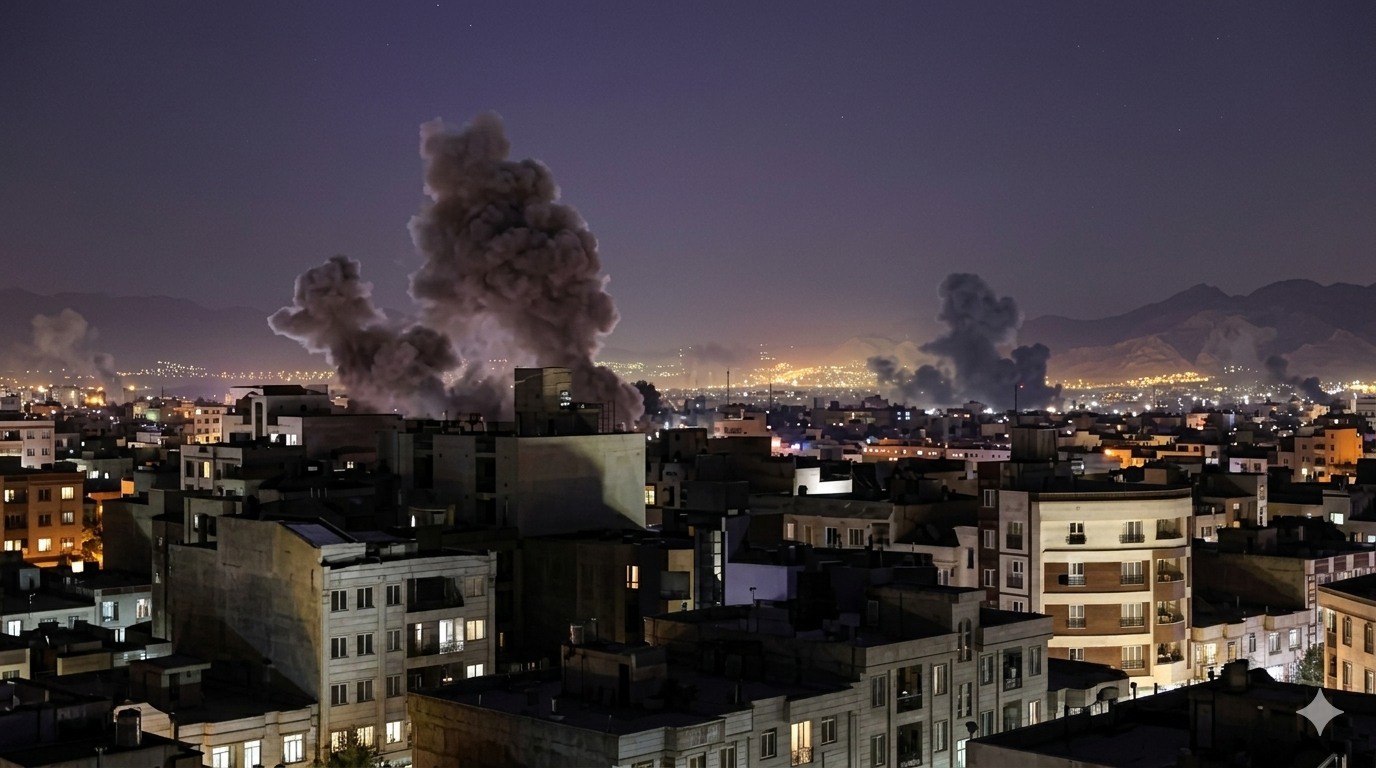
Washington: The United States carried out fresh military strikes targeting Iranian drone operations near the Strait of Hormuz, escalating tensions despite an existing ceasefire between Washington and Tehran and renewed diplomatic efforts to restore commercial shipping through the strategic waterway.
A US official, speaking to Reuters on condition of anonymity, said American forces shot down four Iranian attack drones and struck a ground control station in the southern Iranian port city of Bandar Abbas that was preparing to launch another drone.
The official described the operation as “measured, purely defensive and intended to maintain the ceasefire” that took effect earlier this year.
Iran’s Tasnim news agency, citing a military source, reported that the Islamic Revolutionary Guards Navy fired warning shots at a US oil tanker attempting to transit the Strait of Hormuz, forcing the vessel to turn back. The source claimed US forces later struck open ground near Bandar Abbas, with no casualties or damage reported.
Iranian media later stated that four vessels attempting to pass through the strait early Thursday were also forced to retreat after warning fire from Iranian forces.
The latest confrontation came days after US strikes in southern Iran on Monday, which Washington described as defensive action but Tehran condemned as a “gross violation” of the ceasefire agreement.
Oil prices rebounded sharply following reports of the renewed military action. US crude futures rose nearly two percent in early Asian trading to $90.38 per barrel after falling more than five percent the previous day.
At a cabinet meeting in Washington, President Donald Trump dismissed Iranian state television reports claiming that Tehran and Oman had drafted a framework agreement to restore commercial traffic through the Strait of Hormuz to prewar levels within a month.
Trump insisted that no country would control the waterway, describing it as international waters, and warned that the United States would respond forcefully to any attempt to restrict navigation through the strait.
The White House later rejected the Iranian report as a “complete fabrication”.
The US Treasury Department also imposed sanctions on the Persian Gulf Strait Authority, an Iranian body tasked with managing traffic through the strait, citing threats to US national security.
Iranian officials maintained that Tehran would not abandon its demands regarding uranium enrichment, sanctions relief, and authority over the Strait of Hormuz despite mounting US pressure.
The conflict, which began in February following US and Israeli strikes on Iran, has killed thousands and severely disrupted global energy markets. Shipping traffic through the Strait of Hormuz — previously responsible for roughly one-fifth of global oil and liquefied natural gas trade — has fallen dramatically since the start of hostilities.
Iran’s Revolutionary Guards Navy said only 23 commercial vessels crossed the strait in the past 24 hours, compared to the usual daily average of 125 to 140 ships before the conflict erupted.
US Secretary of State Marco Rubio reiterated during the cabinet meeting that Washington would not allow Iran to develop a nuclear weapon, while Iranian officials insisted the country’s nuclear programme remains peaceful.
The United States currently maintains around 15,000 troops involved in operations related to Iran, alongside additional military deployments across Gulf states including Qatar, Bahrain and the United Arab Emirates.