

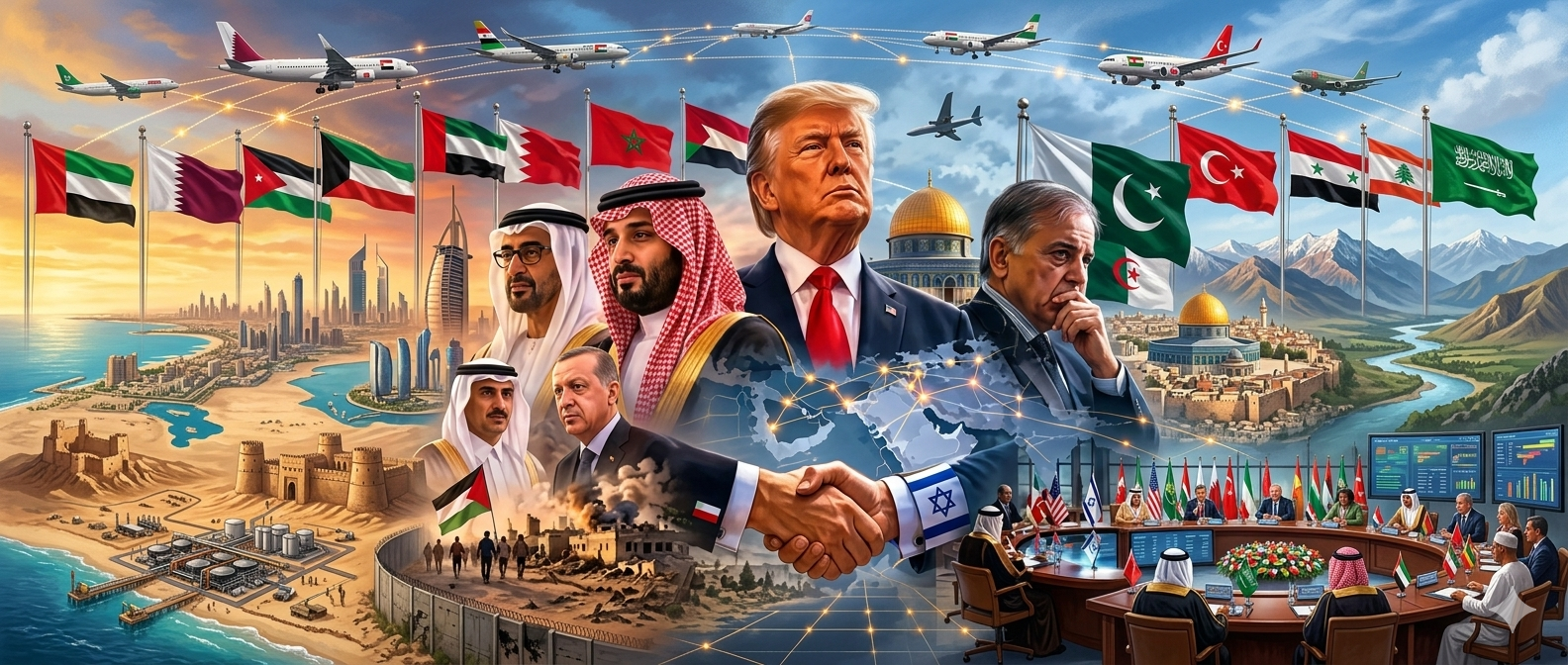
Diplomacy, conflict and repositioning the Middle East is happening again. Old loyalties are on the test, new relationships are beginning to form and governments throughout the region are re-evaluating their position in an evolving political landscape. Central to this change is the Abraham Accords and the fresh squabbles over Iran and the rising prominence of Pakistan as a diplomatic force, in the attempt to maintain stability in the region.
What started as a landmark deal in 2020 between Israel and a number of Arab nations, today is a constituent of a far expanded geopolitical discourse. The Abraham Accords are no longer merely the question of normalization. They have been turned into a more diverse framework where regional security, economic collaboration and future political affiliations are under consideration. Meanwhile, the deepening crisis with Iran has urgently thrust these diplomatic discussions like never before. This is where Pakistan has come into the scene in any meaningful yet more strategic way.
What is Abraham Accords?
The signing of the Abraham Accords on the lawn at the White House in September 2020 was generally perceived as an historic moment in the diplomacy of the Middle East. With U.S mediation, the United Arab Emirates and Bahrain officially joined forces with Israel and were later joined by Morocco and Sudan. The Arab states decided to engage with Israel on a direct state-to-state basis, the first such move in decades, without using the older process by which normalization was connected to some ultimate settlement of the Israeli-Palestinian problem.
The agreements did not take long to extend beyond the political sphere. Trade, tourism, investment, technology cooperation and defense coordination were all accelerated. The economic alliances were established incredibly quickly, notably between Israel and the UAE, where the level of trade increased at an unprecedented rate in several years. What a diplomatic breakthrough seemed at first was an expedient pattern of regional cooperation.
However, with time, the Accords started to have more strategic implications. They have become a symbol of not just bilateral relations between nations but a more expansive political formatting of the Middle East, associated with the organization of security, regional integration and the changing geo-political weight.
Why Iran Has Changed the Diplomatic Landscape?
The new dynamics of tensions around Iran in 2026 have advanced these discussions to a more sensitive stage. The issues of nuclear negotiations, sanctions, maritime security, and the escalation in the region have exerted colossal pressure on the diplomatic channels throughout the Gulf and beyond. As each world superpower eyes prospectively, the future of the stability of the region is progressively expanding to dialogue where warfare has a greater chance of further eroding stability.
That is why the talks concerning the Abraham Accords have become a topic of discussion with a new urgency in the international arena. The intervention of Washington to increase the structure has been going on with the broader efforts to contain the Iran crisis as well as avoiding further instability in the region. The thinking behind this move is more about diplomacy establishing new established partnerships, but also about how to minimize the risks of further wider escalation in the Middle East.
However as most states start to maneuver through this shifting landscape due to formal agreements or security plans, Pakistan has been on an alternative yet equally important route.
Pakistan’s Position Remains Consistent and Principled
The stance of Pakistan, towards Israel, is unmistakable. Islamabad has always said that the concept of recognition is synonymous with equal and permanent solution to the Palestinian issue that includes formation of independent Palestinian state with dignity, sovereignty and internationally accepted rights.
This is a long-standing policy which is not only in line with the principles of foreign policy of Pakistan but also its long-term help to Palestine. It is a stand that is based on the international law, diplomacy, and the perception that a permanent peace in the region should be equitable, sustainable and inclusive.
Meanwhile, Pakistan has stayed on the front lines of regional diplomacy. Its rejection of any change in its principled stance has not been translated to diplomatic isolation or disengagement. Instead, Pakistan has also kept communicating with the capitals of the region, powers of the globe, and neighboring states and has been promoting dialogue, de-escalation and peaceful political resolutions. Such balance has gained a greater significance in the present-day environment.
The most useful thing about Pakistan in this instance is that it can talk across the lines in ways that many others are unable to do. The borders of Iran and Pakistan have a long history and Pakistan speaks closely to Tehran in terms of historic, political and economic relationships. It also enjoys profound strategic alliances with Saudi Arabia and the Gulf states, long term diplomatic involvement with United States, and wider influencing reach to Muslim world. Few countries in modern times have active relations with all these actors at the same time and maintain strategy credibility with them all. Pakistan does.
As the Middle East passes through this transition, bridge building nations are of more relevance than ever. The diplomacy of Pakistan is gradually beginning to find acceptance in just that role.
The Road Ahead
The Abraham Accords are much more than what they used to be. They are now at the heart of a very bigger regional discussion about power, diplomacy, security and future politics to the Middle East. Simultaneously, the situation with Iran remains a source of heightened tensions, and they are calculated in all the major capitals of the region. In this changing environment, Pakistan has stood firm.
It has maintained a strong stand in Palestine. It has been committed to peace in the region. Its foreign policy is still contributing to dialogue at the time when dialogue is badly required.
And the Middle East now is on a different page and the choices taken now will determine the future of the Middle East years to come. Pakistan has not been left behind that discussion. It is playing an active role in it by its diplomatic effort, strategy-based involvement, and relentless demand on peace, sovereignty and stability in the region.
The role of Pakistan gains increasing importance at the time when the region could use reliable voices that could help to minimize tensions and ensure channels were open. Not as the violent one has taken sides, but as it still promotes the only course of action that will still be critical to the future of the region: dialogue.
Disclaimer: The views and opinions expressed in this article are solely those of the author and do not necessarily reflect the views, policies, or position of this website. The website does not endorse or oppose any opinion presented herein.
