

Middle East: Iran’s Ministry of Foreign Affairs is reviewing the United States’ response to Tehran’s latest proposal aimed at ending the ongoing conflict, which was delivered through Pakistani mediation, according to Iranian state media reports on Thursday.
The ISNA news agency reported that Pakistan’s Chief of Army Staff, General Asim Munir, is expected to travel to Tehran later in the day as part of continued mediation efforts between Tehran and Washington. The diplomatic channel is understood to involve message exchanges facilitated by Pakistan in an attempt to narrow differences over a ceasefire framework.
Iranian President Masoud Pezeshkian said that “all paths” toward a diplomatic solution with the United States remain open from Tehran’s side. However, he warned that attempts to force Iran into surrender through pressure or threats were “nothing but an illusion,” signaling continued resistance to external coercion while keeping negotiations formally open.
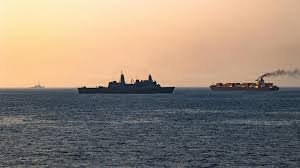
In parallel, Iran has announced a new maritime security measure in the strategically vital Strait of Hormuz. The newly established Persian Gulf Strait Authority said it has created a “supervision area” in the waterway, stating that vessels will now require prior permission to transit the passage. The move raises potential implications for global energy and shipping routes, given the strait’s role as a key chokepoint for oil transport.
Iran’s Islamic Revolutionary Guard Corps (IRGC) Navy separately said it facilitated the transit of more than 25 vessels, including oil tankers and container ships, through the Strait of Hormuz over a 24-hour period, claiming coordinated security arrangements. The IRGC also stated that 26 commercial vessels had passed through under its supervision.
Iranian parliamentary speaker and chief nuclear negotiator Mohammad Bagher Ghalibaf accused the United States of attempting to “start a new war,” alleging that Washington was pursuing military objectives alongside economic and political pressure.
In the United States, White House Deputy Chief of Staff Stephen Miller warned that Iran faced a stark choice between accepting a US-backed agreement or confronting military action “the likes of which has not been seen in modern history.” US President Donald Trump said negotiations were “right on the borderline” between agreement and renewed conflict, adding that Washington would allow only a limited window for diplomatic progress.
Iranian state media also reported that Pakistan’s Interior Minister Mohsin Naqvi had visited Tehran for the second time this week amid ongoing diplomatic efforts, highlighting Islamabad’s continued role as a mediator between Tehran and Washington.
Regional tensions have also expanded beyond the Iran-US track. In the Gulf, the United Arab Emirates urged Iraq to prevent attacks originating from its territory after accusing armed groups of launching a drone strike targeting a UAE nuclear facility. The UAE Foreign Ministry called for urgent action to stop hostile activities without conditions.
In Israel, far-right National Security Minister Itamar Ben-Gvir drew international condemnation after posting footage appearing to show detained Gaza-bound aid flotilla activists being mistreated in custody. Several countries, including Australia, France, Canada, Italy, the Netherlands, Belgium, and New Zealand, said they would summon Israeli diplomats in response, while others including the United Kingdom, Spain, Germany, Ireland, Türkiye, and Qatar also criticised the incident.
The Israeli military said its forces remain on “maximum alert,” with Chief of Staff Lieutenant General Eyal Zamir stating that the army is prepared for “any development” amid heightened regional escalation.
In Lebanon, the health ministry reported that Israeli strikes in the south have killed more than 20 people, despite a ceasefire arrangement that remains formally in place but is widely described as non-functional on the ground. Hezbollah said it carried out 24 attacks on Israeli positions, including rocket and drone strikes, and claimed to have repelled Israeli advances near Haddatha.
Meanwhile, Jordan’s armed forces said they intercepted and downed an unidentified drone that entered its airspace near Jerash, north of Amman, with no reported casualties.
The developments collectively reflect a widening regional escalation involving Iran, Israel, and multiple Gulf states, alongside intensified diplomatic manoeuvring led by the United States and Pakistan in efforts to prevent further conflict.