

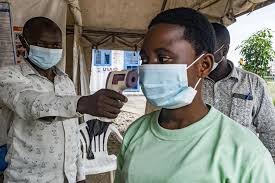
KINSHASA: The World Health Organization (WHO) has raised serious concern over the “scale and speed” of an Ebola outbreak in the Democratic Republic of Congo (DRC), where at least 131 people have died and more than 500 suspected cases have been reported, officials said on Tuesday.
The outbreak, centred in the conflict-hit northeastern province of Ituri Province, involves the rare Bundibugyo strain of Ebola, for which no approved vaccine or specific treatment currently exists.
Congolese Health Minister Samuel Roger Kamba said on national television that authorities had recorded around 131 deaths and approximately 513 suspected cases, though he cautioned that not all deaths had been clinically confirmed as Ebola-related due to limited laboratory testing in affected areas.
The outbreak figures have risen sharply from earlier estimates of 91 deaths out of 350 suspected cases, reflecting the rapid spread of the virus in remote and insecure regions where health access remains limited.
WHO Director-General Tedros Adhanom Ghebreyesus said the organisation had declared a high-level international health emergency response, warning that the situation was deteriorating quickly.
“I’m deeply concerned about the scale and speed of the epidemic,” Tedros said, adding that the decision to escalate the alert level was not taken lightly under international health regulations.
Health officials said the epicentre of the outbreak is located in Ituri, a mineral-rich and conflict-affected region bordering Uganda and South Sudan, where armed clashes and displacement have complicated containment efforts.
Authorities also reported suspected cases in neighbouring provinces including North Kivu, as well as cross-border transmission into Uganda, raising concerns of wider regional spread.
In Uganda’s capital Kampala, two confirmed cases were reported, including one death involving individuals who had travelled from the DRC, according to WHO officials.
The virus has also reached Goma, a key urban centre in North Kivu currently under the control of the Rwanda-backed M23 armed group, further complicating humanitarian access and response coordination.
The WHO and Africa Centres for Disease Control and Prevention have declared the outbreak a continental public health emergency, citing the difficulty of deploying medical teams and supplies in conflict zones.
Officials said insecurity, poor infrastructure, and community mistrust have slowed early detection and response efforts, with some communities initially attributing the illness to “mystical causes,” delaying hospital reporting.
The Bundibugyo strain of Ebola was first identified in 2007 and is known to have a fatality rate ranging between 30 and 50 percent. Unlike the more commonly targeted Zaire strain, no licensed vaccines are currently available for this variant.
The outbreak marks the 17th recorded Ebola epidemic in the DRC since the virus was first identified in 1976, with previous outbreaks causing thousands of deaths, including a major epidemic between 2018 and 2020.
International agencies, including the WHO and the International Committee of the Red Cross, have warned that ongoing armed conflict in eastern DRC could severely hinder humanitarian operations and outbreak containment efforts.
The United States has begun screening travellers arriving from affected regions and temporarily suspended visa services linked to outbreak-hit areas, while Germany has indicated readiness to treat infected foreign nationals if required.
Health experts have urged urgent international coordination, warning that delays in response could significantly increase both regional and cross-border transmission risks.