

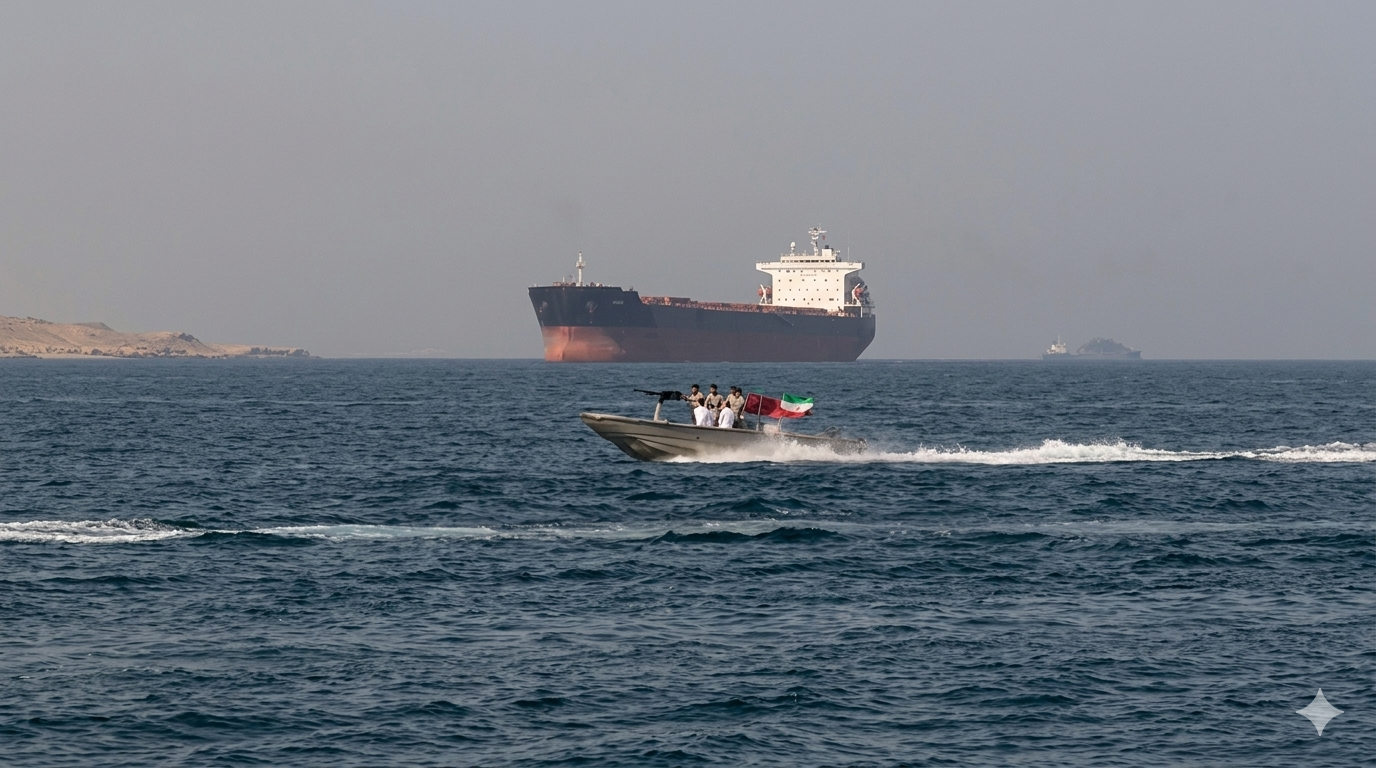
Iran’s top security body announced on Monday the formation of a new authority to oversee operations in the Strait of Hormuz, a strategically vital waterway that Tehran has effectively restricted since the outbreak of war with the United States and Israel earlier this year.
In a statement posted on its official X account, the Supreme National Security Council introduced the new body, named the Persian Gulf Strait Authority (PGSA), saying it would provide “real-time updates on the Hormuz Strait operations and latest developments.”
The post was also shared by the navy branch of Iran’s Islamic Revolutionary Guard Corps, commonly known as the Revolutionary Guards.
Iranian officials have not yet fully clarified the exact role or powers of the newly established authority. However, earlier this month, Iranian state broadcaster Press TV reported that the PGSA was part of a new system intended to exercise Iranian sovereignty over the Strait of Hormuz.
According to the report, ships passing through the waterway had begun receiving operational “regulations” from the official email address info@pgsa.ir, indicating Tehran’s efforts to formalise control measures over maritime traffic in the region.
The Strait of Hormuz has remained at the centre of escalating regional tensions since war broke out between Iran, the United States and Israel on February 28. Iran has since significantly restricted commercial shipping activity through the route, while a fragile ceasefire has been in place since April 8.
Iran’s tightening control over the waterway has alarmed global energy markets and shipping companies because the strait is considered one of the world’s most critical trade corridors.
Under normal conditions, the Strait of Hormuz handles nearly one-fifth of global oil and liquefied natural gas shipments, in addition to other major commodities including fertiliser and petrochemical products.
The disruption of maritime traffic through the strait has increased concerns over global energy supplies and freight costs, while simultaneously giving Tehran added geopolitical leverage in its confrontation with Western powers.
At the same time, the United States has imposed its own naval blockade on Iranian ports during the ongoing conflict, further intensifying pressure on regional trade routes.
Iranian officials have repeatedly stated that maritime operations in the Strait of Hormuz would not return to “pre-war status.” Last month, Tehran announced that it had received its first revenues from tolls imposed on vessels crossing the strategic passage.
On Saturday, Ebrahim Azizi, head of the Iranian parliament’s national security commission, said the country had prepared a “professional mechanism” to manage maritime traffic through the strait.
He added that the new system would soon be formally unveiled.
The Strait of Hormuz lies between Iran and Oman and connects the Persian Gulf to the Arabian Sea, making it one of the most strategically important waterways in the world. Any disruption to shipping through the corridor has historically triggered volatility in global oil prices and raised fears of broader regional instability.