

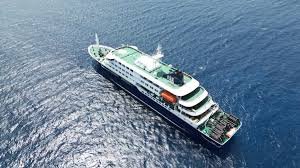
Argentina: The World Health Organization (WHO) has confirmed that eight passengers aboard the cruise ship MV Hondius have tested positive for the Andes virus, a rare and potentially severe strain of hantavirus that is capable of human-to-human transmission.
In its latest update, the UN health agency said eight cases have been laboratory-confirmed, while two additional cases are classified as probable and one case remains inconclusive and is undergoing further testing.
The outbreak has already resulted in fatalities, with three deaths reported among passengers since the ship departed Argentina on April 1 for a transatlantic cruise. According to the WHO, two of the deceased had confirmed Andes virus infections, while the third death is considered a probable case linked to the virus.
The WHO stated that all known infections are linked exclusively to individuals who were onboard the vessel. One of the inconclusive cases involves a US passenger who has been repatriated to the United States and is currently asymptomatic. The individual initially tested positive and then negative, and further laboratory analysis is ongoing.
Hantavirus is primarily transmitted through exposure to the urine, feces, and saliva of infected rodents. However, the Andes strain is the only known variant capable of human-to-human transmission, raising concerns in confined environments such as ships and remote outbreaks. There are currently no vaccines or specific antiviral treatments available for the disease.
The WHO has assessed the public health risk as moderate for individuals who were on board the cruise ship, while maintaining a low risk for the general global population.
Health investigators have not yet identified the origin of the outbreak. However, the WHO stated that initial infection likely occurred before the cruise began, noting that the first confirmed victim, a 70-year-old Dutch passenger, developed symptoms on April 6. Given that the incubation period for hantavirus ranges from one to six weeks, authorities believe exposure occurred prior to boarding.
The investigation into transmission patterns and the source of infection remains ongoing, with international health authorities continuing monitoring and contact tracing among passengers and crew.