

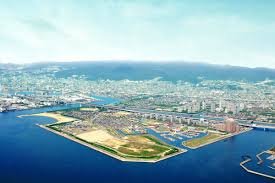
There is a rising wave of maritime redirection through the shipping routes of Asia beginning to transform the regional economics of trade, with energy logistics, alleviation of congestion of ports on the one hand and geopolitical upheavals and disturbances on the other, consolidating to provide new investment avenues in the Arabian Sea.
It is against this backdrop that the proposed mega-scale Energy City and multi-purpose terminal at Port Qasim are now being planned-developments that mirror a strategic movement towards positioning the maritime infrastructure as a key means of economic development as opposed to a peripheral one. Arab News reports that in 2025, Pakistan maritime made an historic profit of Rs100 billion (around $360 million), surpassing its previous best financial year recorded before a year of efficiency reforms and an operational restructuring.
Various efforts that have achieved this financial achievement have been noted to include cost reduction strategies, enhanced efficiency of the marine ports, and enhanced environmental regulation of the seas activities. The same reporting underlines these reforms have not only ensured that revenue flows improved but also that systemic inefficiencies that had long limited the shipping and logistics potential of the country were considerably reduced. Economically, turnaround is an indication that gradual reforms in the governance of infrastructure intensive sectors can deliver quantifiable fiscal implications in comparatively brief periods.
The latest suggested Energy City is at the centre of this growth plan. It will be an energy storage and logistics center, making it specifically designed to host bonded warehouses of various types of energy items such as petroleum and refined fuels. According to the claims of the officials quoted by Arab News, different locations are considered, which can be viewed as a combination of logistical optimization and the prospects of scaling in the future. The model is aimed at attracting the consortium-based investment, inviting the terminal operators and individual investments to finance and run the facility in common.
Macroeconomically, this strategy indicates that it will transform to hybrid infrastructure funding (public sector control and capital inclusion in the infrastructure). Capital-intensive port economies tend to use such models in order to distribute fiscal load evenly and speed up infrastructure delivery. Well realized, Energy City would act as a regional redistribution center of energy and might reduce bottlenecks of storage and operating efficiency of fuel supply chain across inland markets.
In line with this project is the construction of an all purpose terminal at Port Qasim (one of the major ports of the country with deep water) which is a major part of the country container and bulk cargo traffic. Port authorities are seeking to add more capacity to handle larger volumes and decrease congestion which has been a long-standing problem that has led to longer turnaround times and logistical charges in the past. In port economics, a shipping operator can save a lot in terms of its existing vessels waiting time by even a small percentage, which should enhance the position of a country in global indices of logistics competitiveness.
Incremental gains already are already indicated by the recent operational improvements. According to the Arab News, decades old containers and storage pallets, some of which were allegedly piled over a period of 50 years, were recently sold off the Karachi Port Trust premised. This decongestion initiative has allegedly increased the efficiency of handling cargo and lessening the amount of physical bottlenecks in the port ecosystem. Although this kind of intervention is apparently administrational in nature, it can make a big difference in enhancing throughput capacity and does not involve spending extensive amounts of capital on a single intervention.
Meanwhile, the maritime industry in Pakistan is facing a strange overturn in the demand side. Arab news reports that vessels arriving at major ports have been increasing as shipping ships bypass Gulf transshipment centers following instability in the region caused by the US-Iran conflict and counteractions such as Israeli and US interests. This diversion of shipping has brought a temporary surge in the Pakistani ports, a boon that can be received when throughput and utilization rates of operational boats are unexpectedly high.
Such changes highlight the susceptibility of international trade flows to geopolitical risk, economically. Secondary ports usually have a spill over benefit in terms of cargo handling demand when traditional hubs are disrupted. Nevertheless, these benefits are generally cyclical unless underpinned by the structural improvements to infrastructural and logistical capacity- namely the mismatch that Energy City and the multipurpose terminal will focus on correcting.
The increased strategic frame of these projects is designated as the blue economy agenda, whose watershed focuses on the rational monetization of the ocean-based resources, such as shipping, fisheries, energy, and the industry of the coast. The fact that Pakistan maritime industry will hit a mark of approximately 100 billion profit by 2025 as mentioned in the Arab News article offers a quantitative threshold that the industry is starting to transition to the stage of exploiting unrealized potential to a territory of economic activity.
However, the economic effect in the long run will be determined by whether these gains can be maintained when there are temporary trade rerouting effects. Maritime economists frequently warn that port-led growth necessitates dependent cargo flows, steady regulatory and incorporation into inland logistics systems. In the absence of the latter, even the well-thought infrastructure will be exposed to underutilization.
In specific terms, Energy City has a lot of multiplier potential provided that it is associated with industrial policy. It can make the import inefficiencies less effective, stabilize domestic fuel supply chains, and reduce the costs of the downstream industries including manufacturing industry, transport industry and power generation by centralizing the storage and distribution of the energy. In economies where imports of energy dominate, external inflation-controlling impacts also tend to occur in improvements in storage and distribution efficiency.
Equally an example of the competitive strength of exports is a fully operational multipurpose terminal at Port Qasim that can assist in minimizing the dwell times and improving container throughput. Logistics delays may also eliminate price competitiveness in the global markets in export-driven industries like textiles and agriculture. Any slight efficiency on port operations can be thus translated into quantifiable foreign exchange savings.
Regardless of this potential, there are still great challenges. Massive seapar infrastructure presupposes the ability to support capital inflow, coordination of institutions among a variety of regulatory institutions and stability of policy in the long term. Clear governance and hedged structures of returns are also important in boosting investor confidence in consortium-based models. Moreover, the external threat factors include geopolitical turmoil along refugee maritime routes and may impact shipping routes and cargo volumes.
Nevertheless, the policy shift points to a definite aim to restore maritime infrastructure as a fundamental economic resource. The mix of the increase in port revenues, efficiency reforms, and the development of new infrastructure suggests an intention to make the coastal geography the engine of industry and logistics.
Provided these plans are implemented as planned, they may trigger a paradigm change in the role played by maritime assets to drive national development; instead of passively being a means of transit, they may be viewed as offering a complete economic zone that provides energy security, efficiency in trade, and industrial growth to the same time.
Disclaimer: The views and opinions expressed in this article are solely those of the author and do not necessarily reflect the views, policies, or position of this website. The website does not endorse or oppose any opinion presented herein.
