

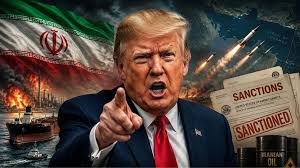
U.S. President Donald Trump on Sunday rejected Iran’s latest proposal aimed at ending the ongoing Middle East conflict, describing it as “totally unacceptable,” a move that signals continued diplomatic deadlock between Washington and Tehran.
Iran had earlier submitted its response to the latest U.S.-backed peace framework through mediators, including Pakistan. The proposal reportedly emphasized an end to hostilities across multiple fronts, particularly in Lebanon, and called for guarantees on maritime security in the Strait of Hormuz.
Trump, posting on Truth Social, offered no details of Iran’s counterproposal but dismissed it outright, stating he had reviewed it and found it “TOTALLY UNACCEPTABLE.”
The exchange comes amid continued military tensions involving Israel and Iran, with Israeli Prime Minister Benjamin Netanyahu reiterating that the conflict would not conclude until Iran’s enriched uranium is removed and its nuclear infrastructure dismantled.
Iranian President Masoud Pezeshkian maintained a defiant stance, stating on social media that Tehran would not “bow down” to external pressure and that dialogue should not be interpreted as surrender.
According to Iranian state media, Tehran’s response includes proposals for a phased end to hostilities and provisions on shipping security. However, U.S. officials have indicated that Washington’s proposal focused on a temporary truce in the Gulf to facilitate broader negotiations on Iran’s nuclear program.
The diplomatic standoff has contributed to volatility in global energy markets, with Brent crude rising sharply by 2.69% to $104.01 per barrel.
Netanyahu, speaking in a televised interview, insisted that Iran’s enriched uranium stockpile must be removed before any settlement can be reached. He also stated that the United States shares this position, although President Trump has previously suggested that Iranian nuclear materials are under close surveillance.
Meanwhile, reports indicate that Iran’s proposal, delivered via Pakistani mediation, includes conditions for the potential dilution of highly enriched uranium and its transfer to a third country, alongside guarantees for its return if negotiations collapse.
Tensions have also escalated in the Strait of Hormuz, where Iran has previously moved to regulate maritime traffic through toll mechanisms, drawing criticism from Washington, which considers the waterway an international transit route critical to global oil supply.
In response, Western allies including Britain and France are reportedly advancing plans for an international maritime security framework for the region, though French President Emmanuel Macron clarified that no unilateral naval deployment is planned.
Regional security concerns intensified further following drone incidents reported by the United Arab Emirates, Kuwait, and Qatar, which said multiple UAVs were intercepted or struck near sensitive airspace. No party has claimed responsibility for the attacks.
Iranian officials warned that any foreign naval presence in the Strait of Hormuz would be met with a “decisive response,” while also signaling a hardened posture toward U.S. military actions.
As diplomatic efforts stall and military activity persists across multiple theaters, the risk of further escalation in the Gulf region remains elevated.