

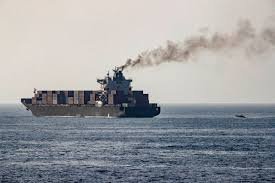
Iran said it had forced a U.S. warship to turn back from entering the Strait of Hormuz, escalating tensions despite a fragile ceasefire, while the United States denied any vessel had been struck.
A senior Iranian official told Reuters that Iranian forces had fired a warning shot, adding it was unclear whether the warship was damaged. Iran’s navy said it issued a “swift and decisive warning” to prevent what it described as “American-Zionist” forces from entering the strategic waterway.
Iran’s semi-official Fars news agency reported that two missiles hit the warship near the port of Jask, at the southern entrance to the strait. However, United States Central Command (CENTCOM) denied the claim, stating that no U.S. warship had been struck or damaged.
The incident comes amid rising tensions linked to “Project Freedom,” a U.S. initiative announced by President Donald Trump to escort stranded commercial vessels out of the Gulf. CENTCOM said the mission would involve around 15,000 personnel, warships, drones, and more than 100 aircraft, alongside enforcement of a naval blockade on Iranian ports.
Trump said the United States would ensure that ships from “neutral and innocent” countries could safely exit restricted waterways, warning that any interference would be “dealt with forcefully.”
In response, Iran’s unified military command warned commercial shipping to coordinate all movement with Iranian forces, asserting that security of the Strait of Hormuz is under Iran’s control. Commander Ali Abdollahi said foreign military forces would be attacked if they attempted to enter the area without authorization.
The Strait of Hormuz — a vital route for around 20% of global oil and gas shipments — has been largely blocked for over two months, with Iran restricting most maritime traffic. The disruption has cut off significant energy flows and driven oil prices up by more than 50%, with prices rising an additional 5% following the latest incident.
Shipping remains severely affected. According to the International Maritime Organization, hundreds of vessels and up to 20,000 seafarers are stranded in the region. German shipping firm Hapag-Lloyd said transit through the strait remains too risky to resume.
Industry executives have warned that military escorts alone are insufficient to restore normal shipping, calling instead for a comprehensive ceasefire and political agreement.
Separately, the United Arab Emirates accused Iran of carrying out a drone attack on an empty crude oil tanker operated by state firm ADNOC as it attempted to transit the strait.
In a rare de-escalatory move, Pakistan said the United States had released 22 crew members from an Iranian container vessel seized last month, describing the step as a “confidence-building measure” amid ongoing diplomatic efforts.
While large-scale U.S.-Israeli strikes on Iran have been paused for weeks, negotiations remain stalled. Iranian state media said Washington had responded to a 14-point Iranian peace proposal via Pakistan, and that Tehran is currently reviewing the response.
A senior Iranian official said Tehran aims to end the conflict across all fronts, including tensions involving Israel and Lebanon, while addressing the shipping crisis first before entering detailed discussions on its nuclear programme.
Washington continues to demand that Iran give up its stockpile of highly enriched uranium, which it says could be used to build a nuclear weapon. Iran maintains its programme is peaceful, though it has signaled willingness to discuss limited restrictions in exchange for sanctions relief.
The situation remains highly volatile, with risks of further escalation in one of the world’s most strategically critical waterways.