

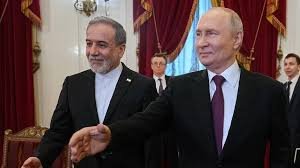
Vladimir Putin said Moscow would do “everything possible” to help secure a peace agreement in the Middle East, as negotiations between the United States and Iran remain deadlocked over nuclear demands and the closure of the Strait of Hormuz.
Putin made the remarks during talks in St Petersburg with Iran’s Foreign Minister Abbas Araghchi, who is on a multi-stop diplomatic tour following stalled negotiations. The Russian leader reaffirmed Moscow’s support for Tehran and emphasized the importance of achieving a negotiated settlement.
Araghchi, who recently visited Islamabad and Oman as part of mediation efforts, said the failure of the talks was due to what he described as “excessive demands” from Washington. Iranian officials have conveyed proposals to the US through intermediaries, including Pakistan, outlining red lines on nuclear issues and maritime restrictions.
US President Donald Trump met with his national security team to review Tehran’s latest proposal, which reportedly includes reopening the Strait of Hormuz in exchange for easing US naval restrictions, while deferring nuclear negotiations to a later stage. The White House declined to comment in detail, citing the sensitivity of ongoing discussions.
US Secretary of State Marco Rubio said Iran appeared “serious” about reaching a deal but stressed that any agreement must prevent Tehran from acquiring nuclear weapons. He also pointed to Iran’s deteriorating economic conditions as a factor driving its negotiating posture.
Meanwhile, tensions spilled over at the Nuclear Non-Proliferation Treaty review conference in New York City, where US and Iranian officials exchanged sharp criticism over Tehran’s nuclear programme. Washington opposed Iran’s appointment to a senior conference role, while Russia defended Tehran against what it called selective criticism.
Iran also criticised the European Union for maintaining sanctions, after Ursula von der Leyen said it was premature to consider lifting them.
The diplomatic impasse underscores widening divisions over nuclear policy and regional security, with no immediate breakthrough in sight despite intensified international engagement.