

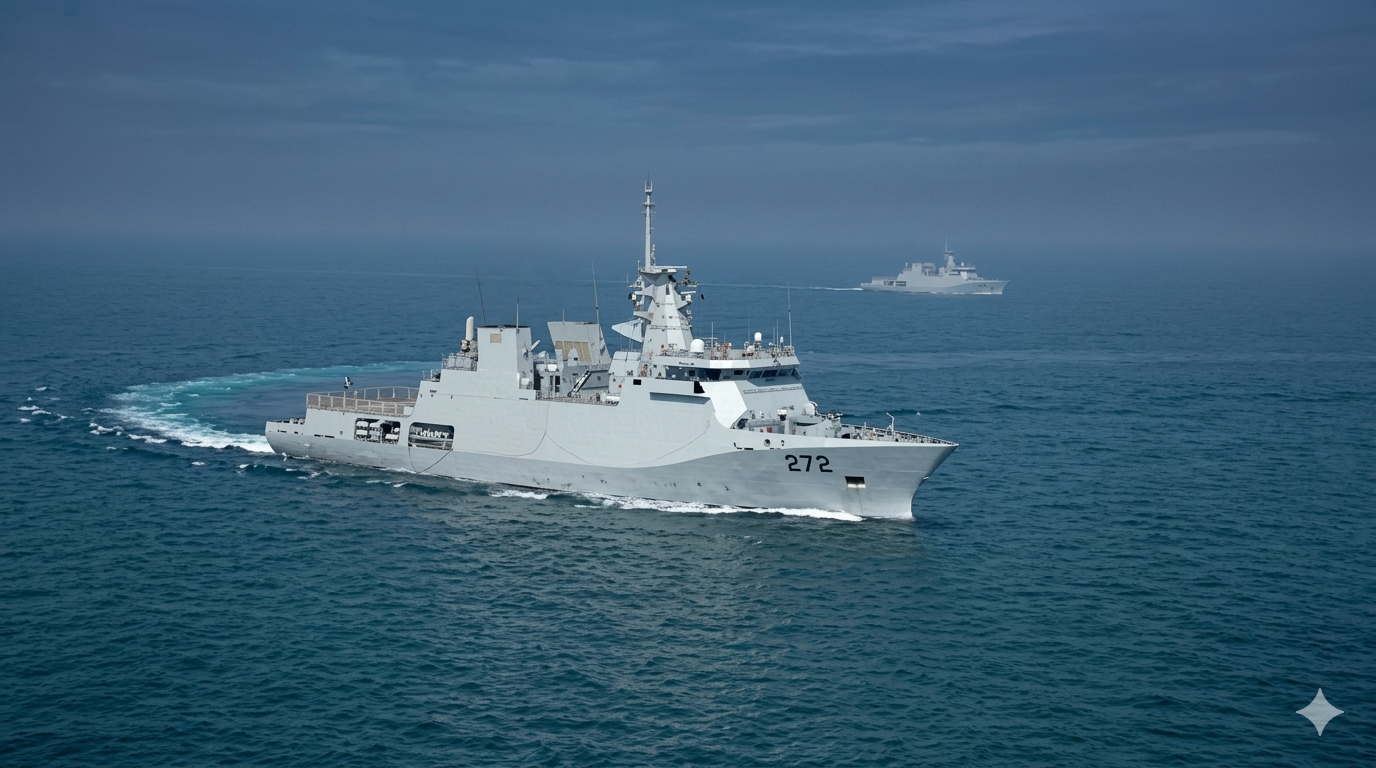
In contemporary security environments, shifts in doctrine are often revealed less through declaratory policy and more through capability demonstration. Pakistan’s recent anti-ship missile test fits squarely within this pattern. Rather than a routine validation exercise, it reflects an incremental but meaningful evolution in Pakistan’s deterrence posture, one that aligns with broader transformations in strategic thought across the maritime domain.
Classical deterrence theory, as developed during the Cold War, was anchored in the logic of mutually assured destruction and strategic stability at the nuclear level. However, as scholars of Security Studies have long argued, deterrence is not static. It adapts to technological change, shifting threat perceptions, and evolving domains of conflict. In this context, Pakistan’s latest test can be interpreted through the lens of deterrence by denial, a concept that emphasizes the ability to prevent adversary success rather than merely threaten punitive retaliation.
The maritime domain has emerged as a critical arena for the application of this logic. The Arabian Sea, once peripheral to South Asia’s security calculus, is now central to it. Sea lines of communication, energy flows from the Gulf, and the increasing militarization of the Indian Ocean have elevated the strategic value of naval capabilities. India’s sustained naval modernization, combined with the presence of extra-regional actors such as the United States and China, has further intensified this environment. Within such a setting, anti-ship missile systems serve as instruments of sea denial, complicating adversarial operations and raising the operational costs of power projection.
From a theoretical standpoint, this development also reflects elements of escalation control and limited war doctrine. Nuclear deterrence, while effective at preventing total war, offers limited flexibility in sub-conventional or gray-zone scenarios. The integration of precision-guided conventional systems provides policymakers with a broader spectrum of response options, thereby strengthening what is often termed credible minimum deterrence. This layered approach enables calibrated signaling without immediate recourse to nuclear thresholds, reducing the risks associated with binary escalation pathways.
At the core of this evolving posture lies a foundational framework within deterrence theory. In security studies, particularly within deterrence theory and international relations, the three Cs represent the pillars of a successful deterrent strategy: Capability, Credibility, and Communication. These elements are interdependent and collectively aim to shape an adversary’s decision-making by ensuring that the perceived costs of aggression outweigh any potential gains. Pakistan’s recent missile test speaks directly to this framework. The demonstration of advanced anti-ship capability strengthens the material component of deterrence. Its operational validation contributes to credibility by signaling readiness and resolve. Equally important is communication, both implicit and explicit, through which such tests convey strategic intent to multiple audiences, including adversaries, allies, and the domestic sphere.
At the same time, the introduction of such capabilities interacts with the enduring security dilemma in South Asia. Measures taken by one state to enhance its security are frequently interpreted as threatening by others, prompting countermeasures that can lead to cycles of action and reaction. In the absence of robust confidence-building mechanisms, even defensive enhancements, such as anti-ship missile deployments, may be perceived through an escalatory lens. This dynamic underscores the delicate balance between strengthening deterrence and avoiding inadvertent escalation.
Beyond the strategic and theoretical dimensions, there is also a question of doctrinal integration. The effectiveness of any capability depends on how well it is embedded within a broader operational framework. This includes inter-service coordination, command and control structures, and the articulation of clear rules of engagement. Without such integration, even advanced systems risk being underutilized or misinterpreted in crisis situations.
The geopolitical context further complicates this equation. South Asia does not operate in isolation. Developments in the Gulf, shifting alignments in the Indo-Pacific, and the strategic competition between major powers all intersect in the waters surrounding Pakistan. As a result, actions taken at the national level are often interpreted within a wider systemic framework. This amplifies both the signaling value and the potential risks associated with military developments.
Additionally, Pakistan’s emphasis on indigenous capability development reflects a pursuit of strategic autonomy, a concept increasingly emphasized in contemporary security discourse. By reducing reliance on external suppliers, states seek to insulate their defense policies from geopolitical pressures. However, achieving such autonomy requires sustained institutional commitment and long-term investment, particularly in research, development, and industrial capacity.
Looking ahead, the challenge lies not in the possession of capability, but in its management. As precision-guided systems become more prevalent, the distinction between deterrence and compellence can become blurred. The availability of more usable options may lower the threshold for limited engagements, particularly in contested domains such as the maritime space. This makes the role of communication, doctrine, and crisis management mechanisms even more critical.
Pakistan’s recent missile test should therefore be understood as part of a broader transition toward multi-domain deterrence, where land, sea, and other emerging domains are integrated into a cohesive strategic framework. Whether this transition contributes to stability or introduces new complexities will depend on how effectively these capabilities are aligned with doctrinal clarity and diplomatic engagement.
In strategic terms, deterrence is not merely about the accumulation of power. It is about the structured alignment of capability, credibility, and communication in ways that shape adversarial behavior while preserving stability. Pakistan’s evolving maritime posture reflects an awareness of this reality. The task ahead is to ensure that this evolution reinforces deterrence without amplifying the risks inherent in an already fragile regional security environment.
Disclaimer: The views and opinions expressed in this article are solely those of the author and do not necessarily reflect the views, policies, or position of this website. The website does not endorse or oppose any opinion presented herein.

