

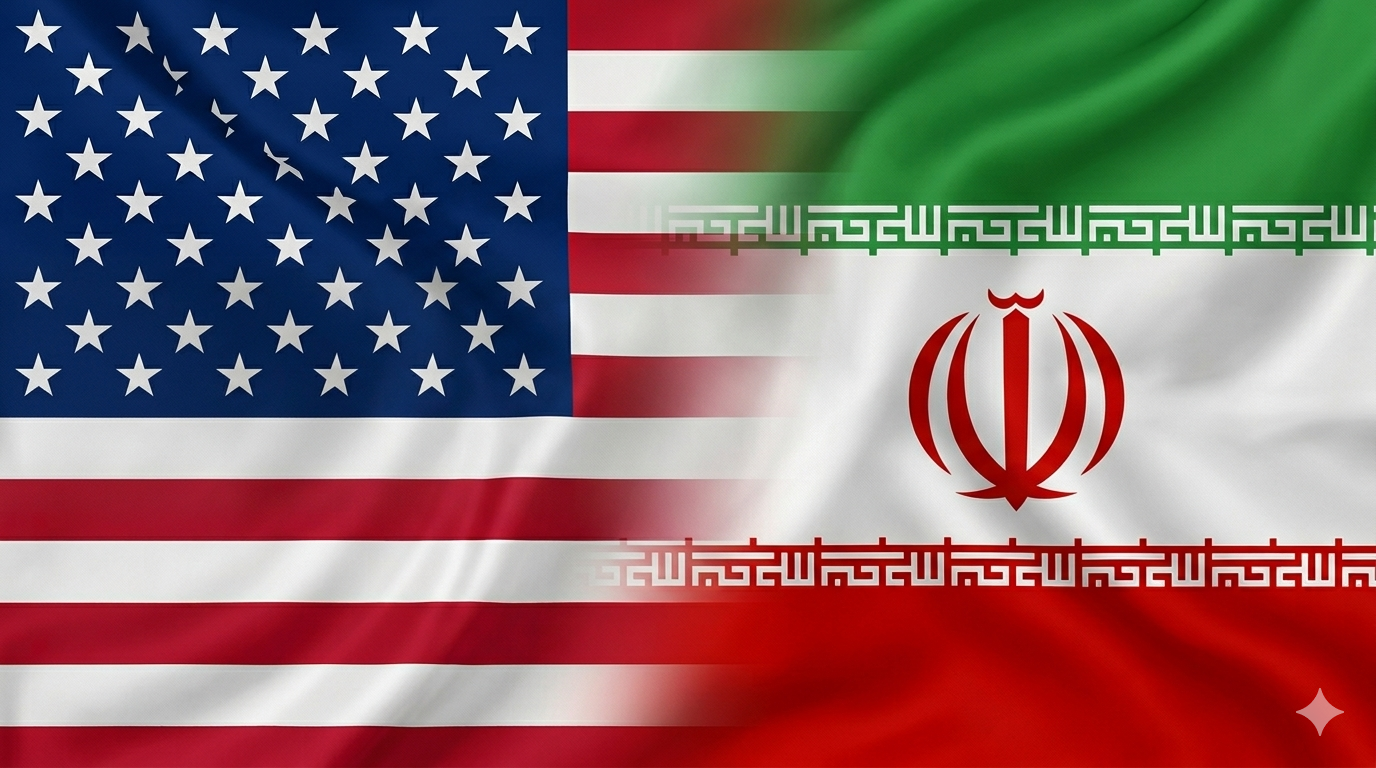
In the anarchic arena of international relations, where great-power rivalry and zero-sum calculations often derail peace initiatives, Pakistan has emerged as an indispensable honest broker. Without the need for binding treaties, media spectacles, or coercive leverage, Islamabad secured an indefinite extension of the US-Iran ceasefire in April 2026. When direct negotiations in its own capital appeared deadlocked and the two-week truce was hours away from collapse, Pakistani leadership exercised classic preventive diplomacy and shuttle diplomacy, persuading Washington to freeze military escalation purely on the strength of its credibility. This is not a one-off tactical win. It is the latest chapter in Pakistan’s consistent record of middle power mediation – a model of strategic autonomy and multi-alignment that positions Islamabad as a genuine bridge-builder in a fractured region.
Pakistan’s Historical Legacy: From Back-Channel Broker to Regional Stabilizer
Pakistan’s credentials as a mediator are deeply rooted in its foreign policy DNA. As early as 1971, under President Yahya Khan, Pakistan demonstrated unparalleled back-channel diplomacy by facilitating Henry Kissinger’s secret visit to Beijing – a pivotal move that reshaped the global balance of power and opened the US-China rapprochement. This was classic middle power diplomacy at work: leveraging geographic positioning and trusted relationships to unlock doors closed to superpowers.
During the Soviet occupation of Afghanistan, Pakistan played a central role in the 1988 Geneva Accords, providing the diplomatic scaffolding and safe havens that eventually forced Soviet withdrawal. In 2020, Islamabad lent critical support to the Doha Agreement between the United States and the Taliban, once again proving its value as a reliable interlocutor in protracted conflicts. Even in the bitter Saudi-Iran rivalry of the 2010s, Pakistan repeatedly offered its good offices. Under Prime Minister Nawaz Sharif, Islamabad hosted multiple rounds of quiet talks and confidence-building measures (CBMs) aimed at de-escalating sectarian tensions. Its principled refusal to recognize Israel, combined with deep military-to-military ties to both Washington and Gulf capitals, has given Pakistan a rare strategic autonomy that no other actor in the region can match.
These historical efforts underscore a consistent pattern: Pakistan does not chase hegemony. It pursues preventive diplomacy rooted in cultural affinity, geographic contiguity with Iran, and economic interdependence with the Gulf. Unlike great powers burdened by imperial legacies or ideological crusades, Pakistan brings clean hands and genuine stakes – the very attributes that make it an effective honest broker in international relations theory.
The Islamabad Accord: A Practical Blueprint for De-Escalation
Building on this legacy, Pakistan crafted the Islamabad Accord in early 2026 – a two-phase framework that combined an immediate ceasefire with the reopening of the Strait of Hormuz as a goodwill CBM, followed by structured negotiations. This pragmatic roadmap was quickly adopted as the working document by both Washington and Tehran. China’s public endorsement of the plan further amplified its legitimacy through coordinated multi-alignment between Islamabad and Beijing.
The 2026 US-Iran Crisis: When Shuttle Diplomacy Delivered Results
As US-Israeli strikes and the Hormuz blockade threatened to engulf the region in wider war, Pakistan refused to remain a passive spectator. Prime Minister Shehbaz Sharif and Field Marshal Asim Munir launched intensive shuttle diplomacy, hosting the first direct high-level US-Iran talks in Islamabad on 11-12 April. The Pakistani capital became a fortified diplomatic nerve center, drawing foreign ministers from Saudi Arabia, Turkey, and Egypt – a rare convergence that turned Islamabad into the unofficial diplomatic capital of the Muslim world.
Field Marshal Munir’s high-level visit to Tehran just days before the talks, coupled with back-channel contacts with senior US officials, helped broker the initial two-week ceasefire that took effect around 8 April.
When the Ceasefire Was Hours from Collapse: The World Held Its Breath
By 21-22 April 2026, the two-week ceasefire was on the verge of expiry. Global markets were already pricing in disaster – oil prices had spiked again amid fears of renewed blockade of the Strait of Hormuz. International media and analysts openly speculated about what would come next: a return to full-scale US-Israeli strikes, Iranian retaliation that could draw in the entire region, and a possible wider conflict involving multiple actors.
The situation turned even more critical when both sides signalled they would not attend the second round of talks in Islamabad. Iran cited internal coordination issues and hesitated to send a full delegation, while the United States gave no firm confirmation of participation. Diplomatic momentum appeared to evaporate overnight. The world was staring into the abyss – watching anxiously as the clock ticked down on a fragile truce that had already prevented catastrophe once. Pessimists predicted an immediate return to hostilities; optimists hoped for last-minute miracles that no one expected.
It was at this precise moment of deadlock and despair that Pakistan’s leadership refused to let hope die. Prime Minister Shehbaz Sharif and Field Marshal Asim Munir made urgent, direct appeals to Washington. Drawing on Pakistan’s unique position as the only actor trusted by both sides, they requested a straightforward but profound extension of the ceasefire. Their argument was clear and compelling: preserve the diplomatic opening, give Iran the space needed to present a unified position, and prevent the region from sliding back into war.
When Talks Stalled, Credibility Triumphed
President Donald Trump responded publicly on Truth Social, explicitly crediting Pakistan:
“At the request of Prime Minister Shehbaz Sharif and my favourite Field Marshal Asim Munir of Pakistan, we will hold our attack on the Country of Iran… negotiations will continue.”
The result was nothing short of historic: an indefinite extension of the US ceasefire with Iran, achieved without any new formal agreement, without the second round of talks even taking place, and precisely when both parties had decided against returning to the negotiating table in Islamabad. Pakistan had once again delivered peace through pure diplomatic weight – extending the truce when negotiations appeared to have completely failed. In IR terms, this was quiet mediation and preventive diplomacy at its finest: results over optics, substance over spectacle.
Why This Victory Matters for Pakistan and the Region
This success is more than a tactical pause. It safeguards Pakistan’s economic lifelines – remittances from over three million citizens in the Gulf, stable oil prices, and secure shipping routes – while preventing dangerous spillover along its western border with Iran. More importantly, it dramatically enhances Pakistan’s soft power and global stature. A nation often viewed through the narrow lens of internal challenges has once again demonstrated its capacity as a mature, responsible middle power capable of shaping outcomes far beyond its borders.
In an era when great-power paralysis frequently leads to conflict, Pakistan’s multi-vector foreign policy and proven track record of honest brokerage offer a refreshing alternative model. It reminds scholars of international relations that middle powers, armed with credibility rather than raw military might, can still steer history.
A New Paradigm for Global Peace
Pakistan did not merely extend a ceasefire – it proved that preventive diplomacy and honest brokerage remain potent tools in the 21st-century international system. When superpowers reached deadlock and both sides walked away from the table, Islamabad kept the door to dialogue open. When the region needed a bridge, Pakistan became that bridge. In a fractured Middle East plagued by rivalry and mistrust, Pakistan today shines not as a bystander, but as a genuine beacon of hope – a country that continues to deliver peace when others only promise it.
This is Pakistan’s moment. A proud chapter written not with weapons, but with the quiet strength of diplomacy. And the region – and the world – is better for it.
Disclaimer: The views and opinions expressed in this article are solely those of the author and do not necessarily reflect the views, policies, or position of this website. The website does not endorse or oppose any opinion presented herein.