

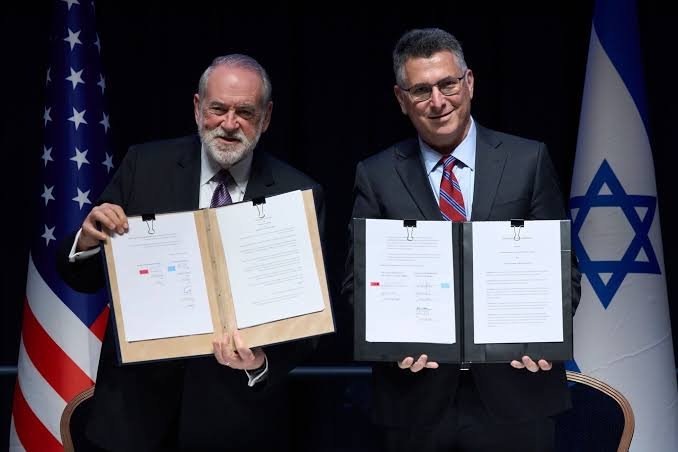
JERUSALEM: The United States and Israel have signed an agreement granting the US a long-term lease on land in West Jerusalem for the construction of a permanent American embassy, further cementing Washington’s diplomatic presence in the disputed city.
Under the agreement, Israel will lease the land to the United States for a nominal annual fee of $1, paving the way for the construction of a purpose-built embassy complex. The move formalises the US diplomatic presence in Jerusalem, where the American embassy has operated from a temporary facility since 2018.
What does the agreement provide?
The lease allocates a site in West Jerusalem for a permanent US embassy, replacing the current embassy compound established after Washington relocated its mission from Tel Aviv during President Donald Trump’s first administration.
The symbolic $1 annual lease reflects the close strategic relationship between the United States and Israel and is intended to facilitate the development of a permanent diplomatic headquarters.
Why is the move significant?
The agreement reinforces the US decision to recognise Jerusalem as Israel’s capital, a policy shift announced in 2017 that broke with decades of American diplomatic practice and prompted widespread international criticism.
Most countries continue to maintain their embassies in Tel Aviv, arguing that the status of Jerusalem should be determined through negotiations between Israelis and Palestinians.
How does it affect the Israeli-Palestinian conflict?
The embassy agreement is expected to further complicate prospects for a negotiated two-state solution.
Palestinians seek East Jerusalem as the capital of a future independent Palestinian state, while Israel considers Jerusalem its “complete and united” capital.
Although the new embassy site is located in West Jerusalem, many analysts argue that expanding the US diplomatic footprint in the city strengthens Israel’s claims over Jerusalem and may further diminish confidence in future peace negotiations.
What has been the international position?
The international community has generally maintained that the final status of Jerusalem should be resolved through direct negotiations between Israel and the Palestinians in accordance with international law and relevant United Nations resolutions.
The relocation of the US embassy in 2018 and the latest agreement for a permanent facility have remained contentious issues, with critics arguing they undermine efforts to achieve a negotiated settlement to the decades-long Israeli-Palestinian conflict.