

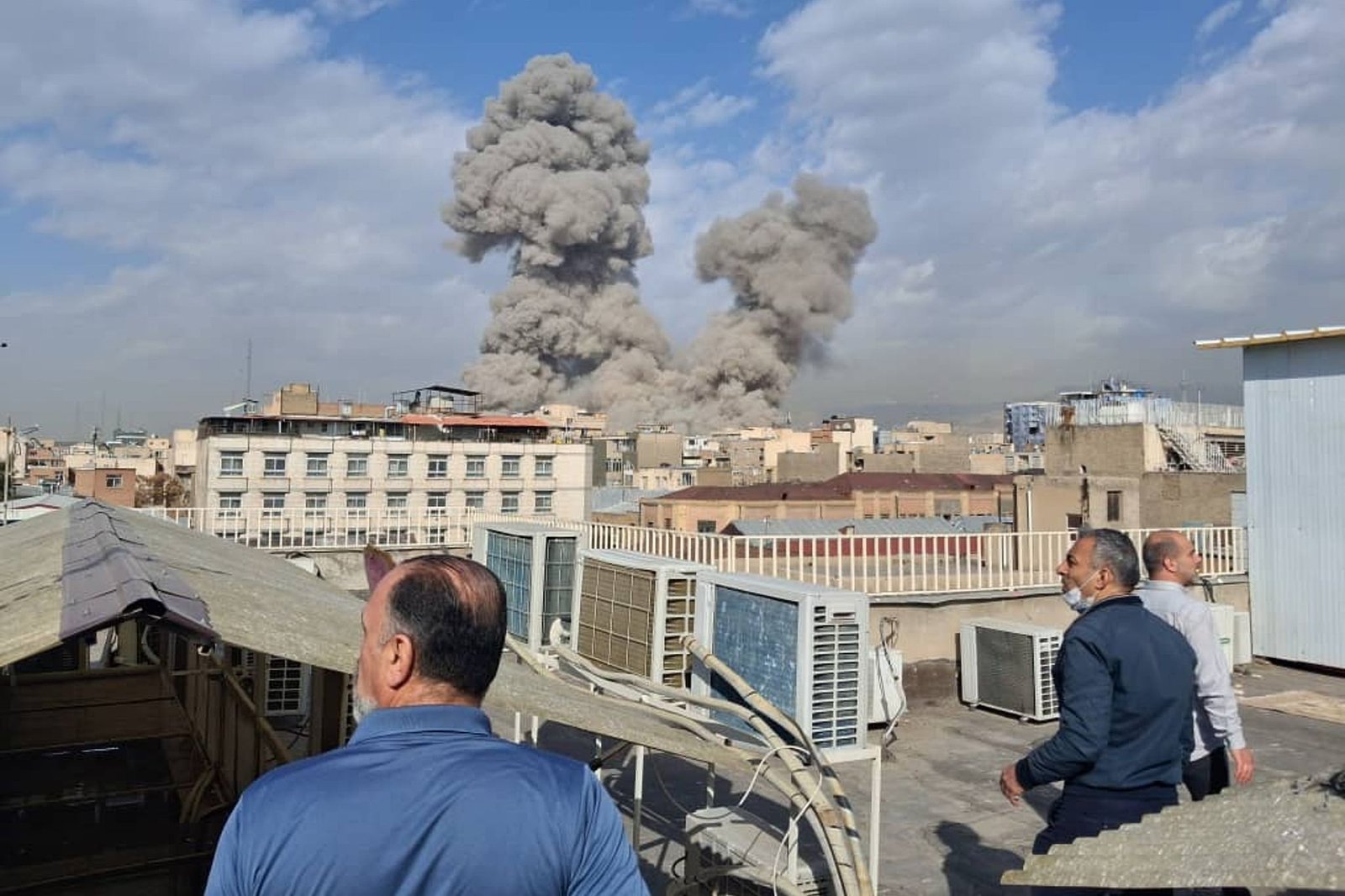
A major military escalation unfolded today as the United States and Israel launched coordinated air and missile strikes against multiple targets inside Iran, including in the capital Tehran and other cities. The operation, described by U.S. officials as “major combat operations”, targeted Iranian military infrastructure and leadership sites; initial strikes reportedly occurred near the offices of Supreme Leader Ayatollah Ali Khamenei, although Iranian authorities say he was not in Tehran and was moved to a secure location. Explosions and smoke were widely observed in Tehran, prompting closures of airspace and emergency measures within Iran and across the region.
Iran responded to the attacks with its own military action, firing missiles and drones toward Israel and U.S. bases in the Gulf, including Bahrain, Qatar, and the United Arab Emirates, according to statements by Iran’s Revolutionary Guard. There were reports of at least one confirmed death at a girls’ school in Minab due to the strikes, marking among the first civilian casualties reported. In addition, international airlines have suspended or rerouted flights across Middle Eastern airspace amid heightened safety concerns and widespread closures of air routes.
U.S. President Donald Trump used the strikes to intensify pressure on Iran’s regime, vowing to cripple its missile and nuclear capabilities and urging Iranian citizens to rise up against their government. Trump framed the action as necessary to address what the U.S. views as existential threats from Iran’s nuclear and missile programs. In contrast, Iranian officials have condemned the attacks and vowed strong retaliation, emphasizing national defense and warning of further military responses.
The situation comes amid ongoing diplomatic tension, with recent talks between Iranian and U.S. negotiators having made some progress on nuclear issues, but failing to resolve core disputes over missiles and enforcement. Meanwhile, Iranian state and allied media are reporting cyberattacks on Iranian news websites and intermittent disruptions to internet and mobile services as part of the broader conflict environment.