

13 March 2026 — Day 14
Over the 24-hour period, combined US-Israeli forces struck over 200 targets in western and central Iran, including ballistic missile launchers, air defense systems, weapons production sites, IRGC bases, naval facilities, and intelligence installations. Key sites targeted included a nuclear-related explosives testing facility near Parchin, a naval base in Chabahar, and multiple locations in Tehran, Qom, and Alborz provinces. The strikes produced large smoke plumes over Tehran and areas connected to Hezbollah operations. US forces reported the destruction of more than 30 Iranian minelaying ships and associated naval infrastructure.
Iranian forces launched multiple missile barrages into northern and central Israel overnight, including strikes near Tel Aviv and Jerusalem, triggering sirens and causing injuries. Hezbollah coordinated attacks from southern Lebanon, firing more than 100 rockets, some using cluster munitions to overwhelm Israeli defenses. At least 30 people were wounded in northern Israel and damage was reported to civilian structures. Iranian authorities also claimed attacks on US and Israeli bases in the Gulf, though many were intercepted or caused limited damage.
Political leaders on all sides issued strong statements during the period. Israel’s prime minister defended the ongoing campaign and warned Iran’s new Supreme Leader, Mojtaba Khamenei, that operations would continue until Iran was sufficiently weakened. Mojtaba Khamenei vowed to maintain blockages in the Strait of Hormuz and continue attacks on US bases in the region. The US president described the campaign as proceeding successfully and pledged to continue efforts despite costs exceeding $11 billion in the first week. Israeli defense authorities announced preparations to expand operations against Hezbollah positions in southern Lebanon.
Casualty figures for the period remain disputed. Iranian officials report more than 1,200 civilian deaths in Iran, while independent estimates put civilian deaths at approximately 1,348, with thousands more affected by military strikes. In Israel, 13–15 people were killed and over 30 injured in missile attacks during 12–13 March, with cumulative conflict-related injuries exceeding 1,000. In Lebanon, at least 570 casualties have been reported from strikes on Hezbollah positions, while limited casualties occurred in Gulf states due to attempted Iranian attacks. Displacement estimates indicate up to 3.2 million people affected in Iran and over 800,000 in Lebanon. The conflict has driven oil prices above $100 per barrel and prompted global market volatility, while tens of thousands of Americans have been evacuated from the region.
No major new ground operations inside Iran were reported during the 24-hour window, with military activity concentrated on aerial strikes and retaliatory barrages. Analysts warn that the humanitarian impact continues to grow, and the conflict shows no signs of de-escalation, with both sides maintaining high operational readiness.
12 March 2026 — Day 13
The joint United States–Israeli military campaign against Iran entered its thirteenth day with some of the heaviest airstrikes reported since the beginning of the conflict. The latest bombardments targeted Tehran, military infrastructure, and internal security installations, while hostilities expanded across the wider region, including naval incidents in the Strait of Hormuz and intensified clashes involving regional proxy groups.
Airstrikes overnight focused heavily on Tehran, where explosions were reported near military and security installations. Targets included facilities associated with the Islamic Revolutionary Guard Corps (IRGC) Quds Force, weapons research sites, oil depots, and parts of the power grid. Fires and significant damage were reported in several areas, and electricity outages affected suburbs including Pardis, Fardis, Karaj, and Shahriar. Drone strikes were also reported against Basij checkpoints, while additional attacks hit internal security facilities in Ilam Province.
Elsewhere in Iran, strikes were reported in Tabriz against facilities linked to the Revolutionary Guard and local police stations. Fuel depots in Qom were also struck, causing large explosions. In Esfahan, damage was reported at aviation and drone production sites believed to be linked to Iran’s military infrastructure. In Kerman, fuel facilities near the airport were hit, apparently aimed at disrupting Iranian air force logistics. Additional strikes were reported near border areas between Al-Ahwaz and Iraq.
The conflict also expanded beyond Iran’s borders. In Lebanon, large-scale Israeli airstrikes targeted Beirut’s southern suburbs, areas widely associated with Hezbollah. Several apartment buildings were damaged, prompting evacuations, while clashes intensified along the Israel–Lebanon border where Israeli armored units were reported massing.
Iran continued retaliatory attacks, launching multiple waves of missiles and drones toward Israel. Air raid sirens sounded across central and northern Israel, including Tel Aviv and surrounding areas. Iranian projectiles reportedly targeted military facilities, radar systems, and industrial infrastructure near Haifa.
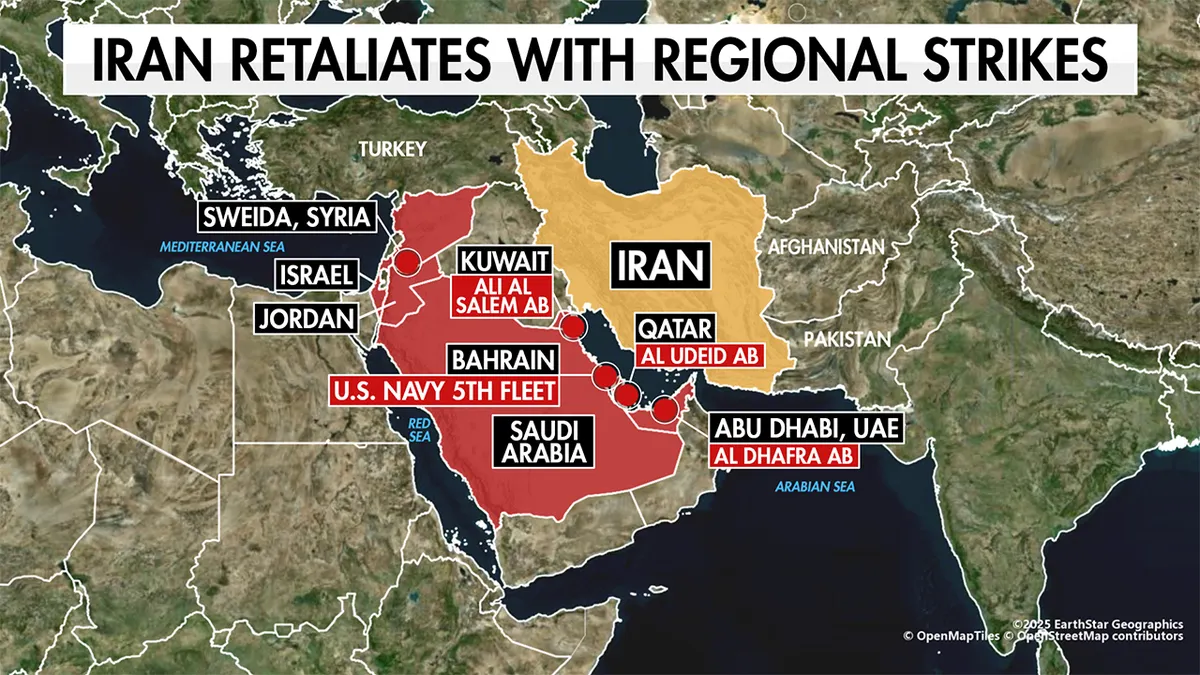
Iran also carried out attacks against United States military installations in the Gulf region. Drones and missiles were reported near American bases in Kuwait, Saudi Arabia, Bahrain, and the United Arab Emirates. Two drones struck near a U.S. diplomatic facility close to Baghdad International Airport.
Maritime security in the Strait of Hormuz deteriorated significantly as several commercial vessels were struck or damaged by projectiles. Shipping incidents were reported involving a Greek-owned tanker near the Iraqi coast and other merchant vessels operating in the Gulf. Fires were also reported on a cargo ship north of Ras al-Khaimah. Drone strikes targeted the Ruwais industrial complex in the UAE, while two drones exploded near Dubai International Airport, injuring several people.
Iran also deployed naval mines in the Strait of Hormuz, temporarily disrupting tanker traffic through the strategic waterway. U.S. naval forces responded by destroying several small Iranian vessels reportedly involved in laying mines in the area.
Casualty figures remain difficult to verify due to limited access and the ongoing conflict. Iranian officials reported more than 1,300 deaths and thousands of injuries since the fighting began, while humanitarian agencies warned of significant civilian displacement in both Iran and Lebanon. In Lebanon, recent strikes reportedly killed more than a dozen people, adding to a rising death toll from weeks of cross-border fighting.
The United States reported dozens of injured service members since hostilities escalated earlier this year, with several fatalities confirmed since late February. Israeli authorities reported limited casualties from the latest missile attacks, with many projectiles intercepted by air defense systems.
The fighting has also begun to affect global markets and trade routes. With the Strait of Hormuz effectively closed to tanker traffic, oil prices surged sharply amid fears of prolonged supply disruptions. International energy agencies are reportedly considering the release of strategic reserves to stabilize markets.
Diplomatic efforts to de-escalate the conflict have so far stalled. Iranian leaders have rejected negotiations under current conditions and demanded compensation for damages caused by the strikes. Western governments have continued consultations through international forums, but no ceasefire agreement has been reached.
Security agencies in several countries have also raised alerts over potential cyberattacks and financial disruptions linked to the conflict. Meanwhile, shipping insurers have sharply increased surcharges for vessels operating in the region as maritime risks continue to rise.
With hostilities spreading across multiple fronts and no clear diplomatic breakthrough in sight, the conflict between Iran, Israel, and the United States threatens to deepen instability across the Middle East and disrupt global energy and trade networks.
11 March 2026 — Day 12
The ongoing Iran–US–Israel conflict entered its 12th day on Wednesday, with intensified military operations, rising casualties and renewed diplomatic efforts.
Military officials in US described March 10 as one of the most intense days of the campaign, with joint US-Israeli operations striking Iranian military infrastructure, oil facilities and command centers.
Targets included Islamic Revolutionary Guard Corps (IRGC) headquarters, missile bases and fuel depots, including the Shehran oil depot in Tehran, where large fires were reported after the strike. Since the start of the war, officials claim that between 300 and more than 5,000 targets have been hit across Iran.
US naval forces also destroyed at least 16 Iranian vessels suspected of laying naval mines near the Strait of Hormuz, raising tensions around the strategic shipping route.
Meanwhile, Iran accused Israel of conducting an airstrike on a school in Khomein in western Iran, resulting in heavy casualties. The strike was described by some commentators as a “double-tap” attack, in which a second strike reportedly hit rescuers responding to the initial blast.
Israeli security analysts reported that Iranian attacks are increasingly targeting northern Israel, including areas near energy and industrial facilities.
Iran responded with multiple waves of missile and drone attacks against Israeli territory and regional military targets.
One of the major barrages, referred to as “Wave 37,” lasted around three hours, during which Iran launched ballistic missiles carrying one-ton warheads as well as cluster munitions toward Tel Aviv, Haifa and other central areas of Israel.
Iran also launched drones and missiles targeting US military bases in Iraq, including the Harir Air Base, as well as sites in Saudi Arabia, Kuwait, the United Arab Emirates, Bahrain and Qatar. Gulf air-defense systems intercepted 17 missiles and six drones during these attacks.
In another development, a ballistic missile fired from Iran was intercepted over Türkiye by NATO air-defense systems, highlighting the widening geographic reach of the conflict.
Iran’s Islamic Revolutionary Guard Corps warned that it was preparing for an “energy war,” signaling potential attacks on energy infrastructure after fuel depots inside Iran were targeted. Iranian forces also indicated they were shifting toward the use of heavier weapons systems in their retaliation.
The conflict has increasingly spread beyond Iran and Israel. Israeli forces expanded operations in Lebanon, striking sites linked to Hezbollah, including a new attack in central Beirut, an area previously considered relatively safe.
Hezbollah launched 31 separate attack waves on Israel on March 9, involving rockets and drones. Israeli forces later targeted organizations accused of financing Hezbollah’s weapons network.
Casualties and Humanitarian Impact
The war has resulted in significant casualties and infrastructure damage across multiple countries.
- United States forces: Around 140 troops have been wounded, most suffering minor injuries, with 108 already returned to duty. Reports indicate 7 to 8 US personnel have been killed so far.
- Iran: Estimated 1,400 to 1,500 deaths, including civilians. Among them were around 160 schoolgirls reportedly killed in a bombing in Minab, though details surrounding the incident remain disputed. More than 10,000 structures, including homes, schools and medical facilities, have been damaged.
- Israel: Approximately 15 to 20 civilians killed and over 1,700 injured since the conflict began, including casualties from the latest missile attacks. Iranian forces have fired around 300 missiles, roughly half equipped with cluster warheads.
- Lebanon: Israeli strikes have resulted in about 486 deaths.
- Other regions: Minor injuries have been reported in neighboring countries, including 19 injuries in Jordan and four in Azerbaijan, largely due to falling debris or missile interceptions.
Large-scale displacement and emergency evacuations have also been reported across several parts of the Middle East.
Political signals from Washington remained mixed during the reporting period.
US President Donald Trump described the war as a “short-term excursion” that could end “very soon,” but simultaneously warned Iran that any attempt to block the Strait of Hormuz would trigger severe retaliation, threatening “death, fire and fury.”
US Defense Secretary Pete Hegseth stated that the United States was “overwhelmingly winning” and predicted that March 10 would see some of the most intense strikes of the campaign.
A proposed ceasefire initiative delivered to Iran through diplomatic channels reportedly received no response, prompting Washington to seek assistance from European and regional mediators.
Iran’s leadership rejected negotiations while the country remained under attack. Supreme Leader Mojtaba Khamenei declared that Iran would “determine when the war ends,” while Foreign Minister Abbas Araghchi stated that talks could not take place without credible guarantees against further attacks.
International diplomatic activity also intensified, with China, Russia and France contacting Iranian officials to encourage ceasefire negotiations.
Russian President Vladimir Putin clarified that Moscow was not sharing US military intelligence with Iran, despite speculation about deeper involvement.
Israeli Prime Minister Benjamin Netanyahu addressed the Iranian public directly in a message on social media, saying Israel would continue strikes aimed at weakening the Iranian leadership, while some Israeli officials suggested that regime change in Iran could take up to a year.
The conflict has significantly affected global energy markets. Oil prices surged above $100 per barrel during the period before falling slightly as investors speculated about a potential short-term resolution.
Shipping activity through the Strait of Hormuz, a key route for global oil supplies, has been heavily disrupted, with reports suggesting that 80 to 90 percent of normal traffic has been affected.
Rising fuel prices have begun influencing consumer inflation in the United States, particularly through increased gasoline costs.
In a separate development, the US administration indicated it had allowed India to continue importing Russian oil despite sanctions, citing broader global energy concerns.
Australia also announced plans to deploy additional missile systems to the United Arab Emirates as part of regional security measures.
Despite diplomatic outreach from several major powers, no immediate signs of de-escalation emerged during the reporting period. Both sides continue to signal readiness for prolonged conflict, while military operations and missile exchanges remain ongoing across the region.
Observers warn that further escalation could deepen the humanitarian crisis and disrupt global energy markets, particularly if fighting expands around the Strait of Hormuz or draws additional regional actors into the conflict.
10 March 2026 — Day 11
The US‑ and Israel-led military campaign against Iran entered its 11th day on March 10, with continued airstrikes, missile exchanges, and drone attacks amid conflicting signals from US President Donald Trump about the war’s timeline.
In remarks to CBS News and at a Florida press conference on March 9, Trump described the campaign as “very complete, pretty much” and “very far ahead of schedule,” suggesting it could end “very soon.” He ruled out an immediate resolution, stating the US has “not won enough” yet, and touted progress, including near-elimination of Iran’s naval capabilities and significant degradation of its ballistic missile program. US forces have struck over 5,000 targets so far.
Trump warned that any disruption of oil flows through the Strait of Hormuz would prompt a response “twenty times harder,” potentially targeting additional infrastructure, including electricity production. Oil briefly spiked above $100 per barrel, before easing about 10% amid market hopes for a shorter conflict.
Iran’s Islamic Revolutionary Guard Corps (IRGC) rejected any timeline imposed by the US, asserting that Iran will determine when the war ends and vowing continued resistance.
A major political development occurred as Iran’s Assembly of Experts appointed Mojtaba Khamenei — son of the late Supreme Leader Ayatollah Ali Khamenei — as the new Supreme Leader on March 8–9. State media framed this as a continuation of hard-line policies, with public rallies in Tehran showing support. Israeli officials suggested senior figures associated with the new leadership remain potential targets.
Military developments:
- US and Israeli forces struck IRGC command centers, missile facilities, Air Force HQ, and infrastructure in Tehran, Isfahan, and southern Iran, including near Minab, with fires and smoke reported over Tehran.
- Iran launched ballistic missiles and drones, some reaching central Israel, causing injuries. Hezbollah fired rockets and drones into northern Israel from Lebanon.
- Iranian projectiles were intercepted over Gulf states including Saudi Arabia, UAE, Kuwait, Bahrain, and Qatar, with some hitting infrastructure such as a desalination plant in Bahrain.
Casualty figures remain disputed. Reports indicate over 1,200–1,300 killed in Iran, including civilians, with thousands injured. Casualties have also been reported in Israel, Lebanon, and Gulf states from cross-border attacks.
The conflict shows no immediate signs of a ceasefire, with diplomacy stalled and regional spillover risks, particularly to oil shipping routes, continuing. Analysts note Iran’s missile capabilities are declining due to sustained attacks, but proxy involvement, including from Hezbollah, continues to widen the conflict’s scope.
9 March 2026 — Day 10
The war between Iran and Israel, widely viewed as a joint military campaign involving the United States, entered its tenth day on March 9, 2026, with intensified airstrikes, missile barrages and widening regional repercussions. In a major political development, Iran’s Assembly of Experts appointed Mojtaba Khamenei as the new Supreme Leader following the killing of Ali Khamenei earlier in the conflict. Iranian state institutions, including the Islamic Revolutionary Guard Corps, pledged allegiance to the new leadership, while President Masoud Pezeshkian vowed a strong response to continued attacks. Israeli officials warned that any leader pursuing policies aimed at Israel’s destruction could also become a potential target.
Over the past 24 hours, fresh waves of joint airstrikes targeted Iranian energy and military infrastructure, including oil depots and fuel facilities in Tehran and sites in Alborz Province, triggering massive fires and thick smoke over parts of the capital. Explosions were also reported in Qom, while Israeli strikes continued against positions linked to Hezbollah in Beirut and southern Lebanon. Israeli authorities claim their forces have struck hundreds of targets and achieved near-complete aerial dominance over parts of Iranian airspace.
Iran responded with multiple ballistic missile and drone barrages toward Israel and several Gulf countries hosting American military facilities. Missile strikes in central Israel injured several civilians, while drone attacks hit a desalination facility in Sitra, wounding more than 30 people and damaging key water infrastructure. Additional attacks were reported in Saudi Arabia, Kuwait and the United Arab Emirates, targeting fuel storage sites, airports and ports, with incidents also reported in Qatar and Oman. Iranian strikes also targeted areas near Baghdad and Erbil, where American military facilities are located.
The humanitarian toll continues to rise. In Iran, more than 1,200 people have reportedly been killed and thousands injured since the war began on February 28. In Israel, the death toll stands at around a dozen with nearly 2,000 wounded from Iranian missile attacks. In Lebanon, hundreds have been killed in the past week and over half a million people displaced. Iranian strikes across Gulf states have also caused casualties and infrastructure damage, while several American service members have died from injuries sustained in earlier attacks. The conflict has also disrupted regional energy supplies, pushing global oil prices above $100 per barrel and raising concerns over environmental hazards and potential water shortages following strikes on desalination plants.
Political rhetoric has also intensified, with Donald Trump stating that the end of the war would depend on a joint decision with Benjamin Netanyahu and demanding Iran’s “unconditional surrender.” Netanyahu warned that the next phase of operations would bring “many surprises.” Iranian leaders rejected the demands and vowed continued retaliation, while China and Russia called for de-escalation and diplomacy. Despite the escalating strikes across the region, no ground invasion or nuclear escalation has been reported so far, though the conflict is increasingly seen as entering a more dangerous phase with energy infrastructure and civilian areas becoming major targets.
8 March 2026 — Day 9
The conflict between the United States, Israel, and Iran entered its nineth day on March 8, with continued airstrikes, missile launches, and rising regional tensions signaling no immediate path toward de-escalation. The ongoing campaign has evolved into a wider regional crisis involving air, missile, and naval operations across multiple countries in the Middle East.
During overnight operations between March 7 and early March 8, Israeli forces launched a new wave of strikes targeting areas in and around Tehran. Among the targets were several oil storage depots, fuel facilities, and energy infrastructure sites, including a major oil depot located north of the capital. The strikes triggered large fires and explosions that sent heavy plumes of smoke into the sky and caused visible damage across nearby districts.
Military officials stated that the strikes were intended to disrupt infrastructure believed to support Iran’s military operations and logistical capabilities. Additional attacks were reported near Mehrabad International Airport, where fires and structural damage were observed. The broader operation reportedly involved dozens of aircraft targeting missile infrastructure, military compounds, and facilities associated with Iran’s armed forces.
Iran responded by launching ballistic missiles and drone strikes toward Israel, prompting air defense systems to activate across multiple Israeli cities, including Tel Aviv. Sirens sounded in several areas as interceptors engaged incoming projectiles. Authorities reported that the majority of missiles and drones were intercepted before reaching their targets.
Iranian officials stated that the country would continue retaliatory strikes while defending its sovereignty. Despite diplomatic messaging from Tehran aimed at easing tensions with neighboring Gulf states, military incidents continued across the region.
Reports indicated drone activity and attempted strikes near strategic sites in the Gulf, including an incident near Dubai International Airport that temporarily disrupted flight operations and reportedly resulted in casualties. Air defense systems in Bahrain and Qatar also intercepted several incoming aerial threats believed to be targeting facilities linked to U.S. or allied presence.
The United States reiterated its strategic objectives in the conflict, emphasizing the dismantling of Iran’s missile and nuclear capabilities. Washington signaled that military operations could continue for several weeks as part of a broader campaign aimed at degrading Iran’s military infrastructure.
Israeli leadership stated that the campaign would involve additional phases and operations designed to weaken Iran’s strategic capabilities while avoiding a full-scale ground invasion.
Meanwhile, the conflict expanded into Lebanon, where Israeli airstrikes intensified against positions associated with Hezbollah. Evacuation warnings were issued in parts of southern Beirut, prompting large-scale civilian displacement. Lebanese authorities reported significant casualties following recent strikes, while Hezbollah claimed it had launched rockets and drones toward northern Israel in response.
Regional tensions have continued to grow as the war impacts shipping lanes, energy markets, and airspace across the Middle East. Iran’s naval forces have reportedly suffered substantial losses during earlier phases of the conflict, and disruptions to maritime traffic near the Strait of Hormuz have contributed to rising global oil and gas prices.
Across the region, governments have issued travel advisories and heightened security measures amid fears that the conflict could spread further. Civilian casualties have also continued to rise, with Iranian authorities reporting over 1,300 deaths since the start of the conflict, many of them described as civilians.
Despite the intensity of the fighting, there have been no confirmed diplomatic breakthroughs or ceasefire negotiations in the latest developments. Military operations remain ongoing as all sides continue to prepare for a potentially prolonged confrontation that now affects much of the Middle East.
The situation remains highly volatile, with further military developments expected in the coming days.
7 March 2026 — Day 8
The ongoing conflict between the United States, Israel, and Iran entered its eighth day on Saturday, with intensified airstrikes and missile exchanges reported across multiple fronts as the confrontation continues to escalate.
Israeli forces launched a new wave of airstrikes on Tehran early Saturday, targeting government infrastructure, military facilities, and areas near Mehrabad Airport. Large explosions and fires were reported in several parts of the capital as strikes hit in rapid succession. Israeli officials described the operation as a broad-scale strike campaign aimed at leadership bunkers and other strategic sites.
Military authorities stated that earlier phases of the campaign had already destroyed a significant portion of Iran’s air defense systems and ballistic missile capabilities. United States forces also participated in the strikes, with long-range bombers reportedly targeting deeply buried missile launch facilities and hardened military infrastructure.
Iran responded with ballistic missile and drone attacks toward Israel, triggering air raid sirens in Tel Aviv and prompting Israeli air defense systems to intercept incoming projectiles. Witnesses reported seeing missiles in the sky over the city as interceptors attempted to neutralize the threats.
Iran also attempted strikes on locations in the Gulf region hosting US-allied military facilities, though several incoming projectiles were intercepted by regional defense systems.
Iranian officials reported more than 1,300 civilian deaths since the conflict began, while humanitarian concerns continue to grow as displacement and infrastructure damage increase.
Meanwhile, US President Donald Trump called for Iran’s “unconditional surrender,” stating that Washington would not pursue negotiations unless Tehran agreed to fully abandon its military and missile ambitions. Officials in Washington and Tel Aviv say the campaign is intended to permanently degrade Iran’s missile capabilities, nuclear infrastructure, and military command structure. Authorities have indicated that while no ground invasion is planned, air and naval operations could continue for an extended period.
The conflict has also expanded into Lebanon, where Israeli strikes on Hezbollah positions have intensified after evacuation warnings were issued in parts of Beirut’s southern suburbs. Health authorities there reported more than 200 people killed and hundreds injured during the latest strikes.
Regional instability has affected multiple countries across the Middle East, disrupting shipping routes near the Strait of Hormuz, damaging naval assets, and contributing to rising global oil and gas prices.
International organizations have warned of a growing humanitarian crisis, citing civilian casualties, displacement, and damage to critical infrastructure. Rights groups and United Nations officials have called for restraint as the conflict continues.
Despite the heavy exchanges of fire, no major breakthrough or collapse of state authority has been reported. Military officials say the campaign has entered a phase focused on targeting Iran’s defense industries and missile production facilities, suggesting that the confrontation could continue for weeks or longer as tensions remain high across the region.
6 March 2026 — Day 7
The war entered its seventh day amid escalating intensity, with Israel announcing the start of the “next phase” of operations focused on eliminating remaining Iranian leadership elements and military capabilities, following over 2,500 combined US-Israeli strikes (including more than 6,000 munitions dropped). Heavy airstrikes continued across Iran, particularly in Tehran, Qom, and other regions. US B-2 bombers dropped dozens of 2,000-pound bombs on buried ballistic missile launchers, contributing to a reported 90% drop in ballistic missile attacks and 83% reduction in drone strikes. US Central Command also reported sinking an Iranian “drone carrier ship”, with over 30 vessels hit overall. Iran’s oil production and export infrastructure remained heavily damaged, while Strait of Hormuz disruptions kept global energy markets volatile.
Israel also increased pressure on Hezbollah, striking strongholds in Beirut’s southern suburbs (Dahiyeh) and targeting rocket sites in southern Lebanon. Hezbollah continued rocket and drone attacks on northern Israel, while Lebanese forces cracked down on IRGC-linked activities.
Iran and its proxies launched retaliatory barrages, including ballistic missiles toward central Israel, triggering sirens and fires in Tel Aviv residential areas. Attacks spread across the Gulf region: drones and missiles struck Bahrain, Kuwait, UAE, Qatar, and Saudi Arabia, while a US oil tanker in the Persian Gulf was set ablaze. Despite this, Iranian launches remained significantly reduced due to destroyed launch systems.
US President Donald Trump said Iran is being “demolished ahead of schedule” and claimed it now has “no air force, no air defenses left,” stressing that operations will continue without time limits. Defense Secretary Pete Hegseth said the campaign is “accelerating.” Iranian officials, including Ali Larijani, warned that forces are “ready and waiting” to resist any ground invasion, while the IRGC assumed full wartime control.
Casualties in Iran rose to at least 1,230 killed with hundreds wounded, including reports of civilian strikes such as two schools in Parand near Tehran. Regional casualties included dozens in Gulf states and Lebanon, while Israel reported minor injuries and fire damage. The UN and other international voices called for restraint as evacuations continued, with no ceasefire signals and the conflict expanding across multiple fronts.
5 March 2026 — Day 6
The conflict between the United States, Israel, and Iran entered its fifth day on March 5, 2026, with ongoing intense military exchanges showing no immediate signs of de-escalation. Israel’s military announced a new broad wave of strikes targeting military infrastructure, security headquarters, Basij paramilitary forces, and missile sites primarily in Tehran, as well as other areas like Qom and Isfahan province. These strikes continued overnight and into the day, described by some reports as the tenth wave since the joint US-Israeli operations began in late February.
In Washington, the US Senate voted 53–47 against a war powers resolution that would have limited President Donald Trump’s authority to continue military actions against Iran without further congressional approval. This vote, which occurred on March 4–5, demonstrated strong Republican support for the ongoing military campaign and allowed US operations to proceed without new restrictions.
Iran continued its retaliatory actions, launching additional waves of missiles and drones toward Israel and US bases or assets in the Gulf region, including sites in Bahrain, Kuwait, Qatar, and the UAE. Some Iranian projectiles were intercepted by regional defenses or NATO forces, with one missile reportedly downed after heading toward Turkish airspace. Iranian strikes also affected oil facilities and other infrastructure, contributing to sharp rises in global oil prices and wider market disruptions.
The death toll in Iran from US and Israeli strikes surpassed 1,000–1,045 people, according to Iranian state media and health officials, including both military personnel and civilians. Additional casualties were reported in Lebanon from Israeli operations against Hezbollah positions in Beirut and southern areas, with over 50 killed there in recent days. Israel reported relatively minimal losses from Iranian attacks so far.
The US military, including submarine operations, sank or destroyed multiple Iranian naval vessels, with reports confirming actions in the Indian Ocean and elsewhere. Defense officials indicated that forces were accelerating operations, with more troops and assets arriving in the region. Discussions in Iran focused on leadership succession following the reported death of Supreme Leader Ayatollah Ali Khamenei in the initial strikes, amid reports of an interim council and a potential role for his son Mojtaba Khamenei.
The war has widened regionally, involving proxy forces, Gulf states through interceptions, and spillover effects such as threats to shipping in the Strait of Hormuz. International media emphasized the fast-moving nature of events, with airstrikes, missile barrages, and political developments unfolding rapidly.
4 March 2026 — Day 5
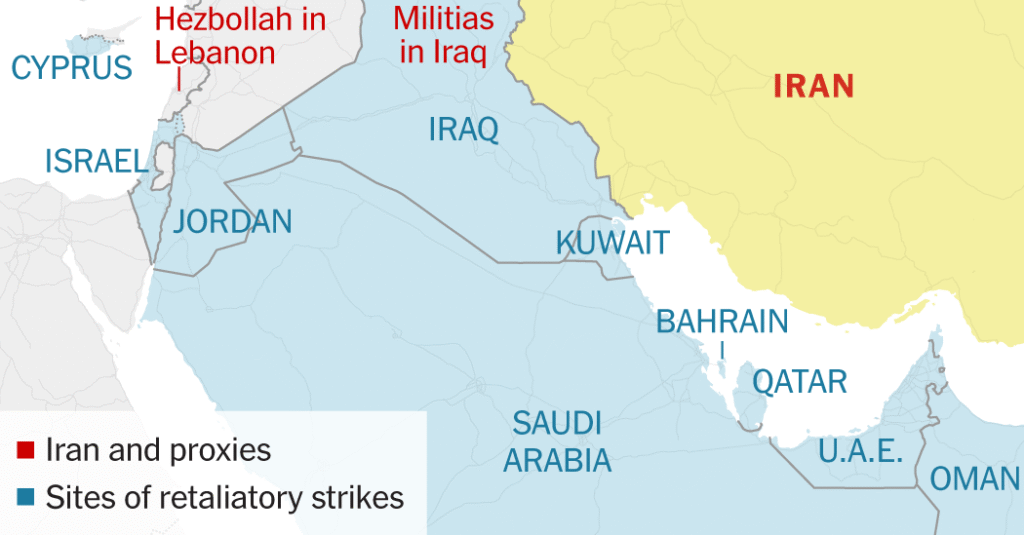
The war entered its fifth day with continued heavy US and Israeli airstrikes across Iran, focusing on remaining missile sites, command structures in Tehran, nuclear facilities like Natanz (where IAEA reports indicate a months-long setback to uranium enrichment), and oil refineries, with over 200 strikes reported including US Tomahawk missiles. This has reduced Iran’s oil production by 30%, exacerbating global price volatility amid Hormuz disruptions affecting 15 million barrels per day. Israel maintained pressure on multiple fronts, including ongoing operations in southern Lebanon against Hezbollah, where ground forces advanced, destroying rocket sites and causing 150+ Hezbollah casualties amid reports of disorganized proxy forces.
Iran and its proxies launched limited retaliatory missile and drone barrages toward Israel (e.g., Haifa military base) and US/Gulf assets (e.g., Qatar base, causing 2 US casualties and minor damage), with Hezbollah claiming drone strikes on an Israeli airbase, totaling 100+ projectiles, though 99% intercepted similar to 2024 exchanges. Iranian forces intercepted 2 tankers in the Persian Gulf, worsening shipping delays with 150+ vessels anchored. Global energy markets remained volatile as the Strait of Hormuz disruption continued, with shipping firms like Maersk suspending transits due to high-risk declarations and IRGC threats, pushing LNG prices up 20%. US President Trump stated in a Truth Social video, “We have hit hundreds of targets… Bombs will be dropping everywhere,” urging Iranian military defections and regime overthrow. Iranian leader Alireza Arafi responded, “They have signed their own death warrant,” vowing undisclosed power. Casualties rose with 150+ in Iran, 5 Israeli injuries; UN condemned civilian impacts, noting echoes of 2025 war’s 4,700 Iranian injuries.
3 March 2026 — Day 4
The conflict continued to intensify on its fourth day as Israel carried out simultaneous airstrikes on Tehran and Hezbollah targets in Beirut, expanding its operations on two fronts with 50+ strikes on missile depots and Hezbollah positions in southern Lebanon and the capital, killing 100+ Hezbollah fighters and displacing 200,000 Lebanese amid $500 million in infrastructure damage and 790 hectares of agricultural fires. This mirrors the 2023-2024 conflict’s 10,200 cross-border attacks and Hezbollah’s daily barrages of 200+ rockets.
Iran responded with ongoing missile and drone attacks against Israel and targets in the Gulf region, launching 80+ projectiles (mostly intercepted) targeting central Israel and Riyadh’s US embassy vicinity, causing 20 Israeli casualties and minor refinery disruptions that spiked oil prices 6%. Airports in Gulf states faced disruptions, with 8 casualties reported.
In a major escalation, Iran declared the Strait of Hormuz effectively closed, with IRGC forces intercepting 2 tankers and threatening attacks on vessels, leading to a 70% drop in traffic (stranding 8 million barrels per day) and global LNG price rises of 20%, evoking historical chokepoint crises like the 1970s embargo. Global stock markets fell 5% on energy fears.
Meanwhile, US President Donald Trump stated that a “big wave” of American attacks is still coming, indicating the military campaign against Iran could continue for weeks or longer, while emphasizing, “We didn’t start this war, but we are finishing it,” and signaling US escort for tankers through Hormuz. Iranian officials condemned the moves as “aggression,” vowing prolonged resistance.
2 March 2026 — Day 3
On the third day of the war, the United States and Israel continued their bombing campaign across Iran, conducting hundreds of strikes targeting missile facilities, IRGC bases, and airfields, with 200+ Iranian casualties and 50% of missile launchers damaged per US estimates, analogous to the 2025 war’s degradation of capabilities.
The conflict widened when Hezbollah joined the war, launching rockets and drones into northern Israel (200+ projectiles, similar to 2024 daily barrages of hundreds), injuring 10 Israeli civilians, evacuating 2,000, and opening a new front echoing the 2006 war’s 4,000+ rockets.
Israel quickly retaliated by striking Hezbollah targets in Beirut and southern Lebanon, with major airstrikes on rocket sites killing dozens (40 reported) and causing widespread displacement. Hezbollah leader’s successor warned of expanded attacks, claiming strikes on Israeli bases.
Iran also expanded its retaliation, launching additional attacks against Gulf targets, including drone strikes near the US Embassy in Riyadh, Saudi Arabia, causing minor disruptions and pushing oil prices up 9%.
The day also saw the first confirmed deaths of US service members, with 6 killed in Iranian strikes against American forces in the region, escalating direct US involvement and prompting additional carrier group deployment. President Trump condemned the losses, stating, “These threats will not continue any longer,” and vowing to annihilate Iran’s navy.
1 March 2026 — Day 2
Airstrikes by US and Israeli forces intensified, with new waves of bombing hitting deeper into Tehran and other strategic locations across Iran (300+ strikes on missile factories), causing 300 Iranian casualties and deepening the leadership vacuum post-Khamenei, echoing the 2025 war’s 900+ civilian deaths.
Despite damage to several launch sites, Iran continued firing missiles toward Israel, launching 150+ (fewer due to degradation; 99% intercepted), causing limited casualties (15 reported) and minor airbase damage, similar to April 2024 attack outcomes.
During the same day, Iran officially confirmed the death of Supreme Leader Ayatollah Ali Khamenei from the earlier airstrikes and announced 40 days of national mourning, declaring a national holiday, which sparked internal protests and signals of regime instability. Interim leaders vowed “irreparable harm” in response, activating proxies across the region.
28 February 2026 — Day 1
The war began when Israel launched a large-scale pre-emptive airstrike against Iran, later joined by the United States, with over 100 aircraft and missiles targeting leadership compounds in Tehran, IRGC centers, missile and drone facilities, air defenses, and military airfields in the largest IAF operation in history, hitting 400+ targets and killing top IRGC leaders, similar to the 2025 200-jet salvo.
The strikes resulted in the killing of Iran’s Supreme Leader Ayatollah Ali Khamenei and dozens of senior officials, including the defense minister and top commanders of the Islamic Revolutionary Guard Corps, confirmed later amid chaos in Tehran and reports of his family members’ deaths.
Shortly afterward, US President Donald Trump publicly confirmed the operation in a statement from Mar-a-Lago, announcing US involvement and outlining goals to prevent Iran’s nuclear weapon, destroy its missiles and navy, while global markets reacted with a 10% oil surge. Trump stated, “Our objective is to defend the American people by eliminating imminent threats from the Iranian regime.”
Iran retaliated the same day by launching ballistic missiles and drones toward Israel and US bases across the Gulf, including Bahrain, Kuwait, Qatar, and the UAE (300+ projectiles akin to April 2024 barrage), disrupting airports, causing light damage to Israeli bases, and 8 Gulf casualties despite 99% interception. Iranian officials declared the strikes a “declaration of war,” vowing escalation.
Disclaimer: This timeline is based on cross-verified reporting from major international outlets and will be updated with new developments