

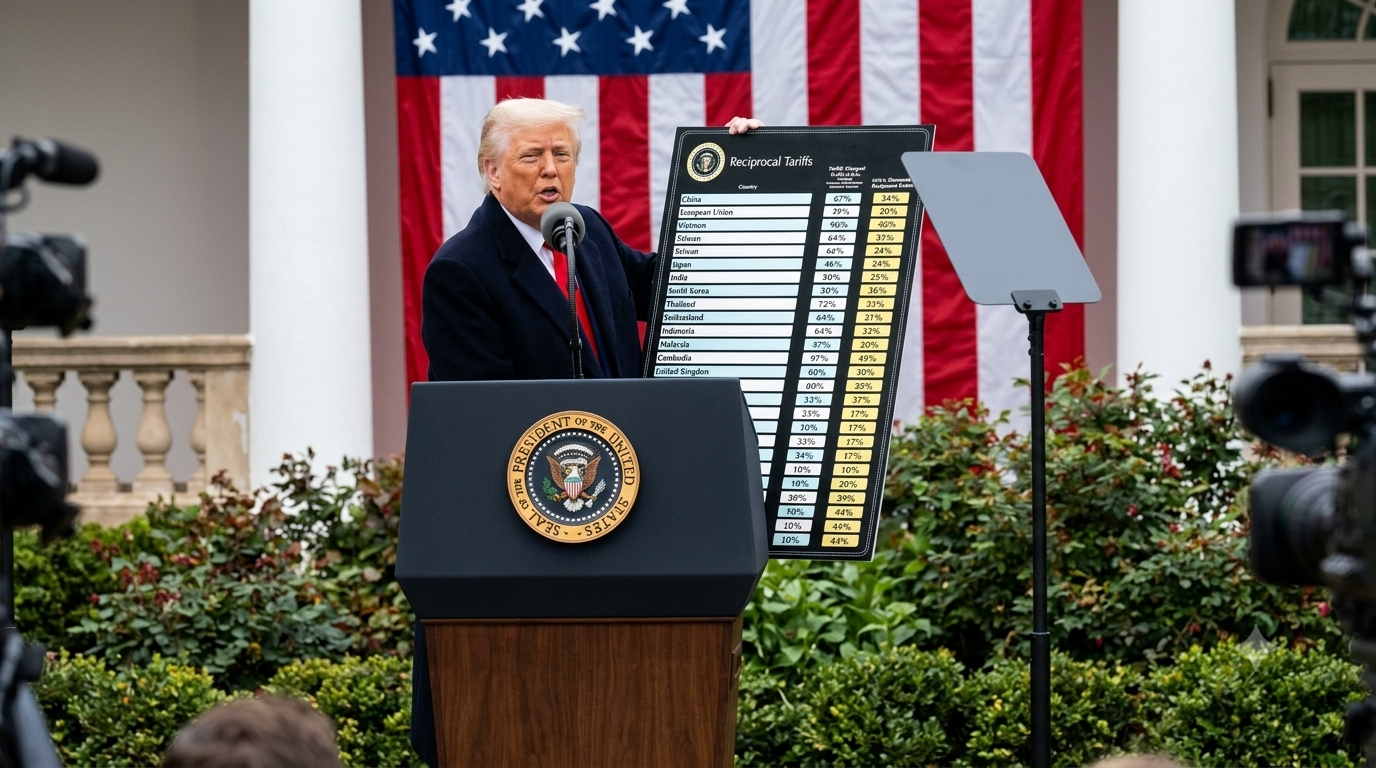
Washington moves toward broader use of traditional trade laws after earlier tariff approach faced legal challenges
WASHINGTON: US President Donald Trump’s administration is preparing additional tariff measures as it shifts toward a longer-term trade strategy aimed at protecting domestic industries and pressuring trading partners, officials and trade experts said.
The latest round of tariffs, including duties of 10% and 12.5% on 60 countries over alleged failures to enforce forced-labor restrictions, marks the beginning of a broader effort to rebuild the administration’s tariff framework using established trade laws.
What New Tariff Measures Are Planned?
US Trade Representative Jamieson Greer said the administration would continue using available tools to impose tariffs aimed at reshoring production and reducing the trade deficit.
Upcoming actions include investigations into excess industrial capacity, alleged intellectual property violations involving Vietnam, and national security-related trade measures covering sectors such as semiconductors, robotics and industrial machinery.
The administration said the new tariff layers would remain within limits agreed in trade deals with several partners, including the European Union, Japan and South Korea.
Why Is the Administration Changing Its Approach?
The shift follows legal challenges to Trump’s earlier tariff measures imposed under a national emergencies law.
The administration is now relying more heavily on Section 301 of the Trade Act of 1974, a trade law previously used during Trump’s first term to impose tariffs on Chinese goods.
The new forced-labor duties cover 99.4% of US imports, according to the US Trade Representative’s office.
How Are Businesses Responding?
Some companies said the latest tariff measures were largely expected and had already been factored into business planning.
Mark Bissell, chief executive of Michigan-based vacuum maker Bissell Inc., said the company had maintained operations based on expectations that tariffs would remain between 10% and 15%.
Trade experts warned that continued tariff expansion could increase costs for businesses and consumers while affecting global supply chains.
What Is the Impact on US Revenue?
Trump’s earlier tariff measures generated significant revenue for the US government, although some collections have faced possible refunds following court challenges.
The administration’s previous “Liberation Day” tariffs generated $166 billion in revenue before refunds to importers reduced collections.
Another temporary tariff program added $31 billion in assessed revenue through July 5, though that money could also be subject to repayment if legal challenges succeed.
What Are the Wider Implications?
Officials said the tariff strategy is intended to encourage domestic manufacturing and reduce dependence on foreign supply chains.
However, economists have warned that continued tariff actions could disrupt global trade and raise costs for US consumers and businesses.
Eswar Prasad, a trade professor at Cornell University, said continued tariff announcements could create uncertainty for the international trading system.