

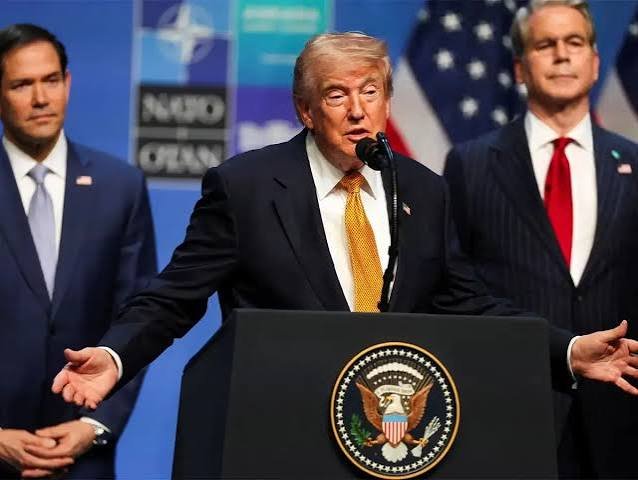
CAIRO/DUBAI/WASHINGTON: US President Donald Trump on Tuesday reimposed a naval blockade on all Iranian ports and warned that the United States could target Iran’s energy infrastructure, power plants and bridges unless Tehran returns to negotiations, marking a significant escalation in the ongoing conflict.
The US military also launched a fresh wave of strikes, saying the operations were aimed at degrading Iranian capabilities used to attack commercial shipping in the Strait of Hormuz.
Iran, meanwhile, said it had again closed the strategic waterway following renewed hostilities, raising concerns over global energy supplies and regional stability.
Why Has the US Intensified Pressure on Iran?
Speaking in an interview with Fox News, President Trump said military action against Iran’s energy infrastructure could begin as early as next week if Tehran refuses to resume negotiations.
“I’ll save the energy targets for last, but ultimately we’ll hit energy targets,” Trump said, adding that power plants and bridges could also be targeted unless Iran “gets to the table and negotiates.”
The US administration said Iran had attacked seven commercial vessels in the Strait of Hormuz over the past week, resulting in nearly a dozen crew members being killed, injured or reported missing.
The renewed naval blockade on Iranian ports came into effect at 2000 GMT, with Washington stating that the Strait of Hormuz would remain open to international shipping except for Iranian maritime traffic.
US officials also confirmed that more than 20 US Navy warships and hundreds of military aircraft are currently deployed across the region to support ongoing operations.
How Is Iran Responding to the Escalation?
Iran rejected Washington’s demands for renewed negotiations, insisting it would not negotiate under military or economic pressure.
Deputy Foreign Minister Kazem Gharibabadi said the United States was mistaken if it believed military action and economic restrictions would force Tehran back to the negotiating table.
Iran’s military claimed it launched drone attacks on US positions at Jordan’s Azraq Air Base, while the Islamic Revolutionary Guard Corps (IRGC) said it had targeted military facilities in Bahrain and Kuwait. Kuwaiti authorities confirmed their air defences intercepted drones, though Reuters could not independently verify Iran’s claims.
Iranian state media also reported that US projectiles struck areas near Bandar Abbas, Sirik, and Qeshm Island, all located near the Strait of Hormuz.
The latest escalation has raised fresh doubts over the durability of the memorandum of understanding signed last month, which had been viewed as a step toward ending months of fighting that has spread across the Gulf region.
Before the conflict began in February, nearly 20% of global oil and gas shipments transited through the Strait of Hormuz each day. The renewed disruption has pushed Brent crude prices to around $85 per barrel, their highest level in nearly a month, amid fears of prolonged supply disruptions.
The conflict, which began with joint US-Israeli strikes on Iran, has expanded across the Gulf and has resulted in thousands of casualties, while increasing concerns over regional security, global energy markets and international shipping.