

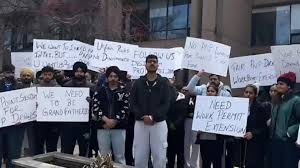
In recent years, a worrying trend has emerged in India’s education landscape. Under Prime Minister Narendra Modi’s government, the number of Indian students heading abroad for higher education has dropped sharply by 31%. According to official statistics from the Bureau of Immigration, this number dropped from 908,000 in 2023 to only 626,000 in 2025. This is a serious concern regarding the educational and diplomatic policies of India. Being a person who firmly believes in the concept of global education and how it can shape young minds and achieve a faster pace of a nation, I am sure that it is not a mere mere fluctuation. It is an outcome of many things combined like a waning world image, demanding visa rules in other countries, and a dented image of fraud.
We should examine the figures to see the seriousness of the situation. In 2023, over 908,000 Indian students have travelled to find their education. This is an indication of the huge need of education in the world. This however decreased to 770,000 in 2024 and to 626,000 in 2025. This has been reduced by 31 percent over two years. This, according to experts, is linked to bigger problems. As an illustration, the Ministry of Education indicates that affordability and availability of loans are some of the factors that the study abroad program is based on. Nevertheless, these reasons cannot be said to explain the steep drop. Greater problems involving the governance of Modi are being played.
The decline of international reputation of India under Modi is one of the factors. After Modi assumed power in 2014, domestic divisions have been on the rise in India, and religious conflicts and oppression against dissent have been reported. This has affected the global attitude towards India. Countries like Canada, the UK, Australia and the US which are most preferred by the Indian students have tightened their visa policies partly because of fears about immigration by the Indian population. In an example, in 2024, Canada put a cap on study visas with a reduction of approvals by 35 per cent of the Indian students. The UK demand has also risen in the financial needs of the students needing a higher level of saving to meet the living expenses. Such policies are not without reason; it is because of the impression that India is exporting too many students, some of whom would over pay their visa expiration or fail to live up to expectations.
This brings us to the effect of scandals of frauds which have been increasing since the Modi administration. Over the last couple of years, fraudulent admission letters and consultancies that have defrauded students have been witnessed. In 2023, hundreds of Indian students were deported by Canadian government on grounds that they are members of a fraud ring dealing with fraudulent documents. Australia has also experienced an increase in visa rejection because of suspicion of fraud. The Indian students are now experiencing increased time to process, increased number of interviews and up to 40 percent visa rejection in certain countries by 2025. Why has the Modi government not done more to curb these fraudulent agents? This has been made possible due to the absence of appropriate regulation and corruption within the education consultancy sector and thus has a bearing on the reputation of India, of being a source of real students.
Weakening diplomacy under Modi has further deteriorated the situation. Diplomacy plays a crucial role in relaxing visa regulations and safeguarding citizens abroad. However, the situation between India and major educational destinations has deteriorated. Disputes between India and Canada regarding diplomatic matters in 2023 resulted in a freeze on visa processing for several months. The US has pointed to India’s human rights record as a reason to restrict H-1B visas, which are largely used by students after completion of their education. Modi’s foreign policy strategy of being a “strongman” abroad, with visible visits and agreements, has not benefited students. Compare this to China’s foreign policy strategy: China, despite tensions around the world, enters into bi-lateral agreements to safeguard their students’ rights.
The effect on Indian youth is nothing short of heart-breaking. Studying abroad is more than just an education; it’s about experience, skills, and connections that fuel innovation in one’s own country. With this drop in numbers, the effect is that fewer students are getting to experience this. Consider STEM education alone: In 2022, more than 60% of Indian students abroad were pursuing science and technology courses, which fuelled the IT explosion back in India. However, with fewer students going abroad, we are witnessing a talent drain in reverse – brilliant minds staying back home but being thwarted by a lack of opportunities. Unemployment rates among Indian graduates are already at 18%, and this could further worsen the situation. Parents shell out lakhs of rupees in preparation, only to receive rejection letters.
Rising costs abroad add fuel to the fire. Inflation in host countries has made studying overseas less affordable. Average tuition in the US rose by 5% in 2024, while living costs in Canada jumped 10% due to housing shortages. Combined with a weakening rupee – down 10% against the dollar since 2023 – many middle-class families can’t afford it. Modi’s economic policies, like demonetization and GST, have squeezed household savings, making loans harder to get. Banks now demand more collateral, rejecting 25% more education loan applications in 2025. The fact that the number of Indian students abroad has fallen by 31% is a cause for concern for Modi’s policies. From 908,000 in 2023 to 626,000 in 2025, the fall shows how a reputation tarnished by fraud, a tough visa regime, and poor diplomacy is holding back the wings of the Indian youth. It is the high time for the Modi government to fix their internal issues rather than supporting cross border terrorism.
Disclaimer: The views and opinions expressed in this article are solely those of the author and do not necessarily reflect the views, policies, or position of this website. The website does not endorse or oppose any opinion presented herein.
