

Pakistan: Pakistan on Thursday rejected Amnesty International’s call for an investigation into its reported airstrikes in Afghanistan, urging the international community to instead examine what it described as the Afghan Taliban’s continued support for militant groups operating against Pakistan.
Why Did Pakistan Reject Amnesty’s Report?
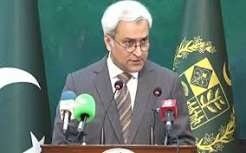
Speaking at the weekly media briefing in Islamabad, Foreign Office spokesperson Tahir Andrabi dismissed Amnesty International’s report, saying it contained serious allegations that were not supported by credible evidence.
Andrabi said the Afghan Taliban continued to provide a “permissive environment” for militant organizations, including the banned Tehreek-e-Taliban Pakistan (TTP) and the Balochistan Liberation Army (BLA).
He said Pakistan’s military actions were carried out under its right to self-defence, adding that operations targeted only militant groups and their logistical infrastructure after other options had been exhausted.
The comments came a day after Amnesty International called for an independent investigation into Pakistani airstrikes carried out in Kabul four months ago.
What Other Issues Did the Foreign Office Address?
Responding to questions on regional security, Andrabi said Pakistan would regard any attack on Pakistani-flagged vessels or its maritime interests in the Red Sea as a grave threat to national security.
He condemned threats by the Houthi movement against Saudi Arabia and commercial shipping, saying such actions undermine regional security, freedom of navigation, and global trade.
The spokesperson also reiterated Pakistan’s support for dialogue and diplomacy in the Middle East and confirmed the country’s commitment to implementing bilateral agreements with Saudi Arabia, including those related to mutual defence.
Commenting on the European Union’s fifth GSP Plus monitoring report, Andrabi welcomed its recognition of Pakistan’s legislative progress and continued implementation of international conventions.
He said the GSP Plus framework remains important for Pakistan’s exports, employment, women’s economic participation, poverty reduction, and broader economic development.