

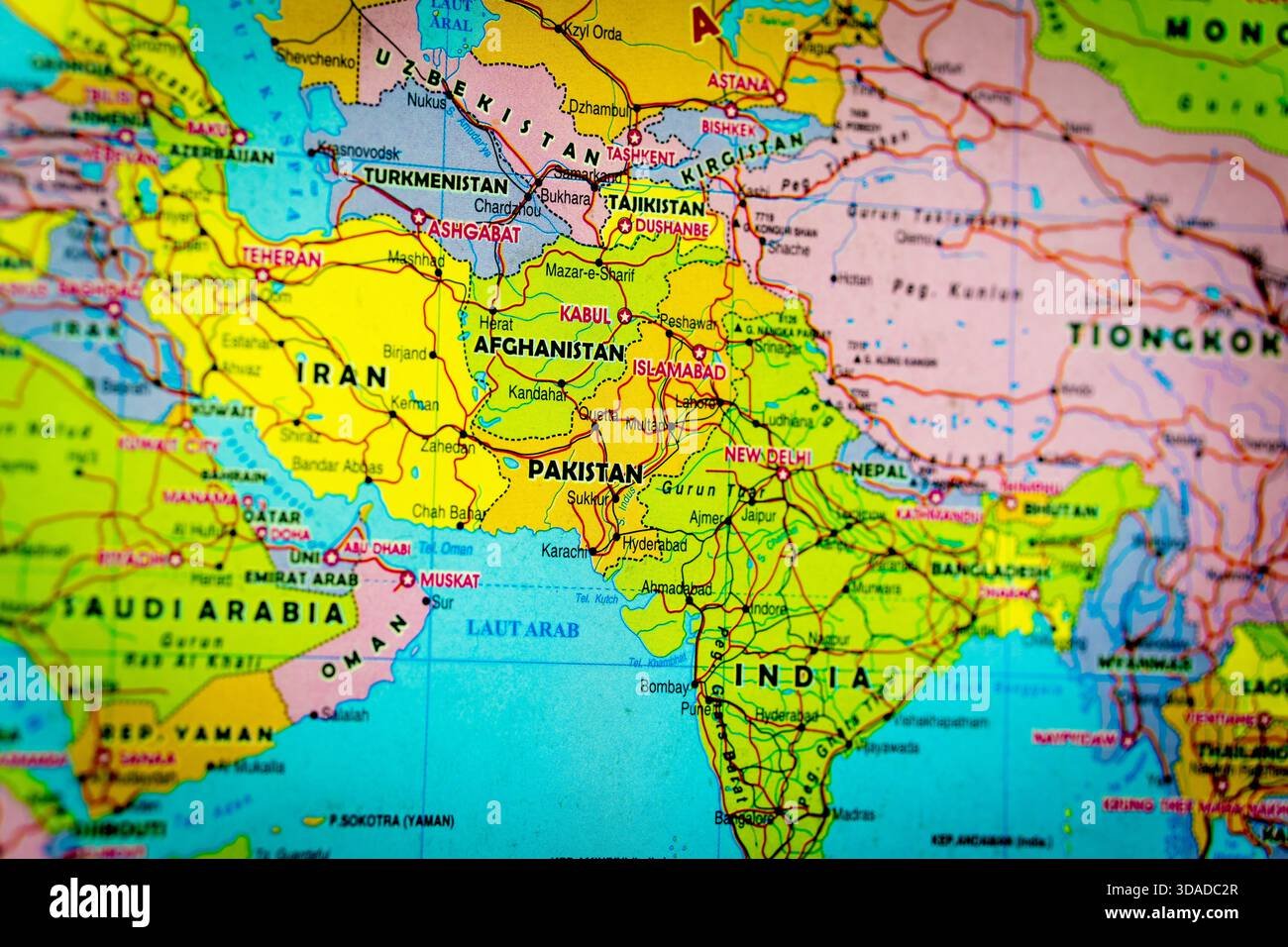
13 March 2026 — Day 21
Fighting between Pakistan and Afghanistan entered its nineteenth day on 12 March, with renewed aerial strikes and continued low-intensity clashes reported along the Durand Line frontier.
Overnight into 12–13 March, Pakistani aircraft conducted strikes on locations near Kabul, including areas around Pul-e-Charkhi on the eastern outskirts of the capital.
Explosions and smoke were reported in the area. Afghan authorities said the strikes struck residential structures and caused civilian injuries. Pakistani officials indicated the targets were suspected militant sites associated with Tehreek-e-Taliban Pakistan.
Separate strikes were reported near Kandahar, where a fuel depot belonging to a private airline near the airport was damaged. Afghan authorities described the incident as part of a broader series of strikes affecting southern provinces.
No confirmed casualty figures from the Kandahar incident were immediately available.
Additional aerial and artillery activity was reported in eastern Afghan provinces bordering Pakistan, including Paktia Province and Paktika Province. Strikes were reported in the Chamkani area, where Pakistani forces targeted positions believed to be used by militants or Afghan Taliban units.
Elsewhere along the frontier, including Nangarhar Province, Khost Province, and Kunar Province, sporadic exchanges of small-arms fire and artillery continued.
On the Pakistani side of the border, security forces reported defensive responses to cross-border fire in districts including Kurram District, Bajaur District, and South Waziristan.
No new large-scale ground offensives or major territorial advances were reported during the 24-hour reporting period.
A brief humanitarian pause occurred on 12 March at the Torkham Border Crossing, a key transit point between the two countries.
The ceasefire lasted approximately two to three hours and allowed local tribal elders to retrieve the body of an individual that had remained in the border zone for several days. The body was reportedly identified as Afghan, though removal was delayed pending further consultations.
The incident underscored the humanitarian challenges facing communities along the heavily militarized frontier.
Pakistani military officials said operations under Operation Ghazab Lil Haq would continue until Afghan regime take action against militant groups accused of using Afghan territory to launch attacks inside Pakistan.
Statements from Pakistani sources claimed hundreds of militant casualties since the start of hostilities and the destruction of multiple posts, vehicles, and weapons depots.
Afghan Taliban regime have disputed those figures and accused Pakistan of targeting civilian areas and infrastructure. Independent verification of casualty claims from either side remains limited.
12 March 2026— Day 20
Pakistani security forces continued targeted operations along the Pakistan–Afghanistan border under Operation Ghazab Lil Haq, carrying out retaliatory strikes against suspected militant positions and hideouts linked to the Tehreek-e-Taliban Pakistan (TTP).
According to official statements, the fighting remained limited to cross-border artillery exchanges, drone-assisted targeting, and defensive ground actions along the Durand Line, with no reports of a full-scale ground incursion or the opening of a new front. Authorities also confirmed that no ceasefire negotiations were underway during this period.
Military officials stated that several militant checkposts, hideouts, and supply routes were targeted in areas across eastern Afghanistan, including Nangarhar, Kunar, and Paktika, as well as sectors along the border such as Zhob, Kurram, Torkham, Bajaur, and Arandu.
In the Zhob sector, two Afghan Taliban posts were reportedly destroyed, forcing militants to withdraw from the area while leaving behind weapons and equipment. Additional strikes in the Arandu and Kurram sectors reportedly damaged several militant positions believed to be used for cross-border activities.
Officials indicated that the ongoing phase of the operation has so far involved more than 65 air and artillery strikes targeting militant infrastructure across the border.
According to government figures released on March 11, the cumulative toll since the start of the operation includes over 640 Afghan Taliban fighters killed and more than 850 injured. Pakistani authorities reported no new military casualties during the reporting period, while the total number of Pakistani soldiers killed since the start of the operation stands at 12.
Officials also reported significant damage to militant infrastructure, including the destruction of more than 240 militant checkposts and the neutralization or capture of dozens of additional positions. Military equipment, including armored vehicles and artillery pieces allegedly used by militants, was also reported destroyed.
Afghan Taliban authorities rejected the casualty figures, accusing Pakistan of indiscriminate shelling and claiming limited damage to some Pakistani border positions. However, independent verification of claims from either side remains difficult due to the ongoing conflict and restricted access to the affected areas.
Humanitarian agencies have previously warned that tens of thousands of civilians have been displaced in border regions since tensions escalated. While earlier reports indicated civilian casualties in some areas, no major new spike in civilian deaths was independently confirmed during the latest reporting period.
Security officials stated that infiltration attempts along sectors including Chaman, Zhob, Kurram, and Bajaur were repelled during the night, with heavy losses reportedly inflicted on militant groups attempting to cross the border.
Authorities maintain that Operation Ghazab Lil Haq will continue until militant threats along the border are fully neutralized, as tensions remain high across the frontier.
11 March 2026— Day 19
Pakistan’s ongoing Operation Ghazab-ul-Haq along the Pakistan-Afghanistan border entered its 19th day on Wednesday, with security forces continuing sustained operations against militant positions and repelling cross-border attacks across several sectors of the Pak-Afghanistan International border, according to security officials.
Military officials said the latest 24-hour operational window from March 10 to March 11 saw no large-scale airstrikes on deep Afghan territory, but sporadic artillery exchanges, mortar fire and precision engagements continued in multiple frontier areas.
In the Kurram sector near Khost, Pakistani forces maintained pressure after repelling a coordinated militant assault on KK Fort earlier this week. Officials said militants carried out unprovoked fire raids and a ground assault, prompting Pakistani troops to respond with heavy artillery, mortars and machine-gun fire, forcing the attackers to retreat. Intermittent exchanges continued as security forces targeted militant regrouping points.
Further clashes were reported in Paktika province opposite Angoor Adda in South Waziristan, where Pakistani forces responded to alleged firing from Afghan border posts. Limited exchanges were also recorded in Bajaur’s Nawapas area, across from Afghanistan’s Kunar province, where artillery and precision fire were used against militant positions.
Security sources said the earlier destruction of militant logistics facilities, including the Khalid-1 ammunition complex, has significantly disrupted insurgent supply lines in the region.
Additional engagements were reported across North Waziristan, Torkham, Taida, and Wana-Wersak sectors, where Pakistani troops targeted militant concentrations near the frontier.
In Zhob district of Balochistan, troops recovered two Soviet-made HGL-9 heavy grenade launchers from abandoned militant posts during clearing operations around March 10.
Authorities have also maintained school closures and public safety advisories in several vulnerable border districts due to continued shelling risks and security concerns.
Operational Statistics
Security sources provided the following cumulative figures from Operation Ghazab-ul-Haq, though the numbers could not be independently verified:
- Militants killed: approximately 635–650+
- Militants injured: 870–900+ (some estimates exceed 1,000)
- Militant posts/checkpoints destroyed: 264–270+
- Positions captured or neutralized: 43–50+
- Vehicles, artillery pieces and armored platforms destroyed: 227–230+
- Militant bases and logistical sites targeted: 70+
- Cross-border militant locations struck: 75+
Security officials said several of the targeted sites included weapons depots, training areas and operational headquarters used to coordinate attacks inside Pakistan.
Diplomatic efforts to ease tensions have stalled, with no confirmed high-level negotiations or ceasefire talks in recent days. Earlier mediation offers by regional actors have yet to produce a breakthrough.
Observers say the conflict has stabilized at a low-to-medium intensity level, characterized by localized skirmishes and retaliatory strikes rather than major offensives. However, the situation along the frontier remains highly volatile, with both sides continuing to accuse each other of cross-border aggression.
Security officials reiterated that Operation Ghazab-ul-Haq will continue until verifiable action is taken against militant safe havens allegedly operating from Afghan territory.
10 March 2026— Day 18
The confrontation along the Pakistan–Afghanistan international border continues as Operation Ghazab Lil Haq enters its third week, with Pakistani authorities confirming that military operations against militant positions linked to the Tehrik-i-Taliban Pakistan and Afghan Taliban elements remain ongoing.
Pakistan’s Information Minister Attaullah Tarar said 583 Afghan Taliban fighters have been killed and more than 795 injured since the start of the operation in late February. According to official figures, Pakistani forces have destroyed 242 border checkposts, captured 38 posts, and eliminated 213 tanks, armored vehicles, and artillery systems, while 64 locations inside Afghanistan have been targeted in air strikes against militant infrastructure.
Security sources say operations are continuing in frontier sectors including North Waziristan and areas opposite Paktika Province, with strikes aimed at ammunition depots and militant hideouts. Pakistani officials maintain the campaign will continue until cross-border militant networks are dismantled.
The Taliban regime in Afghanistan rejects Pakistan’s claims and says its forces are repelling attacks and defending positions. No major new large-scale airstrikes on cities such as Kabul or Kandahar have been reported in the past 24–48 hours, with fighting mostly limited to localized border clashes and artillery exchanges.
9 March 2026— Day 17
Pakistan’s ongoing Operation Ghazab lil-Haq, continues along the western frontier as security forces maintain pressure on militant networks operating from across the border.
Information Minister Attaullah Tarar, in his latest briefing, stated that since the launch of the operation in late February, 583 Afghan Taliban militants have been killed while more than 795 have been injured. He further revealed that Pakistani forces have destroyed 242 Taliban checkposts and captured 38 others, while 64 militant locations inside Afghanistan were targeted through precision strikes.
According to the minister, the operation has also resulted in the destruction of 213 tanks, armoured vehicles, and artillery guns belonging to Taliban forces. The updated figures indicate an increase from earlier tallies, reflecting that military actions are continuing across several sectors of the border.
Meanwhile, tensions escalated again in North Waziristan after a mortar shell allegedly fired from across the border landed in a residential neighbourhood of Ghulam Khan, killing one child and injuring four civilians. The incident triggered heavy firing between positions on both sides of the frontier.
Security forces also carried out operations against militant positions in North and South Waziristan, destroying several hideouts and defensive posts. In a separate development, an infiltration attempt near the Chaman sector was foiled by Pakistani troops.
Officials say the campaign will continue until militant networks operating from Afghan soil are fully neutralised and credible guarantees are received that cross-border attacks against Pakistan will cease.
On the diplomatic front, regional efforts to ease tensions are also under way. A senior envoy from China recently held discussions in Kabul, urging both sides to pursue dialogue and avoid further escalation.
For now, the situation along the Pakistan–Afghanistan frontier remains tense, with both military operations and diplomatic engagement unfolding simultaneously as Islamabad seeks to secure its western border.
8 March 2026 — Day 16
The Pakistan–Afghanistan border conflict entered its fifteenth day on Sunday, with security forces continuing operations under Operation Ghazab-lil-Haq (“Righteous Fury”) to secure the Pak-Afghanistan International border and prevent cross-border terrorism. Military authorities say the current phase of the operation is focused on consolidating territorial gains, strengthening defensive positions, and neutralizing infiltration attempts along sensitive border sectors.
Earlier today, the Inspector General of Frontier Corps (North) Balochistan visited the Zhob sector to review the security situation and operational readiness of troops deployed along the border. During the visit, the IG toured the Gudwana Enclave, a strategically important area of approximately 32 square kilometers that was secured by Pakistani forces earlier in the operation.
Officials stated that the Gudwana enclave had previously been used as a staging ground by terrorists elements operating near the border. Pakistani forces now report that the area has been cleared and remains firmly under their control. Nearby militant positions have reportedly been abandoned, while retreating elements were observed withdrawing from the surrounding areas. The visiting commander met with officers and soldiers stationed at forward positions, praising their professionalism, high morale, and commitment to defending the country’s borders.
Security operations continued across several sectors overnight and into the early hours of March 8. In the Chaman, Naushki, and Torkham sectors, Pakistani forces delivered strong and coordinated responses to hostile activity detected along the frontier. Artillery units, mortars, and heavy weapons were used against suspected militant hideouts and infrastructure believed to support cross-border operations. Surveillance drones were also employed to monitor movement and guide precision strikes on identified targets.
Field updates from the operation indicated that a Pakistani formation known as the Pandu Battalion successfully captured another Afghan border post during the latest engagements. Military officials stated that security forces maintain operational dominance in key sectors and remain prepared to counter any further hostile activity.
Separate from the ongoing conflict, maritime and coastal security forces carried out a major anti-narcotics operation in Balochistan. The joint operation resulted in the seizure of more than 1,050 kilograms of charas (cannabis resin) and 200 kilograms of methamphetamine, highlighting continuing efforts to disrupt trafficking networks that operate along border and coastal routes.
According to operational summaries released by Pakistani authorities, since the beginning of the escalation on February 26, security forces have inflicted significant losses on militant elements. Reports indicate that more than 565 militants have been killed and over 790 injured during the course of the operation. In addition, 248 militant posts have been destroyed, 40 positions captured or neutralized, and more than 200 vehicles and artillery systems eliminated. Officials also reported the destruction of dozens of aerial targets during earlier phases of the conflict.
Security forces have also successfully repelled several infiltration attempts along the border. In one such incident, militants attempting to cut the border fence were intercepted in an ambush, resulting in their neutralization and the recovery of explosive devices and equipment.
Military officials continue to highlight the capture of the Gudwana Enclave as a major tactical success, noting that the area previously facilitated militant movement across the border. Its control is expected to strengthen Pakistan’s defensive posture along a critical stretch of the frontier.
The situation along the Pakistan–Afghanistan border remains tense, and security authorities state that Operation Ghazab-lil-Haq will continue until cross-border militant threats are effectively neutralized and lasting stability is restored to the region.
7 March 2026 — Day 15
Pakistan’s ongoing cross-border operation has entered its fifteenth day, with officials reporting significant losses inflicted on Afghan Taliban positions and operatives.
According to Information Minister Attaullah Tarar and security sources, the operation has so far resulted in 527 Afghan Taliban operatives killed and more than 755 injured. Pakistani forces have targeted multiple locations inside Afghanistan, destroying 237 checkposts, while earlier assessments indicated around 226 posts destroyed and 35 captured.
Security officials said heavy artillery and airstrikes were carried out in several sectors including Kurram, Zhob, Qila Saifullah, Arandu, and areas near Kandahar, where strikes hit former brigade headquarters and other Taliban formations.
Authorities stated that the operation is aimed at eliminating militant threats and will continue until credible assurances are received from Kabul to halt cross-border terrorism. Officials also indicated that militant attacks inside Pakistan have declined since the campaign intensified.
Pakistan has confirmed 12 soldiers martyred in the clashes so far, according to military briefings.
Meanwhile, the Afghan Taliban authorities have reportedly signalled interest in dialogue following heavy battlefield losses, though no formal negotiations are currently underway and both sides continue to exchange accusations.
Tensions remain elevated along key crossing points including Torkham and Chaman, with continued exchanges of fire, shelling, and security operations reported across sectors of Khyber Pakhtunkhwa and Balochistan.
Pakistani officials have reiterated that the ongoing actions are defensive measures in response to militant sanctuaries and cross-border attacks originating from Afghan territory.
6 March 2026—Day 14
Pakistan’s armed forces continue to inflict heavy losses on Afghan Taliban positions under Operation Ghazab lil-Haq, with cumulative figures holding at 481 Afghan Taliban operatives killed and over 696 injured, as per the most recent operational update shared by Information Minister Attaullah Tarar.
Security sources and ISPR briefings (including to Khyber-Pakhtunkhwa journalists at ISPR headquarters) confirm that forces maintained a strong defensive posture along the Pak-Afghanistan International border, effectively targeting and repelling Afghan Taliban aggression. Overnight into March 5, Pakistani forces struck 41 Taliban posts with light and heavy weapons across sectors like Chaman, Zhob, Qila Saifullah, and Noshki, inflicting further casualties and damage while no new Pakistani losses were reported in these exchanges.
481 Afghan Taliban operatives killed, Over 696 injured.
226 checkposts/posts destroyed, 35–36 posts captured.
198 tanks, armoured vehicles, and artillery guns destroyed.
Air and ground strikes targeted 56 locations overall, including key infrastructure like ammunition depots and prior hits on brigade headquarters.
Mid-level TTP leadership eliminated; over 50 airstrikes conducted; 58 operations inside Afghanistan so far.
Operation is a continuation of Pakistan’s war on terror and will persist until credible guarantees and concrete, verifiable steps from Kabul to end sponsorship of terrorism. Pakistan has no intention of conquering Afghanistan or fighting the Afghan people, sole demand is that Afghan territory not be used against Pakistan. Targets are almost achieved in key areas (e.g., Bagram infrastructure destroyed); operations focus on terrorist hideouts only, with civilians not targeted.
No new major escalation or shift reported precisely on March 5-6 beyond consolidation of figures, ongoing punitive strikes, and defensive repulsions. Opposing claims of Pakistani losses/installations hit are dismissed as false propaganda. The operation remains defensive, aimed at dismantling militant infrastructure until verifiable assurances are met.
5 March 2026 — Day 13
Security officials said Pakistan’s armed forces maintained vigilant defence along the Pak-Afghan International Border, successfully repelling minor Afghan incursions (including in areas such as Paktika province), with no Pakistani casualties reported in the latest reported exchanges.
The Inter-Services Public Relations (ISPR), citing updates from Director General ISPR Lieutenant General Ahmed Sharif Chaudhry and related briefings, confirmed that security forces destroyed additional Taliban assets, including armoured vehicles and other military hardware used during cross-border aggression, as part of sustained defensive strikes.
- 481 Afghan Taliban operatives killed, Over 696 injured.
- 226 checkposts destroyed, 35 posts captured
- 198 tanks, armoured vehicles, and artillery guns destroyed
- Air strikes targeted 56 locations across Afghanistan.
Chief of Defence Forces Field Marshal Asim Munir said that Peace between Pakistan and Afghanistan could only prevail if the Afghan Taliban renounced their support for terrorism and terrorist organisations (including TTP/Fitna al-Khawarij); all necessary measures will be taken to neutralise the threat emanating from across the border; use of Afghan soil for attacks on Pakistan is unacceptable.
PM’s Adviser Rana Sanaullah(March 5 updates following in-camera briefing): Pakistan’s targets in the operation are almost achieved and being fortified; sole demand is that the Afghan Taliban do not allow their soil to be used for terrorism against us, if they comply, Pakistan has no fight with them.
4 March 2026 — Day 12
Afghan Taliban forces have suffered heavy losses in the ongoing Operation Ghazb lil Haq, with 481 fighters killed and more than 696 injured, according to the latest operational update issued at 1600 hours on March 4. Security officials said Pakistan’s armed forces maintained vigilant defence along the Durand Line, successfully repelling minor Afghan incursions in Paktika province, with no Pakistani casualties reported.
The Inter-Services Public Relations (ISPR), citing updates shared by Director General ISPR Lieutenant General Ahmed Sharif Chaudhry, confirmed that security forces destroyed additional Taliban assets, including an armoured vehicle allegedly used during cross-border aggression.
According to the latest operational summary, 226 Taliban check posts have been destroyed and 35 posts captured during the operation.
Officials also reported that 198 tanks, armoured vehicles and artillery guns were destroyed, while military actions targeted 56 locations across Afghanistan as part of efforts to dismantle militant infrastructure near the border.
Information Minister Attaullah Tarar dismissed Afghan claims of Pakistani losses, calling them “baseless propaganda.”
Meanwhile, Deputy Prime Minister and Foreign Minister Ishaq Dar reiterated Pakistan’s desire for peaceful relations with Afghanistan but stressed that sovereignty would not be compromised.
“We seek good relations, but not at the cost of our sovereignty,” Dar said, adding that Pakistan has evidence of Afghan soil being used for terrorist activities against Pakistan. The clashes have also led to a humanitarian impact inside Afghanistan, where around 80,000 civilians have reportedly been displaced. Pakistan, officials said, continues to provide humanitarian assistance despite ongoing tensions.
At the same time, the trade blockade between the two countries remains in place, causing economic losses to Afghanistan as cross-border exports decline. Officials say Operation Ghazb lil Haq continues with the objective of securing Pakistan’s borders and preventing militant infiltration from Afghan territory.
3 March 2026 — Day 11
Sporadic clashes continued as Pakistani forces neutralized Afghan shelling attempts in various border areas. ISPR, via Director General ISPR Lieutenant General Ahmed Sharif Chaudhry, reported no damage to Pakistani installations and dismissed Taliban claims as morale-boosting lies. Cumulative successes under Operation Ghazab-e-Haq reached 435 fighters killed and 630 injured. Prime Minister Shehbaz Sharif postponed a scheduled visit to Russia to focus on national security, stating: “Our priority is protecting citizens from cross-border threats.” Turkiye offered mediation, which was welcomed by Islamabad. The United Nations reported a civilian toll of 42 killed and 104 injured, which Pakistan attributes to Taliban tactics of using civilians as shields; Pakistan has called for a thorough investigation.
2 March 2026 — Day 10
Pakistan’s defensive operations thwarted Taliban advances, with precision strikes destroying an ammunition depot in Nangarhar province. ISPR, as detailed by Director General ISPR Lieutenant General Ahmed Sharif Chaudhry, reported 331 Taliban fighters killed and over 500 injured; overall Pakistani losses remain limited to 12 soldiers martyred and 27 injured. State Minister for Information Talal Chaudhry emphasized: “This war was imposed by the Afghan Taliban harboring Tehreek-i-Taliban Pakistan (TTP); Pakistan will end it decisively.” Afghan claims of 80 Pakistani deaths were rejected as complete fabrications. Increased air traffic over Pakistan due to regional stability contrasts sharply with the chaos in Afghanistan.
1 March 2026 — Day 9
Precision strikes targeted Bagram Airfield and other terrorist hubs, with explosions confirmed in Kabul causing significant enemy losses. Information Minister Attaullah Tarar stated that 46 locations were hit, resulting in 331 Taliban fighters killed, over 500 injured, and 104 posts razed. ISPR, through Director General ISPR Lieutenant General Ahmed Sharif Chaudhry, dismissed Afghan assertions of 80 Pakistani deaths and 27 posts captured as desperate misinformation. The United Nations reported 42 civilian deaths, prompting Pakistan to call for an investigation into the Taliban’s exploitation of civilians as human shields.
28 February 2026 — Day 8
Operation Ghazab-e-Haq expanded with targeted strikes on Taliban facilities in Kabul, Kandahar, and border zones, neutralizing TTP elements. ISPR, as briefed by Director General ISPR Lieutenant General Ahmed Sharif Chaudhry, reported 297 Taliban fighters killed and over 450 injured. Taliban drone attack claims were intercepted with no Pakistani losses. Russia urged talks, and Pakistan expressed openness but demanded concrete action against TTP. Afghan claims of 55 Pakistani deaths were refuted.
27 February 2026 — Day 7
Defence Minister Khawaja Asif declared an “open war” in response to Afghan aggression; Operation Ghazab-e-Haq was formally launched, with strikes targeting two brigade headquarters in Kabul, a corps headquarters and depot in Kandahar, and positions in Paktia. ISPR, in a detailed press conference by Director General ISPR Lieutenant General Ahmed Sharif Chaudhry, reported 133-274 Taliban fighters killed and 200-400 injured; Pakistani losses stood at 12 martyred and 27 injured. Defence Minister Khawaja Asif stated: “Afghanistan’s Taliban is complicit in terrorism against Pakistan.” Afghan claims of 55 deaths and 19 posts captured were rejected. A nationwide drone ban was enforced for security reasons. The Taliban expressed willingness for talks, but Pakistan insisted on verifiable steps against TTP.
26 February 2026 — Day 6
The Afghan Taliban launched an unprovoked offensive on Pakistani positions in Nangarhar, Kunar, Khost, Paktia, and Paktika provinces. ISPR reported that attacks were repelled, with 22 Taliban fighters killed and no posts lost. Prime Minister’s spokesman Mosharraf Zaidi stated: “This aggression proves Afghan complicity with TTP.” Afghan claims of 40 Pakistani deaths were dismissed.
24–25 February 2026 — Days 3–4
Heavy exchanges followed Afghan unprovoked fire; Pakistani forces held firm, inflicting casualties on the aggressors. ISPR reported minimal Pakistani losses, with the focus remaining on maintaining border integrity amid ongoing TTP threats.
22–23 February 2026 — Days 1–2
Airstrikes targeted TTP hideouts in Nangarhar, Paktika, and Khost provinces, eliminating 80 militants per ISPR. Afghan civilian casualty claims of 13 deaths and 7 injured remain unverified; Pakistan expressed regret but blamed terrorists’ tactics of embedding among civilians. The Taliban vowed a response, which Pakistan dismissed as empty threats.
21 February 2026 — Day 1
The conflict began with Pakistan Air Force strikes on 7 TTP/ISIS-K camps in Nangarhar, Paktika, and Khost provinces, following attacks in Islamabad, Bajaur, and Bannu. ISPR described the operations as intelligence-led with high militant casualties. Afghan reports of civilian hits were rejected as attempts to deflect from their harboring of terrorists.
Disclaimer: This timeline is based on cross-verified reporting from major international outlets and will be updated with new developments