

SINGAPORE: Oil prices climbed to their highest level in a month on Tuesday as renewed military escalation between the United States and Iran in the Strait of Hormuz raised concerns over global energy supplies.
Brent crude futures rose $1.50, or 1.8%, to $84.80 per barrel, while US West Texas Intermediate (WTI) crude gained $1.70, or 2.2%, to $79.84 per barrel by 0330 GMT.
How has the US-Iran conflict affected energy markets?
The latest gains followed the US decision to reimpose a naval blockade on Iran and continued military strikes against Iranian targets, heightening fears of disruptions to oil shipments through the Strait of Hormuz.
Brent crude had already surged 9.6% in the previous trading session, marking its largest daily increase since May 2020.
What developments have intensified supply concerns?
The escalation comes after the US military carried out a third consecutive night of strikes against Iran, while President Donald Trump announced the reinstatement of a blockade on Iranian shipping and proposed a 20% fee for vessels using the Strait of Hormuz.
The uncertainty surrounding the security of one of the world’s most critical oil transit routes has added a significant geopolitical risk premium to global oil markets.
How has shipping through the Strait of Hormuz been affected?
According to shipping data, the number of tankers transiting the Strait of Hormuz fell to its lowest level in two months.
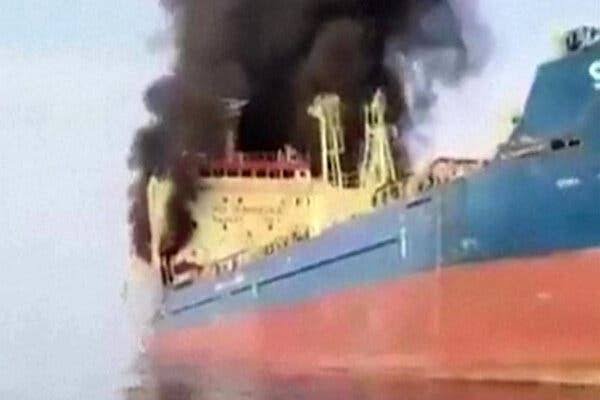
The decline followed attacks on two United Arab Emirates tankers in Omani territorial waters, where Iranian cruise missiles reportedly struck the vessels, killing one Indian crew member and injuring eight others.
What are analysts saying about future oil prices?
Market analysts said the movement of crude through the Strait of Hormuz will remain the key factor influencing oil prices.
They warned that any prolonged disruption to tanker traffic or export flows could push prices even higher, while continued movement of oil through the waterway could gradually reduce the current geopolitical risk premium.
What other regional developments are adding to market uncertainty?
Concerns have also increased after Yemen’s Houthi movement launched missiles toward Saudi Arabia following accusations that the kingdom had bombed an airport under Houthi control.
Analysts cautioned that any expansion of attacks targeting Saudi energy infrastructure or Red Sea shipping routes could further tighten global oil supplies and increase market volatility.