

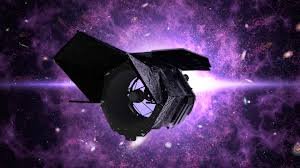
NASA has unveiled a new space observatory designed to explore some of the deepest questions about the universe, including the search for planets beyond the solar system and the nature of dark matter and dark energy.
The mission, known as the NASA Nancy Grace Roman Space Telescope, was presented at the Goddard Space Flight Center in Maryland. NASA Administrator Jared Isaacman described it as a tool that will help create “a new atlas of the universe,” mapping the cosmos on an unprecedented scale.
The telescope is scheduled to be launched no earlier than September aboard a SpaceX rocket from Florida. It measures around 12 metres in length, features large solar panels, and represents more than a decade of development at a cost exceeding $4 billion. It is named after astronomer Nancy Grace Roman, who played a key role in the development of the Hubble Space Telescope and is often referred to as its “mother.”
Positioned about 1.5 million kilometres from Earth, Roman will have a field of view at least 100 times wider than Hubble’s. Scientists say this will allow it to survey vast regions of space far more efficiently than previous instruments.
According to NASA officials, the telescope is expected to identify tens of thousands of exoplanets, map billions of galaxies, detect thousands of supernovae, and observe tens of billions of stars. It will also transmit around 11 terabytes of data daily—more than Hubble has produced over its entire operational lifetime.
A key scientific goal of the mission is to improve understanding of dark matter and dark energy, which together are believed to make up about 95% of the universe. Dark matter is thought to help hold galaxies together, while dark energy is linked to the accelerating expansion of the universe. Using infrared observations, the telescope will look deep into space and effectively further back in time to study how these forces shape cosmic evolution.
Researchers say Roman will complement other major observatories, including the James Webb Space Telescope, Europe’s Euclid mission, and ground-based projects such as the Vera Rubin Observatory in Chile. Together, these instruments are expected to provide a more detailed picture of how galaxies form and move across cosmic time.
Scientists involved in the mission say its results could significantly reshape modern cosmology, potentially revealing phenomena that have not yet been theorised.