

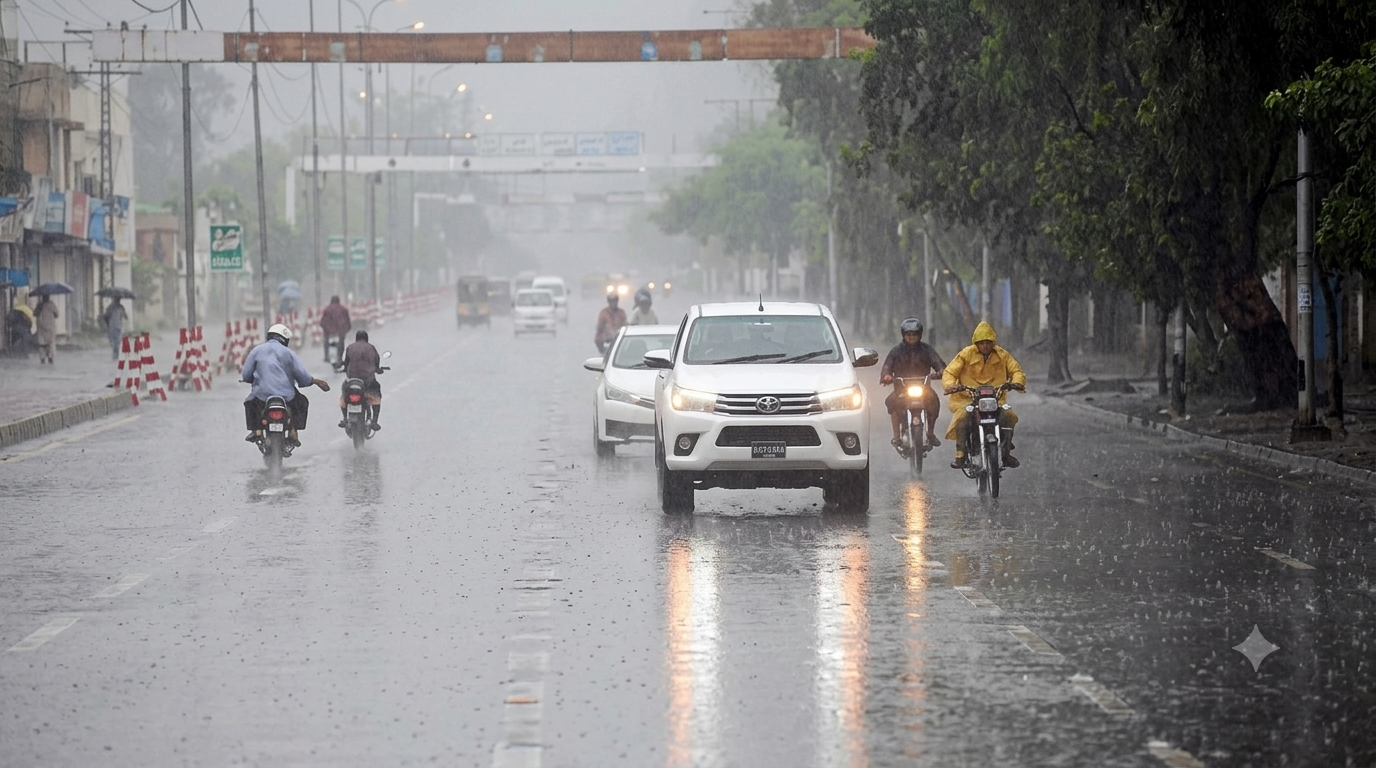
KARACHI: The Pakistan Meteorological Department (PMD) has forecast the onset of the monsoon season in Pakistan from July 1, with the weather system expected to first affect the country’s northeastern regions. Sindh, however, is unlikely to receive monsoon rainfall before July 5, according to the Met Office.
PMD spokesperson Anjum Nazir said the initial monsoon currents are expected to bring rain to Punjab, Kashmir, northern areas and northeastern Punjab from July 1.
He said there is no indication of a monsoon system reaching Sindh over the next few days, adding that no rainfall is expected in the province before July 5.
Nazir said a low-pressure system developing over the Bay of Bengal could later influence weather conditions in Sindh, including Karachi, increasing the possibility of rainfall.
The PMD also forecasts below-normal monsoon rainfall in several parts of Sindh, including Karachi, during the current monsoon season.
The forecast comes as the department expects above-normal temperatures across the country during the month, with the highest probability of warmer-than-average conditions over southern regions, including eastern Balochistan, western Sindh and central Punjab.
According to PMD data, Sindh received 0.3 millimetres of rainfall in May, which was 91.3 per cent below the province’s 1991–2020 average of 3.1 millimetres. The province’s mean temperature during the month was 35.2°C, or 1.0°C above normal.
For June, the Met Office has projected near-normal to slightly below-normal rainfall nationwide, with southern regions, including much of Sindh, expected to receive near-normal rainfall overall, although precipitation may vary across locations.
The PMD warned that above-normal temperatures could increase the likelihood of heat spikes and prolonged heatwave conditions, particularly across the plains of Sindh, Punjab and Balochistan. It added that below-normal rainfall may further intensify heat-related conditions in these areas.
Despite the overall below-normal rainfall outlook, the department cautioned that isolated heavy downpours could still trigger localised urban flooding, particularly in low-lying and poorly drained areas of major cities.