

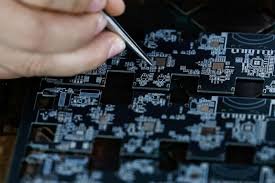
The ongoing conflict in the Middle East is severely disrupting the supply of critical raw materials used in printed circuit boards (PCBs), triggering sharp price increases and placing fresh strain on the global electronics industry, according to industry sources and executives.
The crisis marks a new setback for manufacturers already struggling with elevated memory chip costs, as the widening impact of the Iran-linked conflict continues to disrupt supply chains, petrochemicals, and oil flows.
The disruption intensified after Iran struck Saudi Arabia’s Jubail petrochemical complex in early April, forcing a shutdown in the production of high-purity polyphenylene ether (PPE) resin — a key material used in PCB laminates. The outage has significantly tightened global supply.
Saudi Basic Industries Corporation (SABIC), which produces around 70% of the world’s high-purity PPE and operates within the Jubail complex, has yet to resume output, exacerbating shortages. Shipping routes in and out of the Gulf have also been heavily affected by the conflict, further delaying supplies.
PCB prices, already rising since late 2025 due to strong demand for AI infrastructure, have surged further in recent weeks. In April alone, prices jumped by as much as 40% compared to March, according to analysts at Goldman Sachs. Industry sources indicate that demand has accelerated sharply as manufacturers rush to secure limited raw materials.
Cloud service providers are reportedly absorbing higher costs, anticipating that demand for AI-related hardware will continue to outpace supply in the coming years.
The global PCB market is projected to grow by 12.5% to reach $95.8 billion in 2026, according to industry estimates, underscoring the high stakes of ongoing supply disruptions.
South Korea’s Daeduck Electronics has begun negotiating price increases with major clients, including Samsung Electronics, SK Hynix, and AMD. A senior executive said supply constraints have shifted the company’s focus toward securing raw materials, with lead times for key chemicals such as epoxy resin extending to 15 weeks from just three weeks previously.
In addition to PPE resin shortages, rising costs of other essential inputs, including glass fiber and copper foil, are adding further pressure. Copper foil prices have climbed by up to 30% this year, with increases accelerating since March.
Copper accounts for roughly 60% of total PCB production costs, according to Victory Giant Technology, a key supplier to Nvidia. The company has warned that continued instability in the Middle East could drive further increases in resin and copper prices.
Multi-layer PCBs currently cost around 1,394 yuan ($204) per square metre, while high-end boards used in AI servers can reach up to 13,475 yuan, reflecting the growing cost burden across the electronics value chain.
The latest developments highlight how geopolitical tensions are increasingly feeding into high-tech manufacturing, raising costs and complicating supply chains for industries worldwide.