

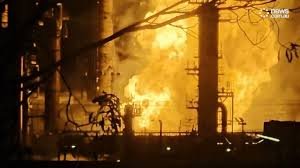
A major fire broke out at a key oil refinery in Australia’s Victoria state after a series of explosions, raising concerns over potential disruptions to domestic fuel supplies, authorities said on Thursday.
The blaze erupted late Wednesday at the Viva Energy refinery in Geelong, about an hour southwest of Melbourne, after a gas leak ignited and triggered powerful explosions. Firefighters said flames reached up to 60 metres high, illuminating the night sky and causing significant damage to parts of the facility.
According to the company, the refinery processes up to 120,000 barrels of oil per day and supplies roughly 10 percent of Australia’s fuel needs. It is one of only two operational refineries in the country, making it a critical component of national energy security.
Emergency services confirmed on Thursday that the fire had been brought under control, though smouldering was expected to continue. Officials said isolation valves helped prevent the blaze from spreading to sections producing jet fuel and diesel, though a unit responsible for high-octane petrol was severely affected.
Incident controllers described the fire as “ferocious,” saying it escalated rapidly from a gas leak into multiple explosions. Thick smoke was seen over the industrial site as emergency crews worked to secure the area.
Energy Minister Chris Bowen said he had spoken with Viva Energy, which expressed confidence that fuel shortages could be managed through imports. Prime Minister Anthony Albanese also announced that Australia had secured an additional 100 million litres of diesel from Brunei and South Korea to help stabilise supply.
Authorities urged the public not to panic buy fuel, stressing that sufficient supplies remain available. However, Australia currently holds only about 38 days of petrol reserves, significantly below the 90-day standard recommended by the International Energy Agency.
The incident comes at a time when global energy markets are already under pressure due to ongoing geopolitical tensions, including instability affecting major oil shipping routes such as the Strait of Hormuz, a key passage for global energy trade.