

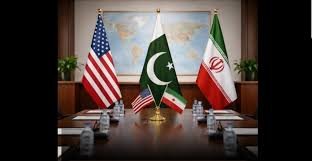
Iranian Foreign Minister Abbas Araghchi said on Monday that indirect talks with the United States are showing “measurable progress,” crediting Pakistan’s diplomatic engagement for helping sustain communication channels, even as military and maritime tensions escalate sharply in the Gulf.
His remarks come amid a renewed confrontation between Washington and Tehran over the Strait of Hormuz, where competing security operations and naval deployments have disrupted one of the world’s most critical energy corridors.
Araghchi warned the United States against further escalation, saying additional military steps risked dragging regional actors into a broader conflict. He described Washington’s latest maritime initiative as counterproductive, stating: “Project Freedom is Project Deadlock.”
The comments follow a series of confrontations at sea, including US claims that its naval forces have been escorting commercial vessels through the Strait of Hormuz under a new operation announced by US President Donald Trump. The White House has described the initiative as an effort to reopen disrupted shipping lanes after months of instability linked to Iran–Israel hostilities and subsequent ceasefire violations.
Iran, however, has rejected US assertions about safe passage operations, while also denying reports of recent naval engagements. The Iranian side maintains that maritime activity in the region remains subject to its security oversight.
Separately, US military officials said several merchant vessels had transited the Strait of Hormuz under naval protection, claims not independently verified by shipping operators at the time of reporting. Global shipping firms, including Maersk, have continued to exercise caution, with many waiting for clearer guarantees before resuming full-scale passage through the corridor.
Tensions intensified further after US naval commanders reported destroying multiple small Iranian vessels in disputed waters, an account Tehran has dismissed. The US Navy has also warned Iranian forces to avoid approaching American naval assets operating in the region.
Iran has additionally circulated updated maritime maps claiming expanded areas of operational control beyond the Strait of Hormuz, a move regional analysts say signals a more assertive posture in surrounding Gulf waters.
Against this backdrop of military signaling, diplomatic channels remain active. Pakistan has emerged as a key intermediary. Deputy Prime Minister and Foreign Minister Ishaq Dar confirmed a recent high-level phone conversation with Araghchi, during which both sides discussed regional stability and ongoing mediation efforts.
According to Pakistan’s Foreign Office, Tehran welcomed Islamabad’s role in facilitating dialogue, while Dar reiterated that sustained engagement remains the only viable pathway to de-escalation. Islamabad has hosted backchannel discussions in recent weeks, though a follow-up round of negotiations has yet to be scheduled.
Araghchi said Iran remains open to continued diplomacy, but warned that continued military pressure risks collapsing the fragile communication framework. “There is no military solution to this crisis,” he said, underscoring Tehran’s position that negotiations remain contingent on restraint from all external actors.
The Strait of Hormuz remains the central flashpoint, with global energy markets closely watching developments as disruptions continue to affect oil, gas, and freight flows through the region.