

The Bangladesh Nationalist Party (BNP) secured a commanding two-thirds majority in Bangladesh’s general election on Friday, a result widely viewed as a turning point after months of political turbulence triggered by the removal of former prime minister Sheikh Hasina in a youth-led uprising.
According to domestic television projections, the BNP and its allies captured at least 212 of the 299 contested seats in the Jatiya Sangsad, or House of the Nation. The opposition Jamaat-e-Islami Bangladesh and its partners secured 70 seats, establishing themselves as the principal opposition bloc.
The BNP’s return to power after two decades marks one of the party’s strongest electoral performances, surpassing its 2001 tally of 193 seats. However, it remains short of the 230 seats won by Hasina’s Awami League in 2008. Several previous elections, though, were criticized as one-sided or boycotted by opposition forces. The Awami League, which governed for 15 years, was barred from contesting this vote.
In a statement issued after its victory became clear, the BNP thanked voters and called for nationwide prayers, instructing supporters to refrain from holding celebratory rallies despite the scale of the win. The appeal reflected a broader emphasis on stability following months of unrest that disrupted daily life and key export industries, including Bangladesh’s globally significant garment sector.
BNP chairman Tarique Rahman is widely expected to assume the premiership. The son of former president Ziaur Rahman, he returned to Dhaka in December after spending 18 years abroad. Bangladesh’s political landscape has long been shaped by rivalry between Hasina and Khaleda Zia, Tarique Rahman’s mother and a former prime minister.
Following Hasina’s departure to India in August 2024, Nobel Peace Prize laureate Muhammad Yunus served as interim head of government. Manual ballot counting began immediately after polls closed on Thursday and was expected to continue into Friday afternoon.
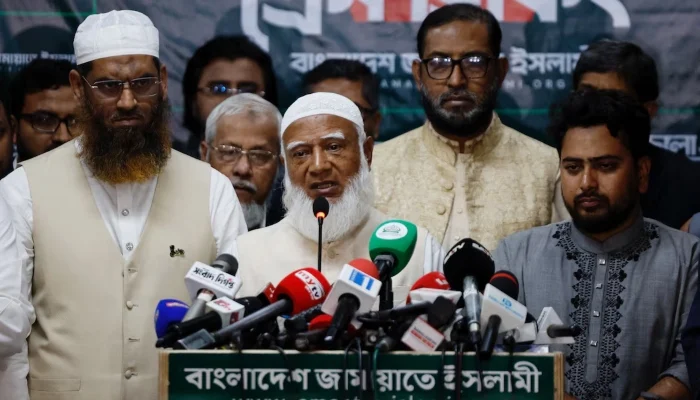
At BNP headquarters in Dhaka, supporters gathered overnight as the extent of the party’s landslide became apparent. Meanwhile, Jamaat-e-Islami chief Shafiqur Rahman conceded defeat and pledged constructive engagement, stating that his party would pursue “positive politics” rather than oppose for opposition’s sake.
The National Citizen Party, a youth-led group that played a role in the anti-Hasina movement and allied with Jamaat, won only five of the 30 seats it contested.
Voter turnout was estimated to exceed 60 percent, significantly higher than the 42 percent recorded in the 2024 election. More than 2,000 candidates from a record 50 parties contested the polls, alongside numerous independents. Voting in one constituency was postponed due to the death of a candidate.
A referendum on constitutional reforms was held concurrently. Preliminary media reports suggested over two million voters supported the proposed changes, while approximately 850,000 opposed them. The reforms include a two-term limit for prime ministers, enhanced judicial independence, greater representation for women, provisions for neutral interim governments during election periods, and the creation of a second chamber in the 300-seat parliament.