

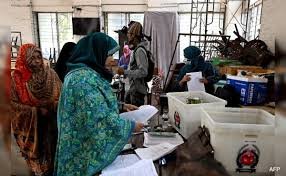
Polls have opened across Bangladesh under heavy security as the country holds its first parliamentary election since the 2024 uprising that removed long-serving Prime Minister Sheikh Hasina from power. Over 127 million voters are registered, with youth aged 18–35 making up nearly half of the electorate, reflecting widespread hopes for democratic change after years of political unrest and street protests.
The election is being closely watched as a test of Bangladesh’s democratic institutions. Tarique Rahman’s Bangladesh Nationalist Party (BNP) is widely considered the frontrunner. Rahman, who returned to Bangladesh after nearly two decades abroad, has pledged to tackle corruption and restore democratic practices if his party wins. His main rivals include a coalition led by Jamaat‑e‑Islami and allied parties, raising concerns over the future of secular politics and minority rights in the country. More than 50 parties are contesting a record number of seats, following the ouster of the Awami League and ongoing legal actions against its leadership.
Authorities have deployed unprecedented security measures nationwide, with hundreds of thousands of personnel guarding polling stations to prevent violence and ensure orderly voting. Several polling centers were classified as high-risk due to previous political tensions. Observers have highlighted that ensuring the safety of voters, particularly minorities, remains a priority in this historic election.
In addition to parliamentary contests, voters are participating in a constitutional referendum addressing reforms such as term limits for the prime minister and expanded rights protections. Political analysts note that the election’s outcome could significantly reshape Bangladesh’s political landscape, influence democratic norms, and affect regional dynamics in South Asia.
Preliminary results are expected by Friday, which will provide clarity on which party will lead the next government and how the country navigates its post-Hasina transition.