

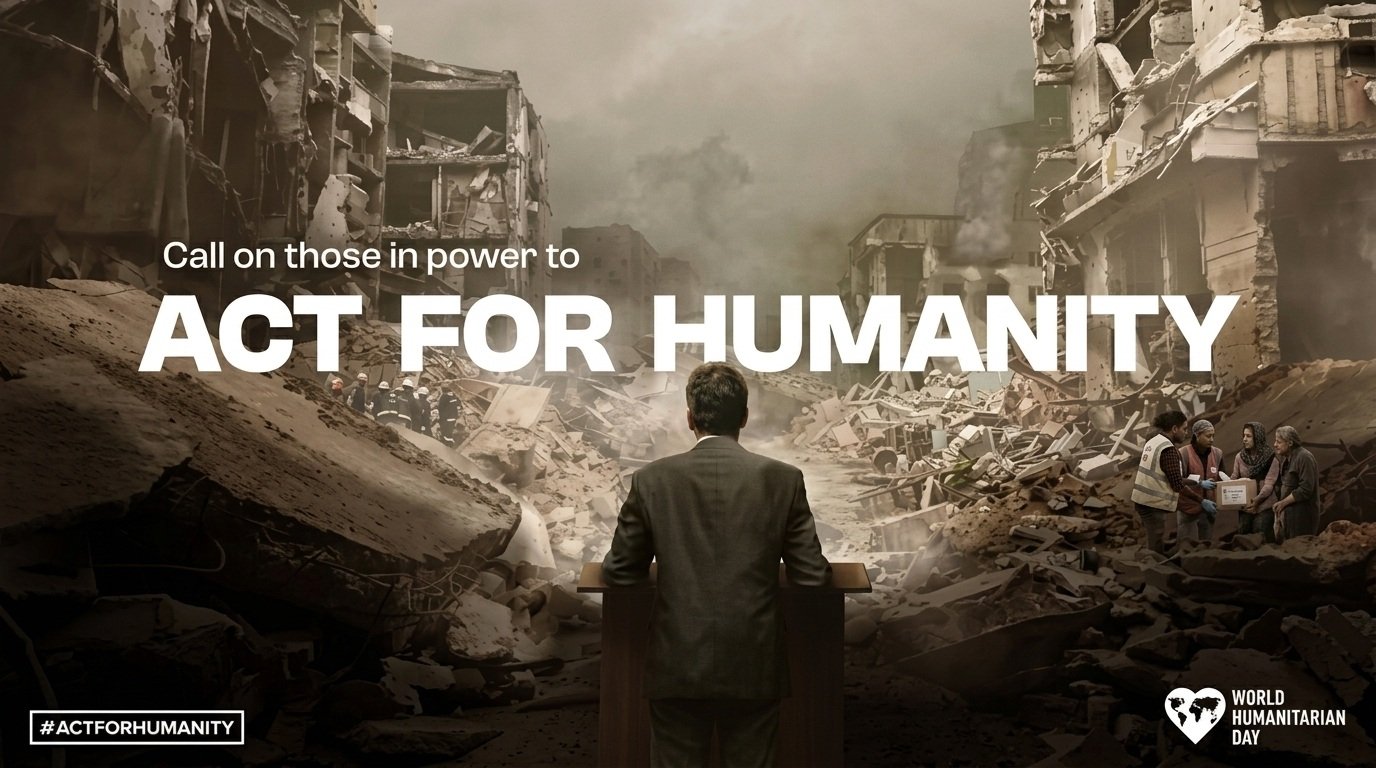
There is a cruel contradiction at the heart of today’s humanitarian crises: those who enter the most dangerous places to save human lives are increasingly becoming victims themselves.
Every day, humanitarian workers walk into places where others are trying to escape. They deliver food to families facing hunger, provide medical care to the wounded, arrange shelter for the displaced and offer protection to people who have lost almost everything. They often work with little recognition and under conditions most of us would find impossible to imagine.
Yet humanitarian work is becoming more dangerous.
According to figures reported by the United Nations Office for the Coordination of Humanitarian Affairs, at least 326 humanitarian workers were killed across 21 countries in 2025. The deaths contributed to more than 1,000 humanitarian workers being killed over a three-year period.
These numbers should not become just another statistic.
Behind every number was a person. Someone had a family, colleagues, friends and a community. Someone had decided that, despite war, disaster, displacement or poverty, another human being deserved help.
Perhaps the most disturbing part is that the majority of humanitarian workers affected by violence are not distant foreigners arriving briefly from another country. They are often local people helping their own communities. They understand the language, culture and terrain. They know where vulnerable families live and which roads remain accessible. They are often among the first to respond and the last to leave.
When they are killed, therefore, the damage goes far beyond the loss of one worker. Communities lose experience, trust and access to essential services. A health worker killed in a conflict zone means fewer patients treated. A relief worker killed while delivering food means fewer families reached. An aid organization forced to withdraw because of insecurity can leave thousands of vulnerable people without assistance.
This is why the protection of humanitarian workers cannot be treated as a secondary issue.
International humanitarian law is not optional. Civilians must be protected. Humanitarian and medical personnel must be respected. Parties to armed conflicts have obligations that do not disappear simply because a war is difficult, unpopular or politically complicated.
The international community must therefore move beyond expressions of concern.
Condemnation after an attack is not enough. Statements of sympathy after another humanitarian worker is killed are not enough. What is required is accountability, effective protection and genuine pressure on those who attack humanitarian personnel or deliberately obstruct humanitarian assistance.
Governments and armed groups must ensure safe and sustained humanitarian access. Donor countries must continue supporting humanitarian organizations rather than allowing funding shortages to weaken already fragile responses. International institutions must strengthen mechanisms for documenting attacks and pursuing accountability. And the public must not allow humanitarian crises to disappear from attention simply because another crisis has taken its place in the news cycle.
There is also a responsibility on ordinary citizens.
Supporting credible humanitarian organizations, sharing verified information and demanding respect for international humanitarian law may appear insignificant compared with the scale of global conflicts. But public attention matters. Silence allows the deaths of aid workers to become normalized, and normalization is dangerous.
World Humanitarian Day should therefore be more than a day of tribute.
It should force us to ask an uncomfortable question: What kind of world expects people to risk their lives to save others while failing to protect them?
Humanitarian workers are not participants in the conflicts they enter. They are there because someone needs food, medicine, shelter or protection. Their work represents one of the most basic principles of humanity: that another person’s suffering matters, regardless of nationality, religion, ethnicity or political affiliation.
The world cannot claim to value human life while allowing those who dedicate their lives to protecting it to become increasingly expendable.
On 19 August, we should remember the humanitarian workers who did not return home. But remembrance alone is insufficient. The real tribute is to make their work safer. The people who help others need protection too.
Disclaimer: The views and opinions expressed in this article are solely those of the author and do not necessarily reflect the views, policies, or position of this website. The website does not endorse or oppose any opinion presented herein.
