

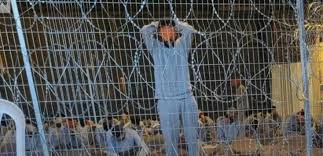
An investigative analysis of alleged systematic abuse in Israeli detention, the collapse of international accountability, and the human beings whose voices the world refuses to hear.
The Screams No One Is Supposed to Hear
There is a man named Muhammad al-Bakri. He was arrested in 2024, held for weeks, blindfolded, bound, stripped, and then subjected to sexual violence alongside other prisoners. Soldiers allegedly used dogs. The abuse was allegedly filmed. He is not a statistic. He is a human being with a name, a family, and a story that the world’s most powerful institutions have so far failed to act upon meaningfully.
He is not alone.
According to Al Jazeera’s investigative documentary Bodies of Evidence: Israel’s Darkest Weapon, his account is one of many, a mosaic of testimonies from former Palestinian detainees describing systematic beatings, forced nudity, rape, insertion of objects, electrocution of genitals, and deliberate documentation of abuse by soldiers. These are not the whispers of fringe actors. These are verified testimonies, cross-referenced with findings from the United Nations, Amnesty International, Human Rights Watch, B’Tselem, and the Palestinian Centre for Human Rights.
The question is no longer whether these things happened. The question is: why is the world still asking questions instead of demanding answers?
What the Evidence Actually Says
Let us be clear about what the international record contains, not allegations from a single source, but a converging body of documented findings.
The United Nations Secretary-General’s 2025 report on conflict-related sexual violence added Israeli forces to its blacklist for the first time in the report’s 15-year history. The report verified cases involving 14 men, seven women, nine boys, and one girl from Gaza and the West Bank. Documented violations included rape, gang rape, forced nudity, genital violence, and strip searches conducted without security justification.
The UN’s Independent International Commission of Inquiry on the Occupied Palestinian Territory concluded in its June 2024 report that “the frequency, prevalence and severity of sexual and gender-based crimes perpetrated against Palestinians… indicate that such violence is part of Israeli Security Forces’ operating procedures.”
Not accidents. Not rogue soldiers. Operating procedures.
In August 2024, Israeli human rights organization B’Tselem released Welcome to Hell, describing the Israeli prison system as a “network of torture camps”, documenting physical, psychological, and sexual abuse of detainees.
UN experts, citing substantiated reports, noted that at least 53 Palestinians had died in custody within a ten-month period. A 17-year-old from Nablus, Walid Khaled Abdullah Ahmad, was reportedly returned with severe malnutrition and extreme weight loss. A 25-year-old diabetic, Arafat Hamdan, died after alleged denial of medication and beating in custody.
These are not abstractions. These are lives.
The Law Is Clear. The Violation Is Deliberate.
Article 3 of the Geneva Conventions prohibits violence to life and person, torture, and humiliating treatment. These rules apply universally and are binding on all parties to conflict, including Israel, which ratified the conventions in 1951.
The Third and Fourth Geneva Conventions establish that prisoners must be treated humanely, torture is forbidden, and sexual violence constitutes a war crime.
There is no exception in international law for political context or identity. The law is universal. The law is absolute.
Yet Israeli authorities reject or dispute allegations of systematic abuse, stating that detention operations comply with legal standards. Investigations remain limited, and accountability is largely absent.
This is not a legal grey area. It is impunity dressed as procedure.
Should the Standard Be Universal?
Here is the question: if these prisoners were of another identity, would the global response be the same?
When documented abuses occurred against Ukrainian prisoners of war, the international response was swift and forceful. Arrest warrants, sanctions, and diplomatic isolation followed.
The disparity in response raises concerns about selective application of international law.
If international law is universal, then a Palestinian detainee in Israeli custody has the same rights as any other prisoner of war. If that principle feels controversial, it reflects how normalized inconsistency has become.
Where Are the Guardians of the Law?
The International Criminal Court issued arrest warrants for Israeli leaders over alleged war crimes and crimes against humanity.
The response from the United States was not support for accountability but sanctions against ICC officials, including judges and prosecutors. Officials were labelled part of “lawfare” efforts, and their legitimacy was questioned.
UN experts warned that sanctioning judicial officials undermines global accountability and signals that power can override law.
The International Court of Justice issued an advisory opinion declaring aspects of the occupation illegal and ordering compliance. The UN General Assembly supported the ruling with broad international backing. Implementation, however, has not followed.
The central question remains: what is the value of international law if enforcement depends on political power?
Silence is not neutrality. Silence is complicity.
Has Israel Taken the Whole World With It?
The global response is not uniform. South Africa brought a genocide case to the ICJ. Multiple states across Latin America, Europe, and Asia have supported or joined legal efforts. The “Hague Group” has advocated enforcement of international rulings.
However, enforcement mechanisms remain weak. Security Council dynamics and geopolitical alliances continue to block binding action.
Over 9,000 Palestinians remain detained, including thousands held without charge under administrative detention. Reports of enforced disappearances persist.
The Voices That Must Be Heard
There are allegations that abuse was documented and recorded by soldiers. If true, evidence exists in material form. Yet victims’ testimonies continue to face disproportionate scrutiny.
UN Special Rapporteurs and human rights experts who document abuses have faced sanctions and political pressure, raising concerns about intimidation of human rights mechanisms.
When those who investigate victims are punished, the effect is not only institutional—it is the silencing of testimony itself.
A Civilisational Moment
This is not only a regional conflict. It is a test of whether the post–World War II legal order—built on human dignity, prohibition of torture, and universal rights—still holds meaning.
International humanitarian law was created to prevent repetition of past atrocities. Its legitimacy depends on consistent application.
When legal protections are applied selectively, the principle of universality collapses.
The victims are not asking for exceptional treatment. They are asking for equal application of the law.
That is not radical.
It is the minimum standard the law requires.
Disclaimer: The views and opinions expressed in this article are solely those of the author and do not necessarily reflect the views, policies, or position of this website. The website does not endorse or oppose any opinion presented herein.