

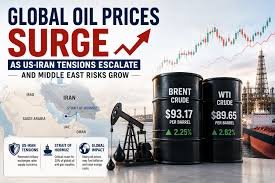
SINGAPORE: Global oil prices climbed sharply on Monday, with Brent crude jumping more than $3 a barrel, as renewed military escalation between Israel and Iran intensified fears of disruptions to crude flows through the Strait of Hormuz.
Brent crude futures rose $3.20, or 3.39 percent, to $96.24 a barrel by 0333 GMT, while U.S. West Texas Intermediate (WTI) gained $2.87, or 3.17 percent, to $93.41. The surge reversed losses recorded at the end of last week, when prices had fallen on expectations of de-escalation in the region.
Market sentiment turned after reports of explosions in Tehran, Tabriz and Isfahan early on Monday, following Israel’s renewed strikes in Lebanon and heightened regional military activity. The developments deepened concerns that the conflict could further disrupt energy supply chains.
The latest price rally comes after Iran launched missile attacks on Israeli targets over the weekend, prompting renewed uncertainty over the trajectory of the wider conflict. The escalation has already pushed oil prices up more than 50 percent since March.
Despite the violence, U.S. President Donald Trump maintained that diplomatic efforts with Tehran remained on track. He also reportedly urged Israeli Prime Minister Benjamin Netanyahu to avoid further escalation, saying continued strikes would not affect ongoing negotiations aimed at a broader settlement.
Analysts said market volatility reflects growing uncertainty over whether shipping through the Strait of Hormuz — a key transit route for roughly one-fifth of global oil supply — could be further restricted amid the conflict. Iranian-linked disruptions have already contributed to a tightening of global supply conditions.
Additional pressure on the market came as OPEC+ agreed on Sunday to increase output for a fourth consecutive month. However, analysts noted that the impact of the decision is likely limited due to production constraints among several member states and ongoing geopolitical disruptions.
Energy analysts said physical supply conditions remain tight despite output adjustments, with infrastructure damage in key producing regions and maritime risks continuing to offset planned increases in production.
The oil market remains highly sensitive to developments in the Middle East, with traders closely watching both military activity and diplomatic efforts aimed at preventing further escalation.