

Washington: Rapidly rising diesel prices linked to the ongoing conflict involving Iran are placing severe financial pressure on school districts across the United States, forcing education authorities to cut spending, dip into emergency reserves, and reconsider essential student services.
School officials from states including Washington, Texas, Minnesota, and Alaska say soaring fuel costs are making it increasingly difficult to operate school buses, maintain transport networks, and even keep classrooms heated and powered.
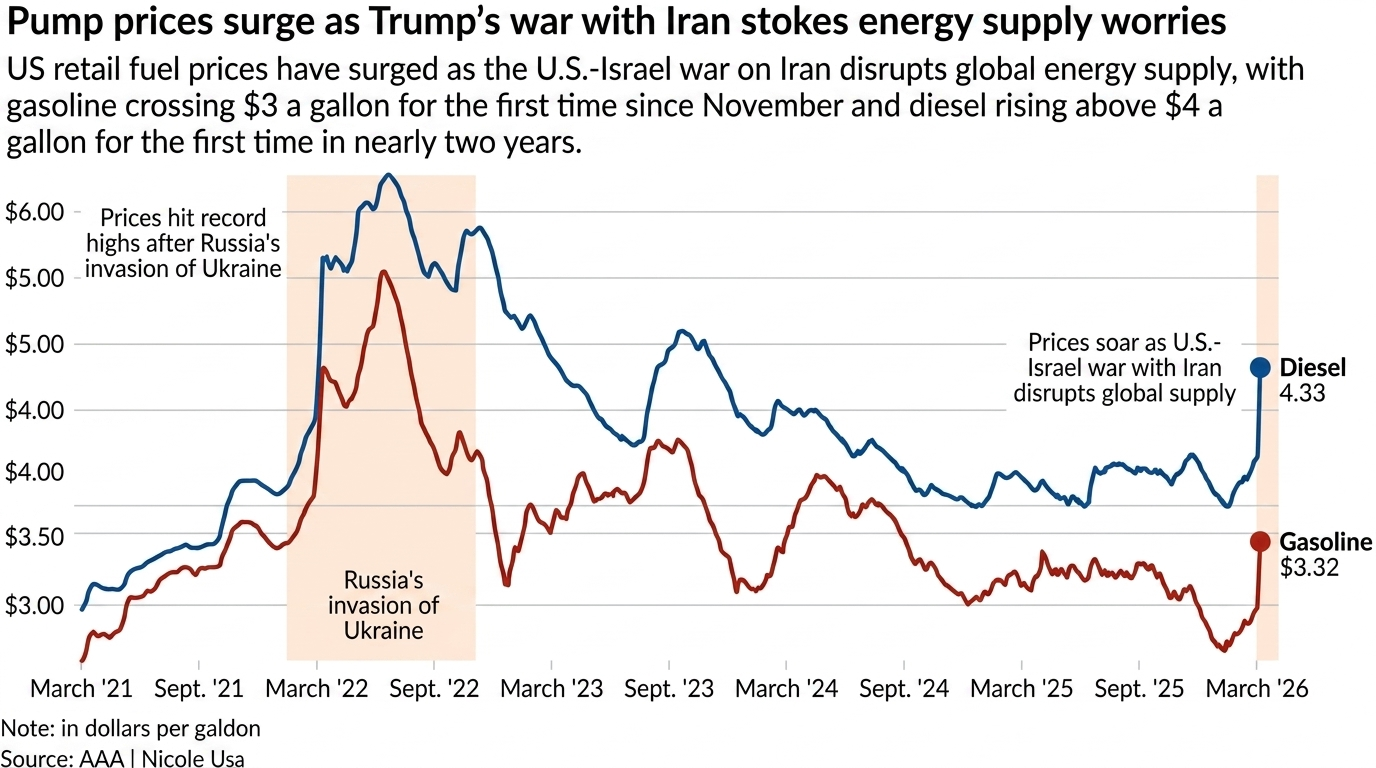
The crisis follows major disruptions in global oil supplies caused by the ongoing US-Israeli conflict with Iran, which has affected nearly one-fifth of the world’s oil flow and triggered one of the fastest fuel price increases on record.
According to industry estimates, diesel prices paid by US transport fleets have surged nearly 67 percent since December, reaching approximately $5.52 per gallon.
The dramatic rise threatens to add nearly $1.8 billion annually to the operating costs of America’s school bus systems, according to an analysis by fleet management technology company Samsara.
US school districts collectively consume more than 800 million gallons of diesel fuel every year, according to the American School Bus Council.
Education officials warn that the financial strain is becoming unsustainable for already underfunded public school systems.
“It’s more than a straw on the camel’s back, it’s like a haystack,” said Trevor Greene, superintendent of the Yakima School District in Washington State.
The Yakima district, located in an agriculture-dependent region with an 86 percent poverty rate, said diesel prices for its fleet recently climbed 64 percent year-on-year to around $6.30 per gallon.
Officials estimate the district will need to spend an additional $213,000 annually to operate its 60 school buses — an amount equivalent to the salaries of two teachers.
District Chief Financial Officer Jacob Kuper said administrators are now purchasing diesel in smaller quantities whenever prices temporarily dip instead of filling the district’s 30,000-gallon fuel tank completely.
“We’re limping through the end of the year,” Kuper said.
The financial burden is not limited to transportation.
In the remote Yupiit School District in southwestern Alaska, diesel fuel is critical not only for transport but also for heating classrooms and powering generators that provide electricity to schools and communities.
“If they can’t produce electricity, then we can’t run the school,” said Scott Ballard.
The district, which serves around 550 students in isolated communities, faces additional logistical challenges because fuel deliveries can only occur during limited seasonal windows due to harsh weather and ice conditions.
Ballard said district leaders are now facing difficult decisions over whether to lock in fuel prices nearly 66 percent higher than last year or risk waiting for possible market declines.
“We’re in a very pressure-packed situation,” he added.
In northwestern Minnesota, Christopher Mills, superintendent of Thief River Falls Public Schools, said diesel costs tied to transporting approximately 800 students have risen around 30 percent since the conflict began.
While school officials are trying to shield classrooms from direct budget cuts, Mills warned that continued price increases may eventually force reductions in student support services.
Even school districts in oil-producing states are struggling with the crisis.
The Waco Independent School District in Texas reported an 84 percent year-on-year increase in diesel prices earlier this year. The district operates more than 80 buses covering daily routes averaging about 60 miles round-trip.
According to a nationwide survey conducted by the School Superintendents Association and shared with Reuters, nearly one-third of US school districts are redirecting money from other educational programmes to pay for fuel expenses.
The survey, conducted among 188 school officials during the first week of May, also found that nearly 20 percent of districts are relying on emergency reserves or rainy-day funds to manage the growing costs.
School administrators across the country are responding through emergency cost-cutting measures including consolidating bus routes, reducing administrative spending, delaying maintenance projects, enforcing anti-idling policies for buses, and reassessing staffing levels.
James Rowan, executive director of the Association of School Business Officials International, said the unpredictability of fuel markets is making financial planning increasingly difficult.
“Districts can plan for higher costs, but rapid swings in prices make it very difficult to budget accurately,” Rowan said.
He warned that many school systems currently surviving through temporary financial measures may not have the flexibility to continue doing so in the future.
Some of America’s largest school districts have been partially protected from the diesel shock through alternative arrangements.
The New York City Department of Education outsources much of its transportation system through contracts that transfer fuel-price risks to private operators.
Meanwhile, the Los Angeles Unified School District has significantly reduced dependence on diesel-powered buses, with nearly 70 percent of its fleet now operating on batteries or alternative fuels.
Officials in Los Angeles said the district’s transition away from fossil fuels has helped reduce the impact of rising diesel costs, although transportation budgets remain under pressure.
The fuel crisis has also emerged as a growing political concern for US President Donald Trump ahead of the upcoming midterm elections, with rising energy costs increasingly affecting schools, transport systems, and household budgets nationwide.