

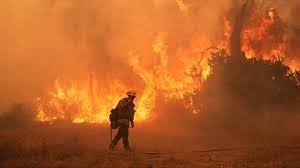
Scientists have warned that climate change, combined with emerging El Niño conditions, has triggered record-breaking wildfire outbreaks across Africa, Asia, and other regions in the early months of 2026, with conditions expected to intensify as the northern hemisphere enters summer.
According to data compiled by the World Weather Attribution (WWA), fires between January and April have already burned more than 150 million hectares (370.66 million acres) of land globally—around 20% higher than the previous recorded peak.
Researchers caution that rising temperatures and shifting weather patterns could push 2026 toward unprecedented levels of drought and wildfire activity, especially as El Niño conditions strengthen.
Wildfire expert Theodore Keeping of Imperial College London, working with WWA, said the early intensity of fires, combined with the forecast El Niño, signals a potentially severe year ahead. He noted that Africa alone has already seen about 85 million hectares burned—23% above its previous record—driven by rapid transitions from unusually wet conditions to extreme dryness, which increases fuel for savannah fires.
In Asia, approximately 44 million hectares have burned so far this year, nearly 40% higher than the previous record in 2014. Countries including India, Myanmar, Thailand, Laos, and China have been among the worst affected.
Experts also warned that wildfire risks could escalate further in the coming months, particularly in Australia, Canada, the United States, and the Amazon, where El Niño typically intensifies heat and drought conditions.
The World Meteorological Organisation (WMO) has indicated that El Niño conditions—caused by warming sea surface temperatures in the Pacific Ocean—are expected to develop around May. The phenomenon is associated with droughts in parts of Asia and the Pacific, flooding in other regions, and rising global temperatures.
Climate scientist Friederike Otto of Imperial College London and co-founder of WWA warned that the overlap of El Niño and human-induced climate change could result in “unprecedented weather extremes” if conditions intensify later this year.