

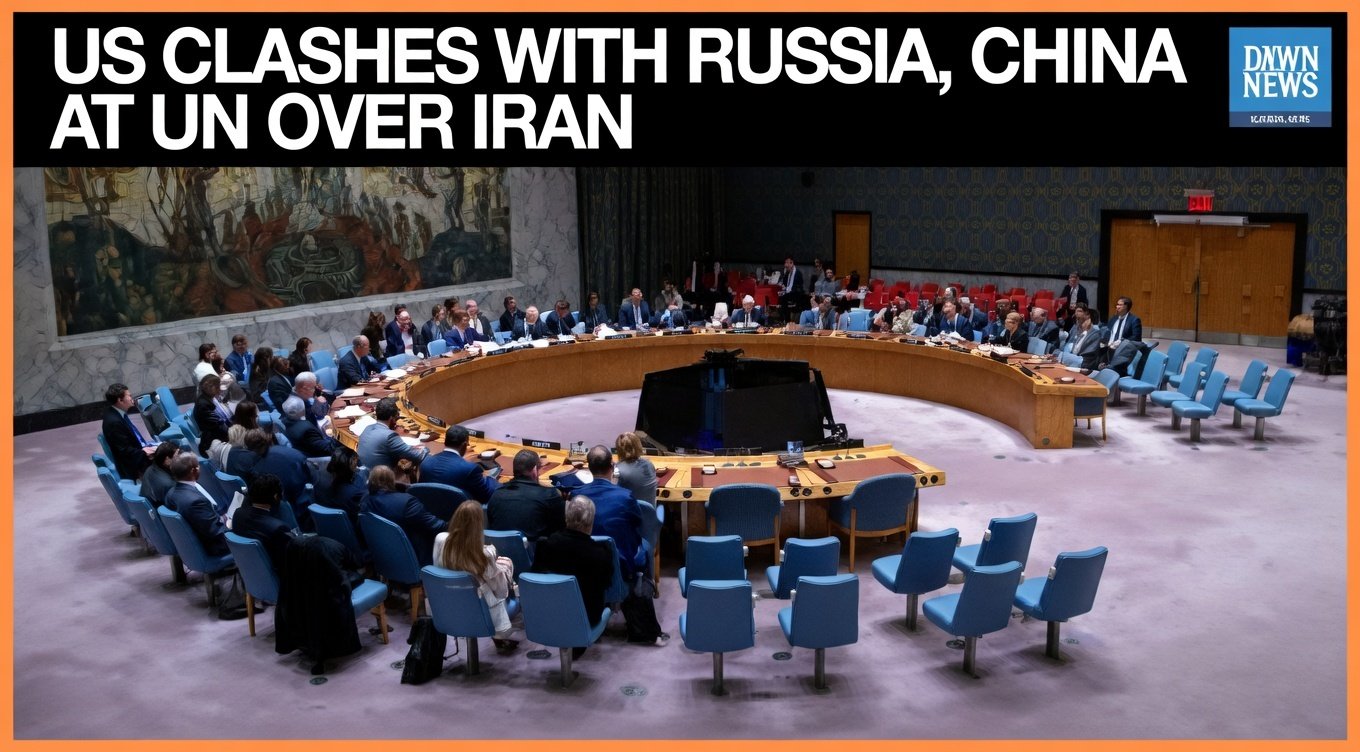
At a United Nations Security Council meeting on 12 March 2026, the United States and its Western allies clashed sharply with Russia and China over Iran’s nuclear programme, amid intensifying global tensions linked to the broader war involving Iran and a US‑Israeli military campaign.
The session, chaired by the United States, saw members vote 11–2 in favour of maintaining oversight of Iran through the 1737 Committee, a sanctions enforcement mechanism, despite opposition from Russia and China. The two powers had sought to block the discussion on extending the committee’s work.
The US Ambassador to the United Nations accused Moscow and Beijing of attempting to shield Tehran and maintain defence cooperation with Iran that Washington says is now prohibited under existing sanctions. The US envoy urged all UN member states to implement an arms embargo against Iran and freeze relevant financial assets.
In response, the Russian ambassador characterised the debate as “hysteria” over alleged Iranian nuclear weapon plans and criticised the United States and its allies for what he described as efforts to escalate the situation in the Middle East and undermine diplomacy. China’s representative echoed this stance, calling the US “the instigator” of the crisis and asserting that the use of force had undermined diplomatic efforts. Iran’s UN ambassador reiterated Tehran’s position that its nuclear programme is exclusively peaceful and rejected attempts to enforce sanctions.
Western representatives, including envoys from Britain and France, argued that sanctions enforcement was justified by Iran’s failure to address concerns about its nuclear activities, including uranium enrichment that the International Atomic Energy Agency has flagged as beyond peaceful needs.
The confrontation at the Security Council reflects widening geopolitical divisions over how to address Iran’s nuclear ambitions and the role of international oversight in a period of heightened regional conflict.