

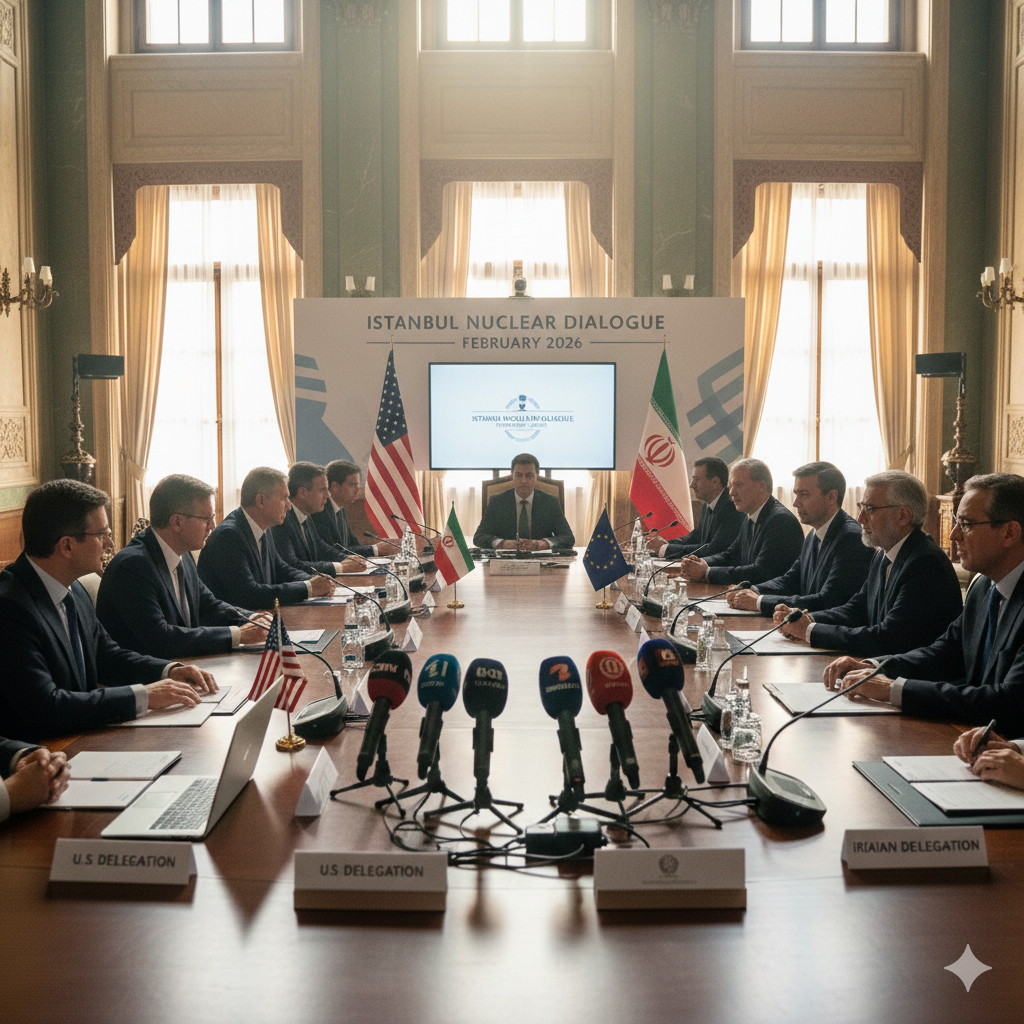
Senior officials from the United States and Iran are expected to resume direct nuclear negotiations this Friday (February 6) in Istanbul, Türkiye, marking the first face-to-face engagement since diplomatic efforts stalled and tensions escalated following a regional conflict last year. U.S. President Donald Trump’s special envoy, Steve Witkoff, and Iranian Foreign Minister Abbas Araghchi are scheduled to meet to discuss a possible framework for a renewed nuclear agreement.
The planned talks aim to revive diplomacy after months of strained relations and could involve representatives from regional countries seeking to mediate. Both sides have signaled openness to restarting discussions, although details remain fluid and a final agreement on timing has not yet been confirmed.
President Donald Trump reiterated that negotiations with Tehran are ongoing while warning of negative consequences if a deal is not reached. Trump, speaking from the White House, said that major U.S. warships are being deployed toward Iran, emphasizing that a diplomatic accord remains preferable but that without one “probably bad things would happen.” His comments reflect a dual strategy of combining pressure with negotiation.
The potential talks come amid intense regional tension and military buildup in the Middle East. Iran has indicated its readiness to pursue diplomatic engagement while maintaining its stance on key national interests. Tehran has not publicly endorsed all U.S. conditions for a deal, particularly regarding its missile program and regional influence, but has stressed diplomacy as a priority.
Iranian officials have also cautioned that any U.S. military action could provoke significant retaliation, underscoring the volatility of the situation as negotiations approach. The stakes of the talks extend beyond the nuclear issue, involving broader security concerns in the Gulf and beyond.
If they proceed as planned, the negotiations in Istanbul would be the first direct U.S.–Iran nuclear engagement since early 2025, when indirect talks were derailed after military confrontation and airstrikes impacted Iran’s nuclear infrastructure. Analysts and diplomats say the outcome could have major implications for regional stability, global oil markets, and international security. Continued diplomatic progress is seen as vital to averting a wider conflict in the Middle East.